Business 6 min read By Arthur Ellington
Brazil lures data centre builders with tax breaks and cheap power
As American communities push back against data centres, Brazil is cutting taxes and offering low-cost renewable electricity to attract the AI infrastructure that US companies are struggling to build at home.
As communities across the United States push back against new data centres, Brazil is positioning itself as an alternative destination for the computing infrastructure behind artificial intelligence. South America's largest country is already a major market for AI services and is now offering tax incentives and relatively cheap power to make building there easier for technology companies.
Brazilians send around 215 million messages to ChatGPT each day, according to OpenAI, making Brazil the chatbot maker's third-largest market for weekly users after the United States and India. Google has said it plans to double its cloud infrastructure in the country by 2030 in response to growing demand, and in March it signed a sponsorship deal with the Brazilian Football Confederation to integrate its Gemini tool across the country's men's, women's and youth national teams. Amazon Web Services says it has spent more than $3.8 billion on data centre infrastructure in Brazil since 2011 and has pledged another $1.8 billion through 2034. Microsoft has committed $2.7 billion to cloud and AI infrastructure in the country over three years.
So far, local demand rather than American companies moving operations abroad has driven most of Latin America's data centre growth. Carlos Barrera, chief executive of Atlas Renewable Energy, believes that could change. « We do see the region as actually an attractive release valve for some of the U.S. capacity constraints that you see now », he said.
Brazil has several features that make it appealing to so-called hyperscalers, the large cloud operators that run data centres at scale. The country has a population of almost 214 million people spread across an area larger than the contiguous 48 US states. Its electricity is also a major draw. According to a report from the Ministry of Mines and Energy, nearly 87 per cent of the country's power comes from renewable sources, and rapid growth in wind and solar generation has produced a surplus. Electricity costs less than half what it does in the United States.
James Mercer, a principal at data centre advisory firm Metro Colo Advisory, said the American backlash was less about pushing companies out of the country than about directing them towards wherever power becomes available first. Cheap power, however, may not stay cheap. Barrera said Brazil will need more transmission lines to connect large data centres to the grid, and government officials are divided on whether electricity bills will rise as a result.
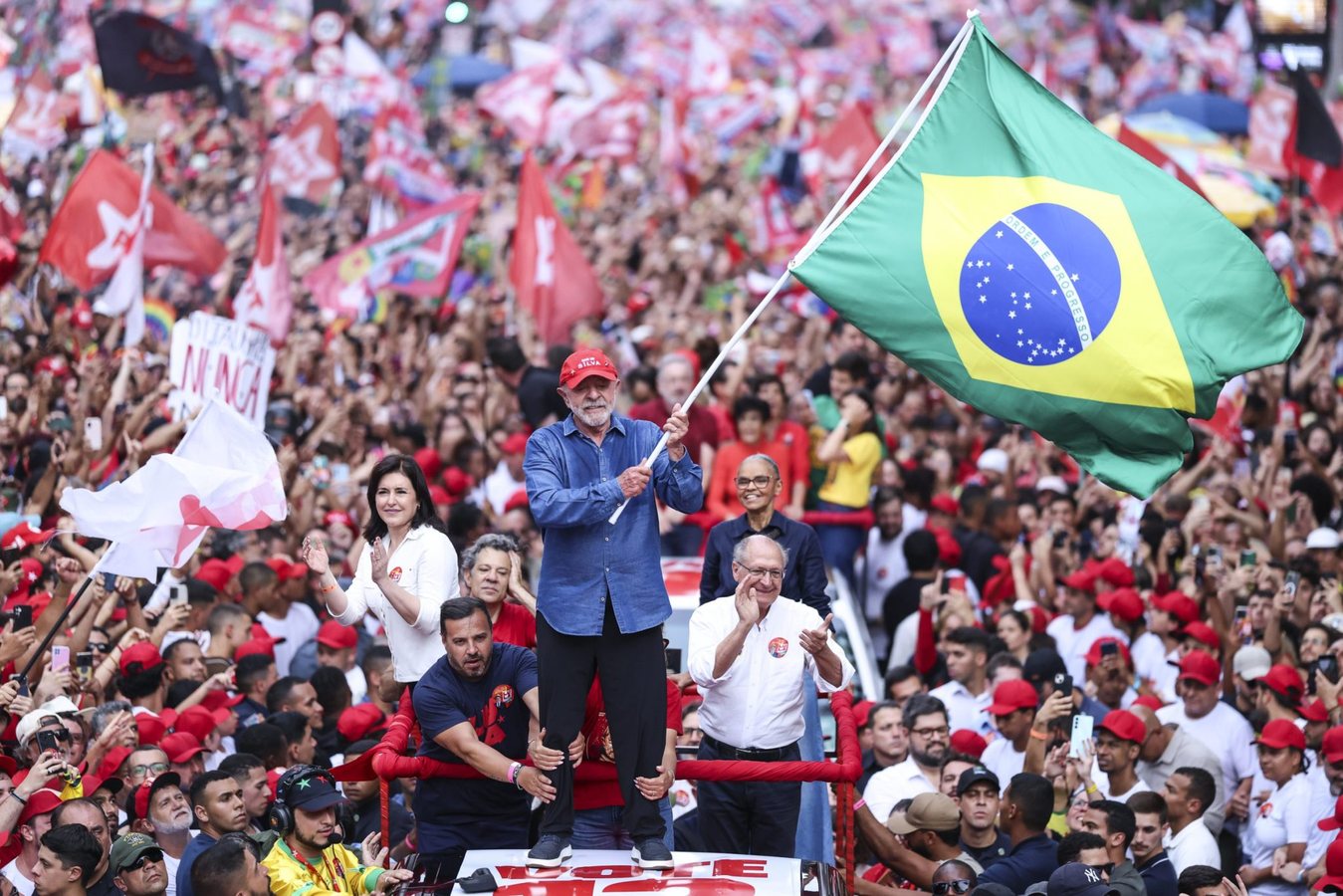
Taxation has been another obstacle. High federal import duties made building large data centres more expensive in Brazil than in other countries in the region. To address this, President Luiz Inácio Lula da Silva signed a law on September 15 cutting taxes on qualifying data centre equipment. The move contrasts with some US lawmakers who have proposed taxing data centres' electricity use and output. « If Brazil wanted to be a player in the data center space, it had to do this tax law change », said Christopher Torto, chief executive of Ascenty, Latin America's largest data centre and connectivity provider.
The legislation, known as REDATA, is intended to support what the government calls data sovereignty. Lula's administration hopes that bringing more computing capacity into the country will help Brazilian businesses develop their own AI products and reduce reliance on foreign services. The Ministry of Development says 60 per cent of Brazilian digital data is currently processed abroad. Under the law, companies must offer at least 10 per cent of their qualifying computing services to Brazilian customers and invest 2 per cent of the value of the tax-advantaged equipment in Brazilian research and development.
Ana Carolina de Assis Nunes, a Brazilian anthropologist and data centre researcher at the nonprofit policy institute Data & Society, said the aim was to lessen dependence on foreign services, particularly in the current climate under US President Donald Trump. She noted, however, that Brazil is offering tax breaks to the same companies that dominate the global industry. Torto acknowledged that Brazil is unlikely to produce its own Google or Microsoft. Still, local data centres could improve latency and keep more data inside the country. « It's not just the model or the data center themselves; it's everything that goes around them that will be really the larger investment long term », he said.
Brazil has not seen the same scale of opposition to data centres as the United States, but some resistance has emerged. Days before REDATA became law, federal prosecutors went to court over a data centre project linked to TikTok, seeking an environmental impact study and consultation with the Indigenous Anacé people before the facility becomes operational. Nunes said opposition in Brazil is not as politically unified as in the US, where data centres have drawn criticism from both left and right. She added that foreign investment still carries prestige in parts of the country, particularly among people who see it as a route into the global economy.
5