Technology 5 min read By Bethany Hadley
Offshore nuclear barges could power California ports and AI data centers
The Port of Long Beach has signed an agreement to develop small modular reactors on floating barges, a project that could bring nuclear power to California despite a 50-year-old ban on new nuclear plants.
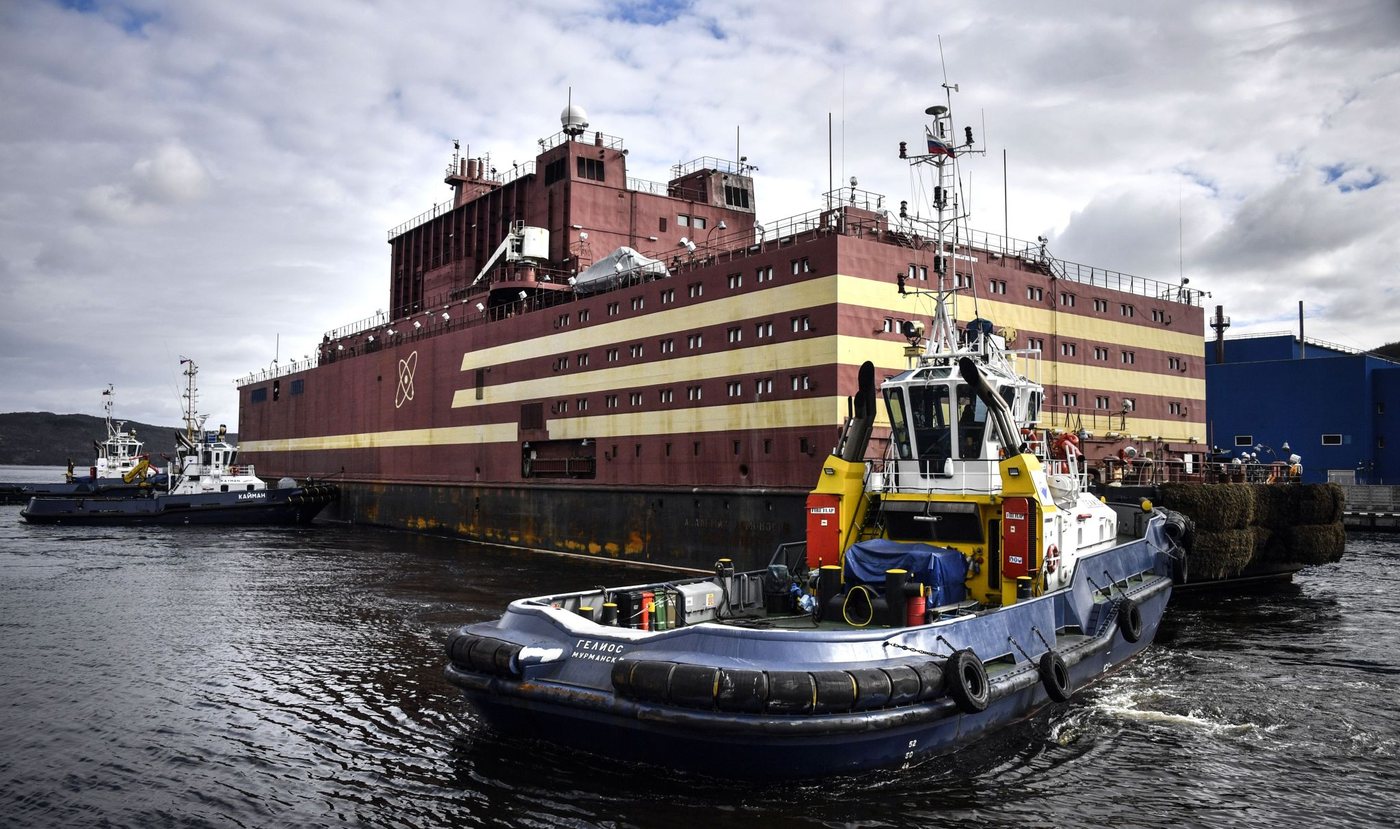
The Port of Long Beach has signed an agreement with the Trump administration to develop next-generation small modular reactors (SMRs) on floating barges, a project that could bring emission-free power to ports, data centers, and vessels. The initiative is part of a broader US push to meet the energy demands of the artificial intelligence boom, and it could begin in California, a state that banned new nuclear plants five decades ago.
The two adjoining ports of Long Beach and Los Angeles form the largest container port complex in the Western Hemisphere. Local startup Bluecore Energy, founded in January, is working with the port to build SMRs on barges, though the project remains years from commercial deployment. Each 10-megawatt reactor on a barge could power the equivalent of about 10,000 homes, be moved by tugboats, and be stacked alongside others for additional generation.
Max Hopkins, a nuclear power analyst at CITIC CLSA, said offshore nuclear power is viable and likely to become widely accepted. "I think it's very viable. It's just a question of when, not if," he said, speaking about the growth of offshore nuclear power across military, maritime shipping, and AI data center applications. "To put something into place fast, with production means, and then you can just float it somewhere—it seems like offshore barges are going to be almost ideal."
Hopkins cautioned that the technology is years from commercial use, with regulatory frameworks, supply chains, and manufacturing systems still to be built. The federal push is accelerating on multiple fronts. The US Department of Transportation's Maritime Administration (MARAD) recently announced a partnership with London-based Core Power to develop regulatory frameworks and technology for a future fleet of nuclear-powered merchant cargo vessels. A day later, the US and the International Atomic Energy Agency (IAEA) launched the Atomic Technologies Licensed for Applications at Sea (ATLAS) initiative to advance SMR and micro-reactor technologies for merchant shipping.
The appeal of nuclear-powered ships is speed and endurance: vessels would only need refuelling every two or three years instead of every voyage, cutting fossil fuel use and enabling faster transit. Maritime vessels account for about 3% of global greenhouse gas emissions, roughly equivalent to the total emissions of Africa. The IAEA said floating nuclear power plants could provide reliable electricity to coastal or remote communities and industry.
Bluecore founder and CEO Kofi Asante, 31, a Ghanaian-American from Austin, Texas, built his logistics and maritime expertise at Uber Freight, heavy-cargo drone company Elroy Air, and electric barge startup Arc before starting Bluecore. He raised $10 million in a pre-seed round, making Bluecore the first nuclear company to partner with MARAD on offshore reactors. "The philosophy was really process of elimination: if you need that much energy, then you arrive at a nuclear reactor," Asante said. "And if you need real estate, two-thirds of the world is water, so you can use barges for extra real estate."
Asante argued the technology is largely developed, including smaller versions of traditional light-water reactors. "We can go miles away and connect via subsea cable—so we don't have to be near neighborhoods, and we don't have to be co-located at the port," he added. He acknowledged the project is proceeding in a state that banned new nuclear reactor development in 1976 over environmental and safety concerns, including unresolved issues with radioactive waste.
Port of Long Beach CEO Noel Hacegaba noted that state lawmakers are already debating legislation to study lifting the ban. "Nuclear is having a moment at the Port of Long Beach, and we are engaged with the private sector, along with state and federal legislators on this issue," he said. "This innovation is years away from becoming a reality due to the technological advancements and regulatory hurdles that still need to be cleared, and it cannot advance without state and federal approvals."
Denmark-based Saltfoss Energy is developing similar nuclear reactor barges in Europe. Russia put the world's first floating nuclear power station on a barge into service in 2020, powering the remote Arctic town of Pevek and its harbor. Naval submarines and aircraft carriers have run on small nuclear reactors for decades.
68