Politics 5 min read By Bethany Hadley
Union vote emerges as key battleground as Trump faces midterm test
With 75,000 manufacturing jobs lost since January 2025 and inflation still squeezing households, President Trump heads into the midterms facing erosion of support among union voters in key swing states.
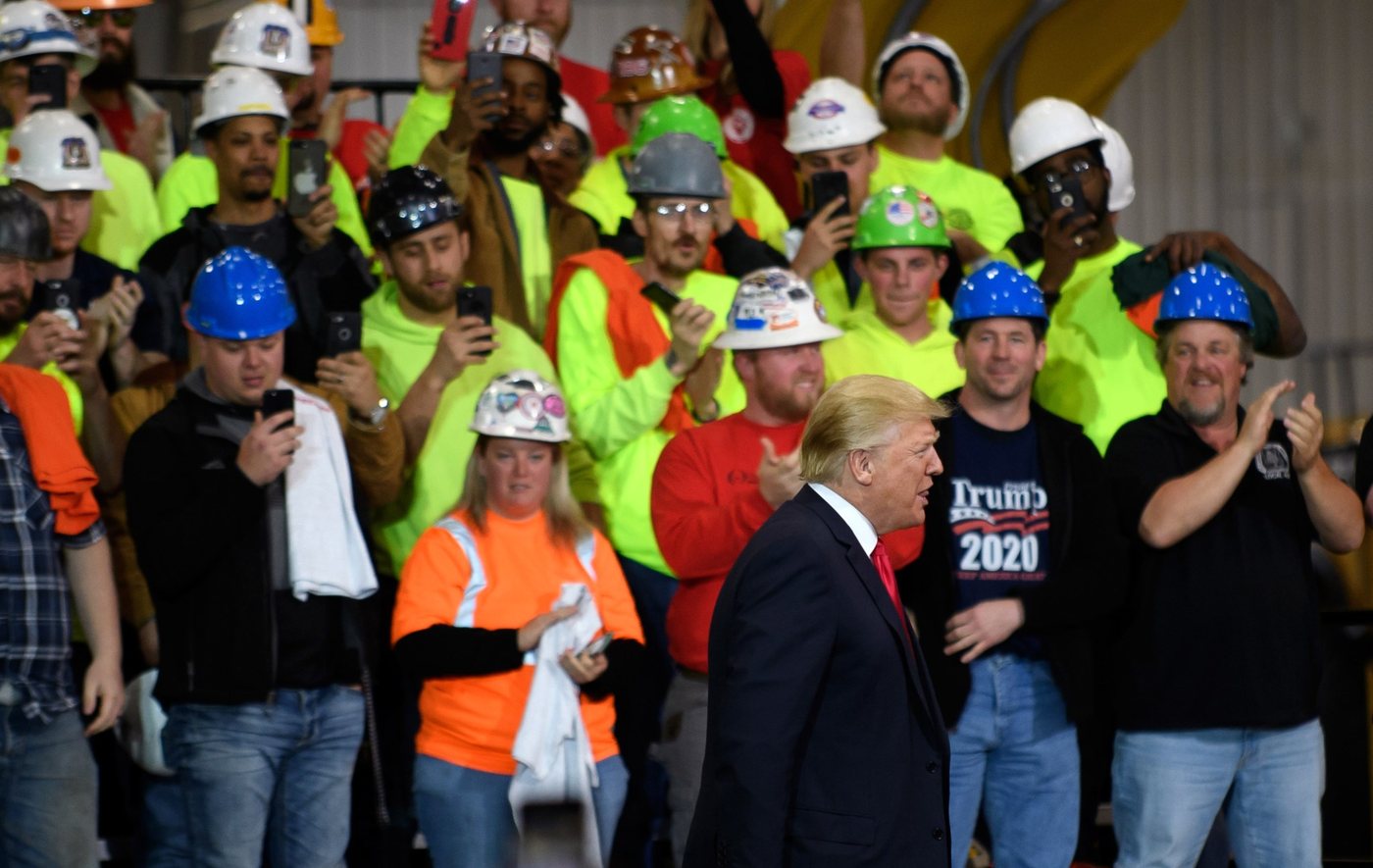
Union households are emerging as a decisive voting bloc ahead of November's midterm elections, with recent polling suggesting President Donald Trump's support among these voters is eroding as manufacturing job losses and inflation weigh on blue-collar communities. The stakes are particularly high in Michigan, Pennsylvania and Nevada, three swing states where union membership exceeds the national average of 10% and where closely contested House and Senate races could hinge on even a small shift in union support.
The economic backdrop is sobering. The U.S. economy has lost 75,000 manufacturing jobs since January 2025, a 0.6% decline, according to federal data. While this sector has been shrinking since the 1980s, the losses under the current administration are politically significant given Trump's 2024 campaign promises to bring back manufacturing jobs and reduce consumer prices. Food prices in July 2026 were up 3.0% from a year earlier, according to the U.S. Department of Agriculture, a rise slightly above the historical average. Gasoline prices also remain elevated, adding to household strain.
Labour market analysts caution that even a manufacturing revival may not translate into substantial job creation. Moody's financial analyst Mark Zandi noted in July 2026 that increased manufacturing output "doesn't translate into jobs," pointing to growth in the tech and defence-aerospace sectors where "these factories just don't employ a lot of people." Economist Laura Veldkamp observed that Trump's tariffs have "made it more profitable for American manufacturers to set up and produce here," but the adoption of advanced manufacturing technologies tends to reduce the need for workers, limiting the employment impact.
The erosion of union support reflects broader dissatisfaction with the administration's economic record. Union membership in the U.S. has fallen from 20.1% of workers in 1983 to 10.0% in 2025, representing 14.7 million people. Public sector workers are unionised at a rate of 32.9%, more than five times higher than the 5.9% rate among private sector workers. This disparity matters politically because the administration's actions on federal labour relations have been particularly contentious.
The White House has pursued a dramatic overhaul of public sector collective bargaining. A March 2025 executive order, supported by guidance from the U.S. Office of Personnel Management, directed federal agencies to end their collective bargaining agreements. The American Federation of Government Employees condemned the move, telling members in an email that the administration was "illegally stripping collective bargaining rights from hundreds of thousands of federal workers." The roughly 400,000 federal job cuts during Trump's second term have disrupted lives, with many of those positions previously represented by labour unions.
Federal unions have challenged the executive order in court. In 2026, independent arbitrators ruled against the administration's efforts to circumvent labour agreements with some federal workers, and in June 2026 a federal judge in Massachusetts struck down an attempt to exercise control over union elections at federal agencies. Whether unionised industrial workers will stand with their public sector counterparts remains an open question.
Historical patterns suggest union members have predominantly sided with Democratic candidates, though support has wavered since the 1970s. The 2024 presidential campaign followed this trend, with a majority of union members voting Democratic but at a far lower rate than in the 1960s. Generational anger over the industrial collapse of the 1970s and 1980s, particularly among older blue-collar workers across New England, the Great Lakes, Ohio and western Pennsylvania, remains a powerful undercurrent that analysts say polls struggle to measure.
As Labor Day gatherings give way to campaign season, the candidates offering practical ideas for economic recovery and showing empathy for workers struggling to pay bills are likely to capture the bulk of the union vote. With control of both chambers of Congress potentially at stake, the president's performance on manufacturing, inflation and workers' rights in the eyes of union households may well determine the political landscape for the remainder of his term.
52