

Politics 6 min read By Alice Ashford
Trump claims China accessed 220 million US voter files in primetime election address
President Donald Trump used a primetime televised address to allege that China infiltrated 220 million voter files and that a 'deep state' plot covered up foreign interference in the 2020 election, sparking immediate criticism from opponents who called the claims unsubstantiated and a diversion ahead of the midterm elections.
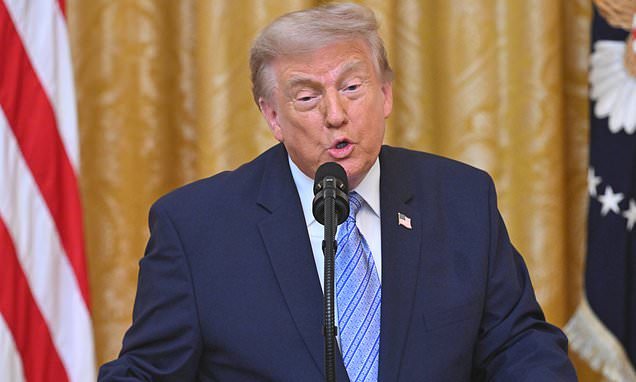
President Donald Trump delivered a primetime televised address on Thursday in which he accused China of accessing 220 million US voter files and alleged that a so-called «deep state» conspiracy concealed foreign interference in the 2020 election. Speaking from the East Room of the White House, Trump cast sweeping doubts on the integrity of the American electoral system, describing it as «catastrophically» short of the standards of fairness and trust required for a functioning democracy.
The 25-minute speech, which had been heavily promoted by the president himself, focused on his long-standing refusal to accept his defeat to Joe Biden. Trump claimed that he had declassified documents proving that Beijing attempted to «undermine» the 2020 election and that elements within the US intelligence community had covered up the alleged meddling. He pointed the finger at the «deep state» for what he described as a coordinated effort to suppress evidence of foreign interference.
Opponents immediately dismissed the address as a smokescreen designed to divert attention from the upcoming congressional midterm elections. Critics warned that Trump was using the platform to sow distrust in the electoral process and to pressure Congress into passing the restrictive SAVE America voter identification bill, which would impose stricter voting requirements nationwide. The bill has been a priority for the president and his allies, who argue it is necessary to prevent voter fraud, though opponents say it would disproportionately disenfranchise minority and low-income voters.
The president’s allegations were met with widespread skepticism from election security experts and former intelligence officials. No evidence has been publicly provided to support the claim that China accessed 220 million voter files, and US intelligence agencies have consistently stated that the 2020 election was the most secure in American history. Trump’s address did not include any new declassified documents, and the redacted materials he referenced have not been independently verified.
During the speech, Trump also railed against the US intelligence community, accusing it of failing to protect the electoral system from foreign adversaries. He claimed that China had engaged in «sinister election meddling» and that the «deep state» had actively worked to hide this from the American public. The president’s remarks echoed many of the unsubstantiated conspiracy theories that have circulated since his 2020 defeat, including allegations of widespread voter fraud that have been repeatedly rejected by courts and state election officials.
Democratic leaders and voting rights advocates condemned the address as a dangerous escalation of Trump’s attacks on democratic institutions. Senate Majority Leader Chuck Schumer called the speech «a blatant attempt to undermine confidence in our elections for political gain,» while the American Civil Liberties Union warned that the president’s rhetoric could lead to increased harassment of election workers and voters. Several Republican lawmakers, however, defended the president’s right to raise concerns about election security, though few explicitly endorsed his specific claims.
The address comes at a critical moment for Trump, who faces mounting legal challenges and a fiercely contested midterm campaign. His party is hoping to regain control of both chambers of Congress, and the president has made election integrity a central theme of his political messaging. The SAVE America bill, which would require proof of citizenship to register to vote and limit mail-in voting, has become a rallying point for conservative voters but faces strong opposition from Democrats and civil rights groups.
International reaction to the speech was muted, with Chinese officials dismissing the allegations as baseless. Beijing has consistently denied any interference in US elections, and the Chinese foreign ministry reiterated that it respects the principle of non-interference in other countries’ internal affairs. The lack of concrete evidence presented by Trump has led many analysts to view the address as a political maneuver rather than a genuine security warning.
Election security experts have cautioned that the president’s unsubstantiated claims risk further eroding public trust in the democratic process. A 2025 Pew Research Center survey found that only 54% of Americans expressed confidence in the accuracy of the 2024 election results, a figure that has declined steadily since Trump’s first term. The president’s primetime address is likely to deepen partisan divides over election integrity, with Republicans increasingly skeptical of the electoral system and Democrats defending its robustness.
As the midterm elections approach, the debate over voting access and election security is expected to intensify. Trump’s speech has set the stage for a contentious campaign season, with both sides mobilizing around competing narratives of fraud and voter suppression. Whether the president’s allegations will gain traction with the broader electorate remains uncertain, but his ability to command a primetime platform ensures that the issue will remain at the forefront of national political discourse.
94