Politics 7 min read By Callum Montgomery
Serbia’s Ukraine energy aid shows how Belgrade is balancing Brussels and Moscow
A €2 million transformer package gives Serbia a concrete role in Ukraine’s civilian recovery while Belgrade continues to reject EU sanctions on Russia and preserve Russian energy ties.
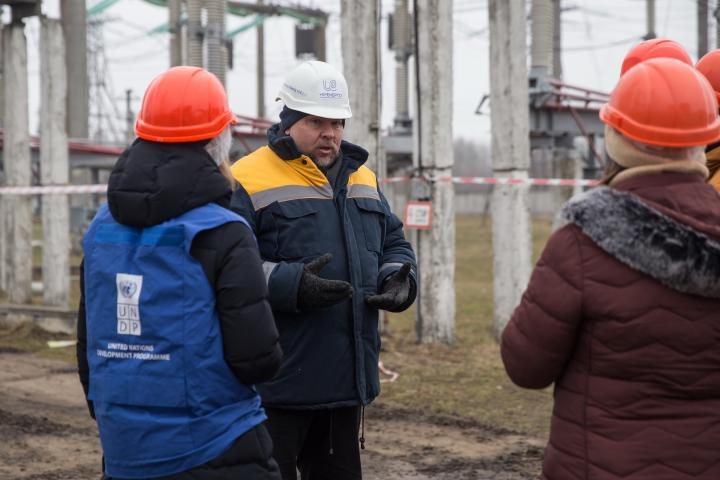
Serbia’s €2 million contribution to Ukraine’s energy recovery is financially modest but institutionally revealing. The package, agreed with the United Nations Development Programme on April 3, 2026, finances high-voltage transformers for Ukraine’s damaged transmission grid.
On its face, the arrangement is a technical procurement project. Politically, it is an example of how Belgrade is trying to participate in European support for Ukraine without fully aligning its foreign policy with the European Union.
Serbia is an EU candidate country. It has also maintained close relations with Russia, declined to join the EU’s sanctions regime and preserved significant Russian links in its energy sector. In June, Serbia’s energy ministry again described Russia as a longstanding partner after talks involving Gazprom and future gas supply.
Yet Serbia is not standing entirely outside the European response to the war. The UNDP agreement provides civilian assistance with a measurable outcome: high-voltage transformers intended to restore electricity transmission capacity and support stable power supplies for millions of Ukrainians.
That specificity matters because power transformers are strategic infrastructure rather than generic aid. The U.S. Department of Energy describes large power transformers as expensive, difficult to transport and usually custom-built, with procurement lead times of at least a year in many cases. A major transmission substation cannot simply substitute a portable generator for a destroyed transformer.
UNDP links the Serbian-financed equipment to essential services, including hospitals, schools, homes, water and heating. The April announcement also placed the work in the context of preparation for the next heating season.
The scale of Ukraine’s energy challenge makes Serbia a minor donor in financial terms. UNDP cited an $88.2 billion estimate for total energy-sector losses in the Fifth Rapid Damage and Needs Assessment, including about $17.1 billion in the electricity subsector. The European Commission has separately announced roughly €922 million for Ukraine’s energy system for the 2026-27 winter.
In June, European and Ukrainian institutions appealed for another €650 million for the Ukraine Energy Support Fund. These figures show why a wider donor base matters: reconstruction is too large and too continuous to rely on a handful of major governments.
Serbia’s role is particularly interesting because it demonstrates that support can be modular. Belgrade can fund transformers through a UN mechanism without changing its sanctions stance or severing Russian energy ties. That may fall short of the foreign-policy alignment Brussels wants from an EU candidate, but it still creates a practical channel through which Serbia contributes to Ukrainian resilience.
The tension became more visible during President Volodymyr Zelenskyy’s first official visit to Serbia in August. Talks covered EU integration, economic cooperation, security and bilateral relations. Serbian leaders continued to signal that their basic sanctions policy toward Russia had not changed.
From Brussels’ perspective, this duality is central to Serbia’s accession problem. EU membership involves progressive alignment with common foreign and security policy. Assistance to Ukraine demonstrates some convergence in practice, but it does not erase major differences over Russia. The transformer project therefore offers evidence of cooperation, not proof of full strategic alignment.
For Kyiv, the incentive structure is different. Ukraine benefits from expanding cooperation even with countries that are not fully aligned on sanctions, particularly when that cooperation produces hard assets for critical infrastructure. A transformer installed in the grid has value regardless of the donor’s broader diplomatic ambiguity.
The timing of the agreement also matters strategically. A large transformer can take a year or more to procure, meaning civilian resilience depends on commitments made well before a crisis peaks. In that sense, the April agreement belongs to long-cycle infrastructure planning rather than short-term winter relief alone.
There is also a strategic message for other non-core donors. Ukraine’s reconstruction does not require every state to begin with a multibillion-euro commitment. Targeted procurement through established institutions can create lower-risk entry points for countries that want to support civilian recovery while limiting the domestic political cost of a larger alignment.
The Serbian package should therefore not be overstated as a geopolitical breakthrough. It does not signal a Serbian break with Moscow, nor was it a new decision reached during Zelenskyy’s August visit. It is better understood as a concrete instrument inside Belgrade’s balancing strategy.
The same precision applies to the technical claim. UNDP describes transformer procurement and support for affected areas; it does not describe the €2 million as a broad program for unspecified reserve generation. Keeping that distinction clear prevents a modest infrastructure project from being inflated into a larger policy shift than the evidence supports.
Serbia’s strategy remains unstable by design: it wants the benefits of closer European integration, continued room for Russian ties and a functional relationship with Ukraine. The €2 million transformer agreement is one of the clearest examples of how that balance is being translated from rhetoric into a limited but measurable policy action.
46