Politics 5 min read By Arthur Ellington
Senior Republican senator questions legality of Trump's Russian diesel deal
A prominent Republican senator has said President Donald Trump's agreement to buy diesel from Russia may be illegal, raising fresh questions about a deal that already faces scepticism over its likely impact on fuel prices.
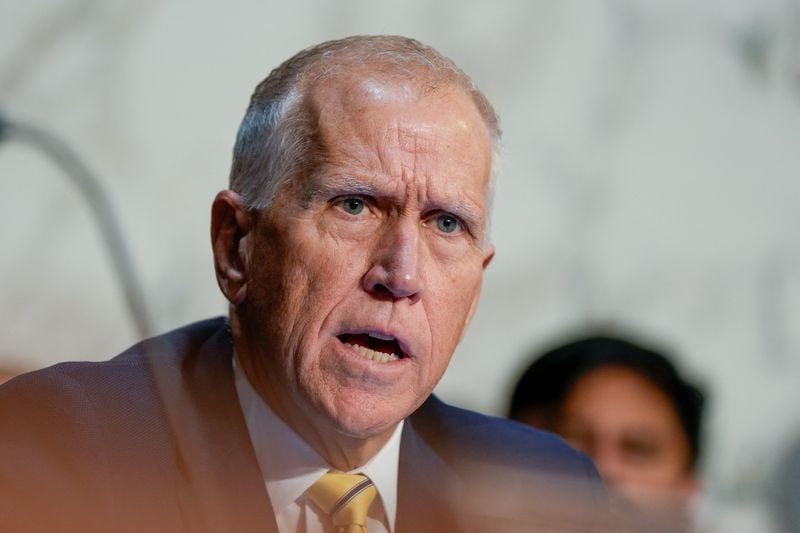
A senior Republican senator has said that President Donald Trump's agreement to purchase diesel from Russia may be illegal, adding a political and legal dimension to a deal that was already drawing scrutiny over its limited likely effect on fuel costs.
The intervention from within the president's own party underscores the unease the arrangement has generated in Washington, coming just weeks after Trump signed a sweeping sanctions law that imposes steep tariffs on the largest buyers of Russian energy. The deal, announced by Trump on Friday, would see Russia supply more than 300,000 tons of diesel immediately, followed by an additional 500,000 tons in November and 1 million tons shortly afterwards. A further 3 million tons would follow within a short period, according to the president.
The timing has surprised observers because it represents a sharp reversal from years of US pressure on Moscow over its invasion of Ukraine. Trump had also signed an executive order on Monday deferring the 24-cent federal tax per gallon on diesel until the end of the year, although most states levy their own separate duties on the fuel.
Diesel prices have retreated from record highs in recent weeks but remain historically elevated. The national average stands at about $6.277 per gallon, down from a peak of $6.528 but still 71 per cent higher than a year earlier. US crude oil, by contrast, is up 56 per cent over the same period, reflecting damage to refining capacity in the Middle East and Russia that has produced a sharper squeeze in fuel markets than in crude.
Because diesel is a critical input for manufacturing, agriculture and logistics, the price surge has been felt across the economy. Recent consumer and producer price indexes showed jumps in transportation costs, while purchasing manager surveys signalled large increases in the prices businesses are paying. Amrita Sen, director of market intelligence and co-founder at Energy Aspects, wrote in the Financial Times that diesel and gasoline, rather than crude oil, are ultimately driving inflation. She noted that since May, 10-year US Treasury yields have correlated more closely with diesel prices than with crude prices for the first time on record.
That relationship helps explain why the administration has turned its attention to bringing down diesel costs. But energy analysts and industry groups have questioned whether either measure will deliver meaningful relief. Farmers and truckers have said the executive order on the federal diesel tax will offer little help, particularly given that per-gallon prices are $2.60 higher than a year ago while the federal tax amounts to just 24 cents.
Michael Lynch, a distinguished fellow at the Energy Policy Research Foundation, told the Associated Press that the Russian supply deal was unlikely to make much of a dent either. He described it as «kind of shuffling deck chairs on the Titanic», arguing that if the US takes Russian diesel, Moscow's existing customers will simply have to look elsewhere, leaving the global price broadly where it is now.
The political backdrop is equally difficult. With midterm elections approaching, affordability has become a potent issue, yet polling suggests that falling fuel prices may not translate into gains for Republicans. A new Politico poll found that just 10 per cent of undecided voters said they would be more likely to vote Republican if petrol prices fell by $1 a gallon, against 29 per cent who said it would have no impact and 57 per cent who did not know. Responses were similar when voters were asked how an end to the Iran war and a sharp drop in inflation might affect their choices.
One Republican operative working on battleground races told Politico that there was little the president could do to change the dynamic, adding that even if he acted, voters were unlikely to believe it at this stage. The senator's suggestion that the Russian diesel arrangement may be illegal now adds a further layer of uncertainty to a policy that was already struggling to convince markets, industry and voters alike.
4