Politics 4 min read By Arthur Ellington
Russia’s Drone Network Raises the Cost of NATO Air Defence
The sites primarily expand Moscow’s ability to strike Ukraine, but their dual-use strategic value forces NATO to spend more on detection, air defence and infrastructure protection.
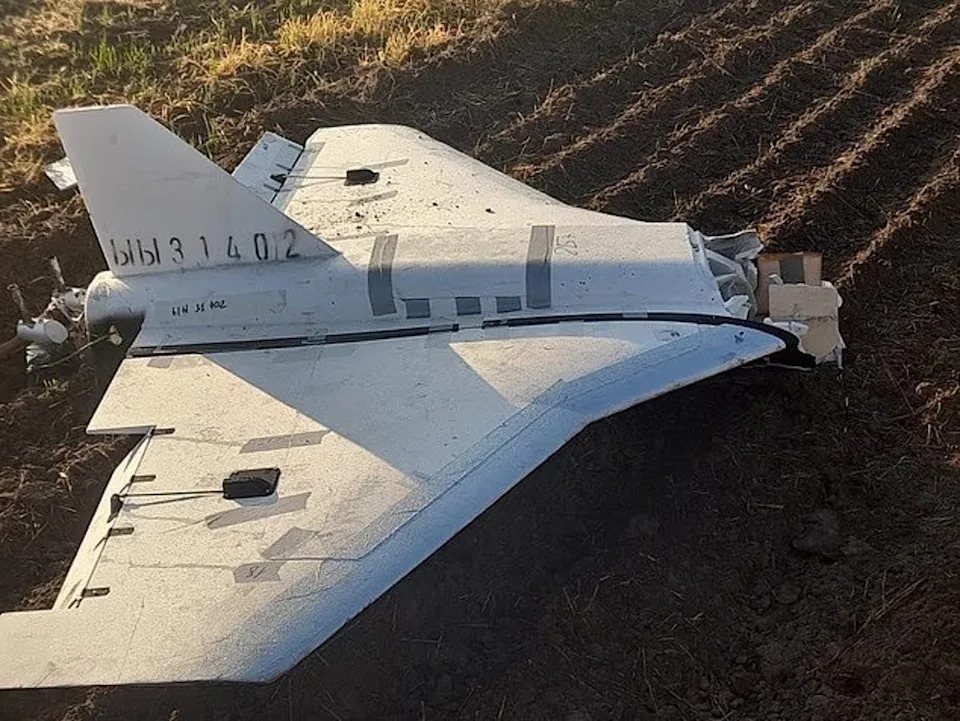
Russia’s expansion of long-range drone launch infrastructure is a military development with an economic and institutional consequence for NATO: the Alliance must now plan against a larger, more dispersed set of potential launch options even when there is no evidence of an imminent attack on Allied territory.
Satellite-image analysis cited by The War Zone and the Institute for the Study of War has identified at least 10 Russian sites with newly built or expanded launch infrastructure near Ukraine and Belarus. Open-source tracking indicates that seven of those sites have already been used in attacks on Ukraine. The immediate logic is therefore clear. Moscow is increasing the resilience and volume of its strike architecture for the war it is already fighting.
That makes one claim too categorical: the facilities are not proven to exist solely for attacks on NATO. ISW’s assessment is that the most immediate purpose is to support larger, more distributed Russian drone salvos against Ukraine. The same infrastructure, however, has strategic value beyond that battlefield because long-range systems deployed in western Russia can also place more NATO territory under potential threat.
For Allied governments, this is a classic problem of dual-use military capacity. They cannot wait for proof of intent before investing in defenses. A NATO official said the Alliance is closely monitoring Russian long-range strike capabilities and has the plans, authorities and forces needed to defend Allied territory. On Aug. 12, NATO also condemned recent Russian airspace violations affecting Poland and Romania and said it was strengthening integrated air and missile defenses along the eastern flank.
The cost is not limited to interceptors. Reuters reported that Poland and the Baltic states are hardening critical infrastructure after allied intelligence warnings that Russia could consider staged or false-flag drone incidents. The scenarios described by officials included the possible use of Ukrainian-made or captured drones to blur responsibility. Those warnings do not amount to evidence that an operation has been approved, and the Kremlin dismissed them as scare stories.
U.S. intelligence assessments reported by CNN add a longer-term strategic layer. They consider it possible that Vladimir Putin could test NATO cohesion with a limited attack in the coming years, from cyber activity to a small incursion. They do not identify an imminent strike on Poland.
The result is an asymmetric spending challenge. Relatively dispersed drone infrastructure can force governments to invest in sensors, command networks, counter-drone systems, hardened energy assets and air-defense coverage across a much larger area. Russia’s network is already useful against Ukraine; its value as a tool of coercion comes from the fact that NATO must prepare for what it might enable next. That is why the infrastructure matters even without a confirmed plan to use it against the Alliance.
74