Politics 3 min read By Alice Ashford
Republicans redrew maps in North Carolina and Ohio but may lose their edge in 2026
Republican gerrymanders in North Carolina and Ohio were designed to lock in a large share of House seats, but a Democratic-leaning wave in the 2026 midterms has undercut the strategy in several districts.
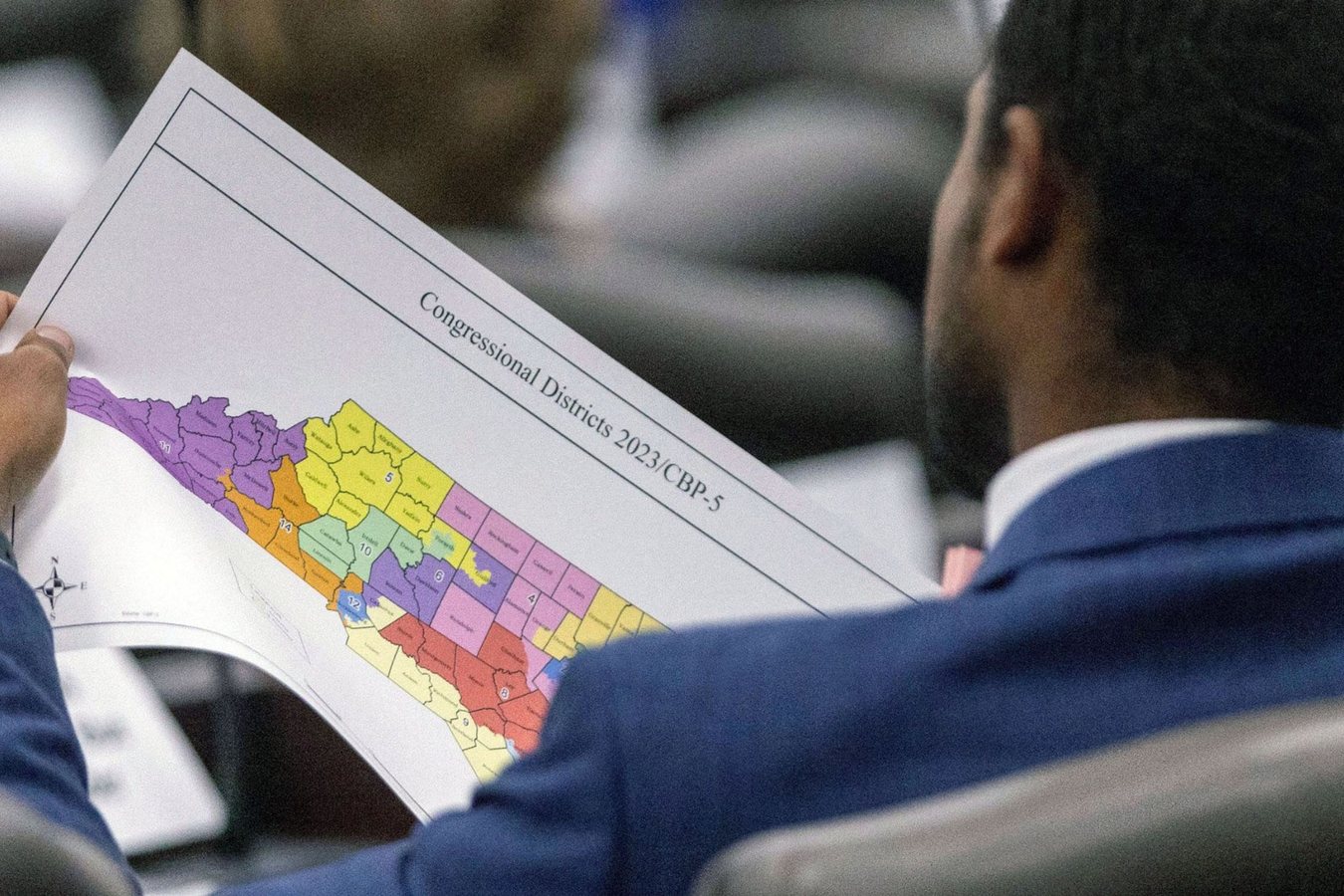
Republican mapmakers redrew congressional districts in North Carolina and Ohio in 2025 to secure a larger share of House seats, but a strong Democratic showing in the 2026 midterms has left those gains in doubt. In North Carolina, 11 of the 14 new districts were designed to favour voters who backed Donald Trump in 2024, and the Republican delegation was expected to win nearly two-thirds of the seats. Instead, the party now appears poised to hold less than a third.
Ohio followed a similar pattern. Of the 15 districts redrawn there, 12 were built to favour Trump voters, with the aim of giving Republicans a delegation of roughly two-thirds. Under the results now emerging, the state's Republican share will fall short of half. Democrats won a number of seats that Trump carried, some by double-digit margins, a pattern that analysts describe as a dummymander, in which a gerrymander backfires when a wave favours the opposing party.
The tactic was not confined to those two states. Republicans also redrew maps in Texas, Florida and Alabama, targeting nine Democratic seats along with the seat held by Representative Shomari Figures. Trump-won districts created there lost much of their advantage in the wave, and the Republican delegations in those states are likely to remain roughly the same size. Shifts among Hispanic voters in Texas and Florida helped Democrats hold several of the seats they had been expected to lose.
Democrats responded with their own redistricting push. A Democratic map in California was projected to give Republicans about 8 per cent of the state's seats, even though the party holds roughly 30 per cent of the statewide vote. A comparable effort in Virginia failed. Several Republican initiatives also ran into legal and political obstacles. Courts struck down gerrymanders in Missouri and Utah, and Trump-backed maps in Indiana and South Carolina failed in state legislatures. Cook Political Report had estimated that those maps could have cost Republicans as many as six and eight seats respectively.
The result in Tennessee's 9th District illustrates how narrow some margins have been. Republicans held the seat by about 2,500 votes. The wider picture is shaped in part by a recent Supreme Court ruling in Louisiana v. Callais, which eases the path for race-based redistricting without court intervention. Future Republican maps may dilute majority-Black districts that are no longer shielded by the Voting Rights Act, and Democratic states are likely to pursue their own redistricting over the next two years.
Source: fortune.com
5