Politics 9 min read By Arthur Ellington
Putin’s protection service is also an institution of power
The machinery around Vladimir Putin does more than keep a president physically safe. It protects communications, controls access and has helped shape careers at the top of the Russian state.
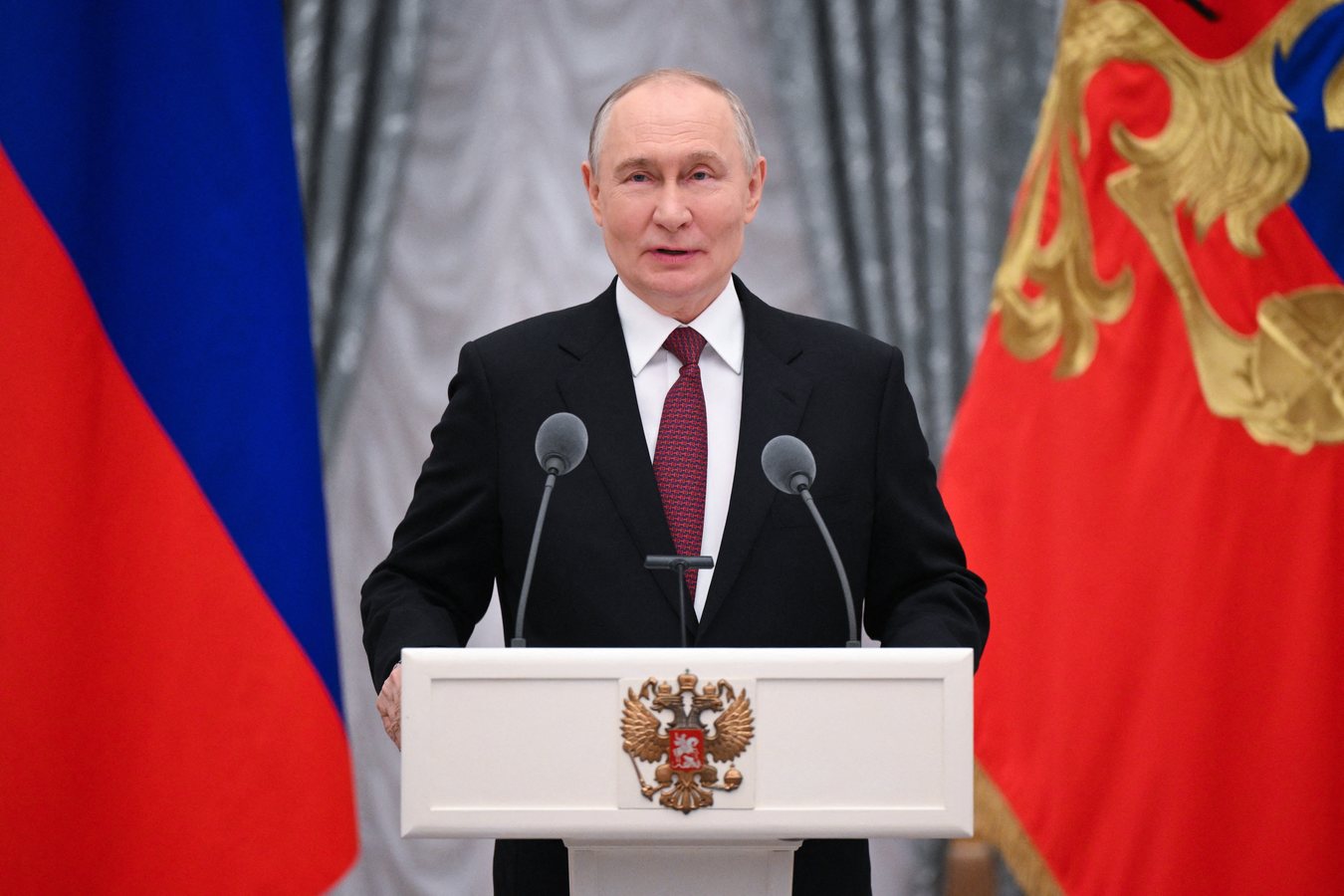
A presidential protection service can look, from the outside, like an unusually elaborate security contractor: guards, armoured transport, secure rooms and a controlled perimeter. Russia’s system around Vladimir Putin is better understood as something more consequential — an institution embedded in the architecture of executive power.
An exclusive investigation by The Bizzi Route assembled the public record around that system. The most revealing conclusion is not about any particular bodyguard or vehicle. It is that the Federal Protective Service, or FSO, is designed to protect both the president as a person and the presidency as a functioning command centre.
That distinction matters for anyone trying to understand how power works in Moscow. The same institution that protects access to Putin also has formal responsibilities for secure presidential communications, protected facilities and elements of the president’s daily logistical environment. Its remit reaches beyond close protection into the infrastructure that lets the head of state continue governing under threat.
A security service built into executive continuity
The FSO is a federal executive body overseen by the president. Its official tasks include identifying and preventing threats to protected people, protecting designated sites, operating special communications and participating in counterterrorism.
Presidential regulations make the everyday reach of that mandate unusually clear. Within its authority, the service is assigned not only personal protection but also transport, household support and safe food for the president and other protected persons.
Those responsibilities turn mundane logistics into state-security functions. A meal is not merely catering if the state formally treats its safety as part of presidential protection. Transport is not simply a matter of moving a passenger if the passenger is the constitutional centre of executive authority. Communications are not merely IT if they must remain available and protected when the leader is isolated by disease, conflict or a security alert.
Russia’s 2015 rules on special government communications reinforce that point. They define protected presidential communications as a category serving the president’s constitutional powers, and the FSO has a dedicated Special Communications and Information Service.
Institutionally, then, the FSO occupies a space where physical protection, information security and continuity of government meet.
The Soviet inheritance survived the Soviet state
The organisation also carries a long institutional memory. The FSO’s own history traces its lineage through the Soviet KGB’s Ninth Directorate, which protected senior leaders, and through the rapidly changing protection structures of the early post-Soviet period. The modern FSO dates to 1996.
That continuity does not mean the organisation is unchanged. Secure communications were consolidated into the modern structure in the 2000s, and the threat environment has evolved dramatically. But the basic idea — that the leader’s security deserves a specialised state apparatus with privileged access and its own institutional culture — survived the fall of the Soviet Union.
That history helps explain why protection work can carry political significance beyond security itself.
Proximity can become a career asset
Two prominent examples illustrate how service near the president can intersect with the wider elite.
Viktor Zolotov, now director of Russia’s National Guard, led the Presidential Security Service from 2000 to 2013, according to Rosgvardiya. Alexei Dyumin, now a presidential aide and secretary of the State Council, served in the FSO from 1996 to 2013; Reuters has reported that he worked in Putin’s bodyguard service beginning in 1999.
Neither career can be reduced to bodyguard work. Both men went on to hold roles with far wider state responsibilities. But their trajectories demonstrate a structural point: an organisation built around trust, discretion and access to the head of state can also become a reservoir of politically valuable personnel.
In highly centralised systems, proximity itself is a form of institutional capital. The people trusted to stand closest to the leader may accumulate relationships and credibility unavailable to officials who encounter the presidency only through formal bureaucracy.
Protection increasingly means managing access
The Covid-19 pandemic made this visible in an unusual way. A disinfection tunnel for visitors to Putin’s Novo-Ogaryovo residence was reported in 2020. In 2022, the Kremlin said French President Emmanuel Macron was seated at a conspicuous distance from Putin after declining a Russian Covid test.
Those images were widely read as diplomatic symbolism. They were also examples of a protection system modifying political access in response to a biological threat.
The same principle applies to other risks. When a threat is assessed as serious enough, the system can influence who meets the president, under what conditions and how much physical proximity is allowed. It can also shift political activity toward protected communications rather than face-to-face contact.
This is where security becomes relevant to governance. Every protective layer that reduces uncontrolled exposure may also increase mediation around the decision-maker.
The wartime threat model is broader
The war in Ukraine has added new pressure. In May 2023, Russia said two drones targeted the Kremlin and described the incident as an attempt to assassinate Putin; Ukraine denied responsibility, and Putin was not in the Kremlin at the time.
By May 2026, the Kremlin was publicly acknowledging additional security measures around Putin for Victory Day events. The Financial Times separately reported that the FSO had tightened protection more broadly amid concerns over assassination and drone attacks, with more restrictive access and fewer visits. Many details in that report have not been publicly confirmed by the Kremlin.
Still, the institutional consequence is visible even without operational detail. A modern protective service must think beyond the classic close-range threat. Drones, long-range strike capability, communications security, insider risk and the resilience of government facilities all widen the perimeter conceptually, even when the exact countermeasures remain secret.
Why the opacity matters
The FSO’s public documents are strikingly clear about responsibilities and strikingly quiet about tactics. That is not an accident. A protection service gains little from publishing exact routes, formations, response times, venue procedures or technical countermeasures.
For analysis, the more durable facts are the institutional ones. The FSO protects a leader who is also a command node. It therefore sits at the intersection of personal safety, communications, access and continuity.
That makes Putin’s protection system relevant well beyond the world of executive security. It is part of the machinery through which the Russian presidency controls its environment — and, in some cases, part of the pipeline through which trusted insiders move into positions of greater political authority.
The tighter the system becomes, the more important its second-order effects may be. Security can preserve the leader’s ability to act. It can also narrow the circle through which information, people and unscripted reality reach him. In a political system already organised around one dominant presidency, that trade-off is itself an issue of power.
71