Politics 6 min read By Bethany Hadley
Paul Biya’s Geneva stay exposes Cameroon’s succession risk
The 93-year-old president is still exercising power from Switzerland, but an unfilled vice presidency and four decades of personalised rule are turning a long trip into an institutional test.
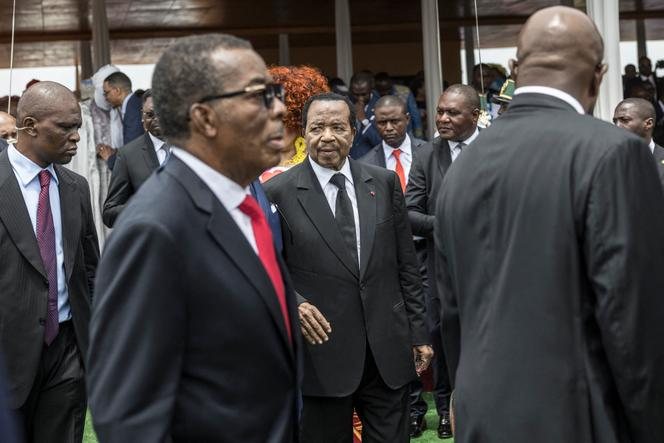
Paul Biya’s extended stay in Geneva is becoming a test of Cameroon’s political architecture rather than merely an episode in a veteran leader’s travel schedule. The 93-year-old president left Yaounde on 7 June for what his office called a “brief private stay in Europe.” More than two months later, the government says he remains in Switzerland and continues to work, while no official return date has been published.
The distinction matters. Biya is not missing in the literal sense: the Cameroonian government has confirmed Geneva as his location. The uncertainty lies in the duration and in the absence of a recent independently verified public appearance. That is enough to create a governance problem in a state where the presidency has been occupied by the same man since 1982 and where the transition beyond him remains largely untested.
Officials insist that executive capacity has not been impaired. Communications Minister Rene Emmanuel Sadi has said Biya is in good health and working from Geneva. State documents are said to continue reaching him. In early August, he reshuffled the senior military command, replacing the commanders of four of Cameroon’s five joint military regions and promoting senior officers. That is a substantial exercise of presidential authority from abroad.
The more dramatic health claims remain unverified. Media reports have cited sources alleging hospital treatment or surgery in Switzerland. Cameroon’s government formally denied that Biya had been admitted to a medical facility, and the head of his civil cabinet told Le Monde that the president had neither been hospitalised nor operated on. For institutions and markets, the responsible position is therefore to treat medical claims as disputed and focus on observable governance signals.
Those signals reveal a structural weakness. Cameroon’s constitution does not prescribe a precise maximum period for a president to remain overseas. Meanwhile, constitutional changes in April restored a vice-presidential office intended to strengthen the succession framework. Biya has yet to appoint a vice president. The country therefore has a newly designed contingency mechanism but no person occupying its most important new post.
Opposition parties have described the situation as “autopilot,” “remote control” and an “institutional vacuum.” Those are political judgments, not findings that executive authority has legally lapsed. Yet they point to a real question familiar to businesses and governments alike: continuity is not the same as resilience. A system can continue processing decisions while remaining vulnerable if authority is concentrated and succession procedures have never been tested.
Cameroon’s economic position gives that question regional significance. It is Central Africa’s largest economy and an important commercial hub, but it faces stagnation, weak infrastructure and limited employment prospects for a rapidly growing young population. Political uncertainty does not automatically translate into a measurable market loss. It does, however, enter the risk calculation around long-term capital, large infrastructure projects and contracts that depend on stable institutions.
The security environment intensifies the need for clarity. Boko Haram remains active in the north, while the conflict between the state and Anglophone separatists continues in the west. Biya’s military reshuffle demonstrates that national-security decisions are still being taken. At the same time, it reinforces the highly centralised nature of the presidency: even from Geneva, the 93-year-old leader remains the pivotal authority over strategic appointments.
Biya’s political longevity is itself part of the institutional risk. A 2008 constitutional amendment removed term limits, and he began an eighth term in late 2025 after a disputed election. More than 70% of Cameroon’s nearly 30 million people are under 35. Most have no lived experience of a presidential transition. For a country with such a young demographic profile, the absence of an established and publicly understood succession pathway becomes increasingly material.
The present controversy should therefore be read as a stress test. The government can point to signed decisions and continued administration as evidence that the system works. Critics can point to the unfilled vice presidency, the lack of a return schedule and minimal public visibility as evidence that it is too dependent on one person. Both observations can be true at once.
What would reduce the risk is not speculation about Biya’s health but greater institutional clarity: a transparent account of the president’s working arrangements, a credible succession chain and a timetable for filling the vice presidency. Until those pieces are in place, each additional week in Geneva will strengthen the perception that Cameroon’s greatest political exposure is not simply the age of its president, but the limited separation between the durability of the state and the durability of Paul Biya himself.
48