
Politics 6 min read By Alice Ashford
Nigel Farage faces humiliation as major parties boycott Clacton by-election
Nigel Farage's plan to force a by-election in Clacton has backfired after Labour, the Conservatives, Liberal Democrats, Greens, and the hard-right Restore party all announced they would boycott the vote, leaving the Reform UK leader politically isolated.
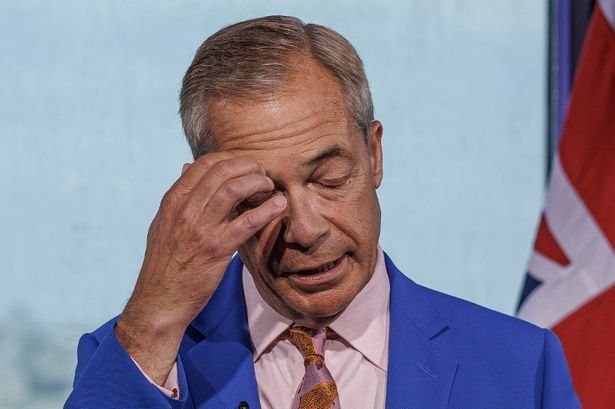
Nigel Farage has suffered a significant political setback after his attempt to trigger a by-election in his Clacton constituency backfired spectacularly, with all major political parties announcing they would boycott the vote. The move, widely described as a political stunt, was intended to force a fresh mandate for the Reform UK leader, but instead left him isolated as rivals refused to participate in what they called a cynical exercise.
Within hours of Farage announcing his resignation as MP for Clacton, Labour, the Conservatives, the Liberal Democrats, the Green Party, and even the hard-right Restore party all declared they would not field candidates in the resulting by-election. The coordinated boycott represents an extraordinary rebuke to Farage, who had hoped to use the contest to galvanise support for his party and draw attention away from ongoing scrutiny of his financial affairs.
The by-election was triggered after Farage resigned his seat in a surprise move that came amid a series of claims regarding his financial links and donations. Critics accused him of attempting to reset the political narrative and avoid accountability, but the boycott has left him facing a contest in which he may be the only major candidate, raising questions about the legitimacy and purpose of the vote.
Professor Sir John Curtice, Britain's leading polling expert, warned that Farage cannot simply withdraw his resignation now that the by-election has been set in motion. According to Curtice, the Reform UK leader is legally bound to follow through with the process, meaning he will have to contest a vote that his political opponents have deliberately rendered a one-sided affair. The situation, Curtice noted, leaves Farage in an awkward position, as he will either win a hollow victory or face the embarrassment of a low-turnout contest that fails to provide the political boost he sought.
The Clacton constituency, located on the Essex coast, was won by Farage in the 2024 general election with a majority of over 8,000 votes. The seat had previously been held by the Conservatives, and its loss was seen as a symbol of the Tories' decline in traditional strongholds. Farage's decision to resign so soon after winning the seat has been criticised as disrespectful to voters, who he had urged to support him on the promise of representing their interests in Parliament.
Political analysts have described the boycott as a rare display of cross-party unity against a figure who has long divided opinion. Labour sources said the party had no interest in legitimising what they termed a «vanity project», while Conservative officials argued that Farage had brought the situation upon himself by treating the electorate with contempt. The Liberal Democrats accused him of «playing games» with democracy, and the Greens said they would not waste resources on a contest that was never intended to be a genuine democratic exercise.
The Restore party, which shares some ideological ground with Reform UK, also joined the boycott, calling Farage's move a «stunt» that undermined public trust in politics. The decision by Restore to stand aside was particularly striking, as it suggested that even parties on the hard right were unwilling to be drawn into what they saw as a manufactured confrontation.
Farage has not yet commented publicly on the boycott, but allies have indicated that he remains determined to proceed with the by-election. However, the lack of opposition candidates means the contest will likely be a low-key affair, with Farage expected to retain his seat comfortably but without the drama and media attention he had anticipated. The episode has already been seized upon by critics as evidence that Farage's political influence is waning, and that his tactics are increasingly seen as outdated or counterproductive.
The by-election is expected to take place within the next few weeks, though no date has been set. Under electoral law, the writ for the by-election must be moved within three months of a vacancy arising. Given the boycott, the contest is likely to be one of the most unusual in recent British political history, with a single major candidate facing only minor or independent challengers, if any.
The affair has also reignited debate about the rules governing by-elections and whether they can be exploited for political advantage. Some commentators have called for reforms to prevent MPs from resigning shortly after being elected, arguing that the current system allows for manipulation. Others have defended Farage's right to seek a fresh mandate, though they acknowledge that the boycott has turned the process into a farce.
For now, Nigel Farage finds himself in a position he has rarely experienced: politically outmanoeuvred and with few options to salvage the situation. The by-election that was meant to reaffirm his authority has instead become a symbol of his isolation, as the major parties of Britain have united in a rare act of defiance against him.
92