Politics 3 min read By Callum Montgomery
Nicușor Dan says Romania's key financial challenge is tax collection
The Romanian president argues that spending cuts remain possible and that the country's main financial stake in the coming years is improving its tax collection rate.
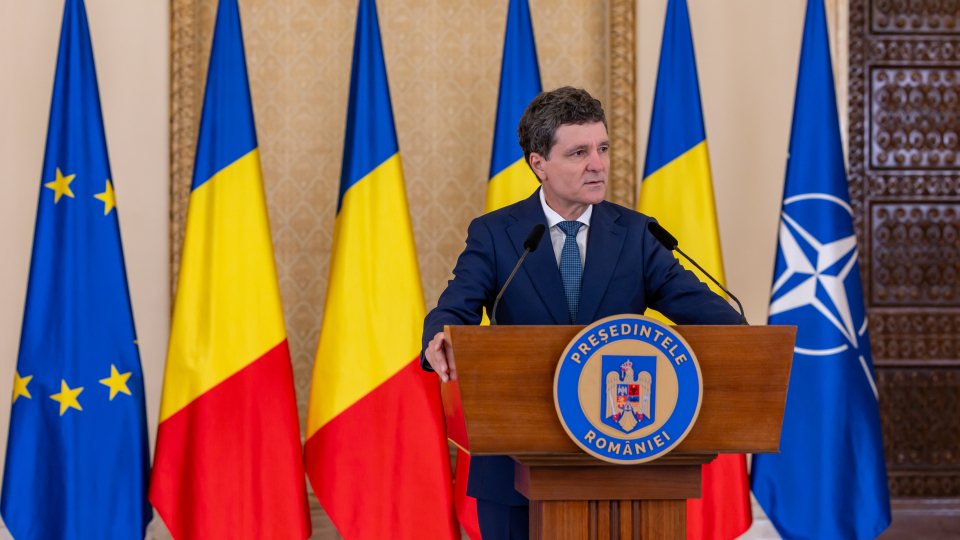
Romanian President Nicușor Dan has said that the country's main financial stake in the coming years is its tax collection rate, while arguing that the state still has many areas where spending can be reduced. Speaking in an interview, he said he sees no visible change yet in the small-spending segment that has long attracted public attention.
Dan cited the past two decades as an example, pointing to a long-running focus on public budget curbs such as flower beds and kerbs, which he said had not produced meaningful savings. He acknowledged that progress has been made on tax collection, but stressed that a great deal of work remains. Asked how he would respond if the government failed to cut spending, he did not present a specific sanction but framed the question as central to the country's fiscal path.
The president also addressed the wider fiscal context. He identified the deficit and heavy borrowing as the core imbalance in public finances, and said that the business sector and the population had borne the brunt of recent tax increases. He pointed to factors beyond the government's control, including a rise in global oil prices, interest rate increases and the impact of the war involving Iran, which he described as an external shock.
Dan also commented on the timetable for balancing the budget through tax measures. The horizon of July 2025 for what he called balanced tax measures was, he said, an estimate rather than a firm commitment. He described the process as one of ongoing adjustment rather than a single decision.
The remarks come after a period of fiscal tightening. The value added tax was raised from 19 per cent to 21 per cent under the government led by Prime Minister Ilie Bolojan in 2025. Separately, Dan said he had secured a pledge that VAT would not be increased before nominating Bolojan, and he said he had not made a VAT cut a condition for the nomination of Prime Minister Luca Niculescu. In a further comment, he addressed the risk of Romania returning to an International Monetary Fund programme, a scenario he discussed in the same interview.
In a related development, the national energy regulator ANRE approved a new billing methodology for prosumers who operate several sites. Under the rules, compensation will be monthly, with bills paid from the surplus generated at several sites. The regulator also said the changes would reduce bureaucracy for individual prosumers.
Source: economedia.ro
6