Politics 7 min read By Alice Ashford
Nicaragua’s Daniel Ortega says country will hold no more elections
Nicaraguan President Daniel Ortega has announced the country will not hold any further elections, vowing to work with the congress he controls to pass laws that would block the opposition from ever coming to power.
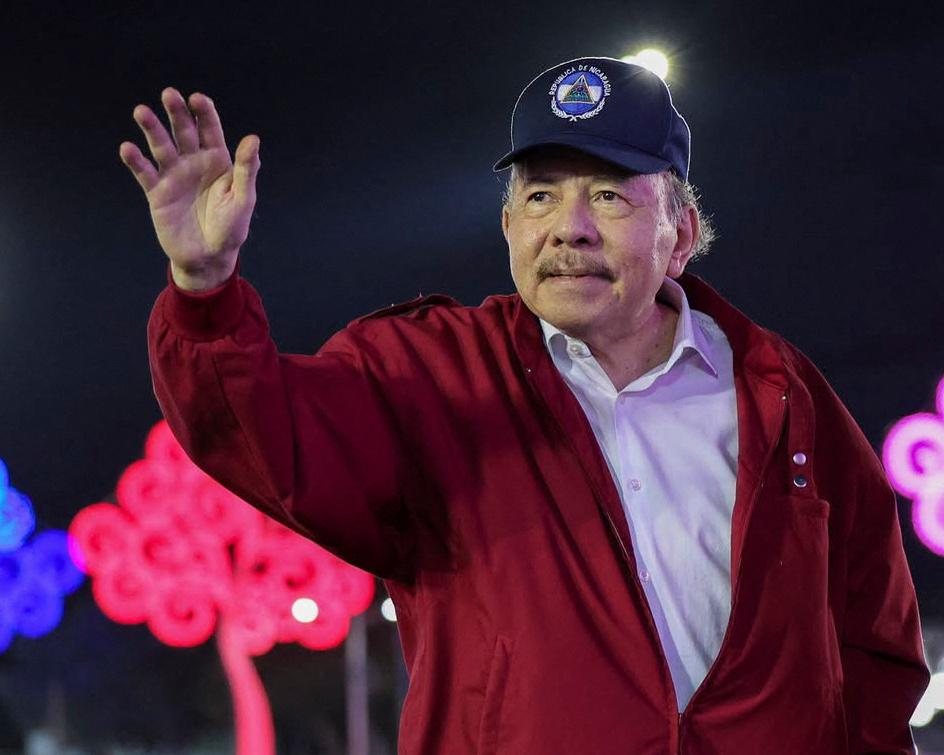
Nicaragua’s long-serving president, Daniel Ortega, has declared that the country will hold no more elections, a move that effectively eliminates any remaining democratic process in the Central American nation. The 80-year-old authoritarian leader, who has been in power since 2007, said the decision is intended to prevent the opposition from ever taking office. Ortega also announced he would work with the congress he controls to pass new laws that would “build a wall” against political opponents.
The announcement marks a dramatic escalation in Ortega’s consolidation of power, which has already seen the suppression of political dissent, the closure of independent media, and the imprisonment of opposition figures. In recent years, Nicaragua has been widely criticised by international human rights organisations for its crackdown on civil society and the exclusion of credible opposition candidates from elections. Ortega’s latest statement effectively ends any pretence of electoral democracy in the country.
Ortega, a former Marxist guerrilla who first led Nicaragua in the 1980s, returned to the presidency in 2007 and has since overseen a steady erosion of democratic institutions. His government has been accused of rigging elections, persecuting opponents, and using the judiciary to silence critics. The United States, the European Union, and several Latin American nations have imposed sanctions on Ortega’s inner circle in response to human rights abuses and anti-democratic actions.
The decision to abolish elections comes amid growing international isolation for Nicaragua. The country has faced increasing diplomatic pressure, with many nations recalling ambassadors or expelling Nicaraguan diplomats. Ortega’s government has responded by expelling foreign diplomats and withdrawing from international bodies, including the Organization of American States. The move is likely to deepen Nicaragua’s diplomatic and economic isolation, further straining its already fragile economy.
Opposition groups within Nicaragua have condemned the announcement, though their ability to organise or protest has been severely curtailed by government repression. Many opposition leaders have been arrested, forced into exile, or stripped of their political rights. The Catholic Church, which has mediated in past political crises, has also faced harassment and restrictions. The international community has largely condemned Ortega’s move, with human rights groups calling for renewed sanctions and diplomatic action.
The announcement has also raised concerns about the future of Nicaragua’s political stability and the well-being of its citizens. The country has experienced a severe economic downturn, exacerbated by political turmoil, the COVID-19 pandemic, and natural disasters. Many Nicaraguans have fled the country, seeking refuge in neighbouring Costa Rica and other nations. The abolition of elections is likely to accelerate emigration and further undermine public confidence in the government.
Ortega’s wife, Vice President Rosario Murillo, has been a key ally in his consolidation of power. She has taken on an increasingly prominent role in government, leading to speculation that she may be being positioned as Ortega’s eventual successor. However, the announcement that elections will no longer be held raises questions about any future leadership transition. Critics argue that the move is designed to ensure the Ortega-Murillo family retains power indefinitely.
The international response has been swift. The United States government has condemned the decision, with the State Department calling it “a brazen attack on democracy.” The European Union has also expressed outrage, vowing to consider additional sanctions. Several Latin American governments, including those of Costa Rica and Colombia, have issued statements of condemnation. However, Ortega’s allies, including Russia and China, have remained largely silent, reflecting the geopolitical divisions that have shaped international reactions to Nicaragua’s political crisis.
Human rights organisations have warned that the abolition of elections could lead to further repression and human rights abuses. Amnesty International and Human Rights Watch have called on the international community to take urgent action to protect democratic institutions and the rights of Nicaraguans. The United Nations has also expressed concern, though its ability to intervene is limited by the lack of consensus among member states.
Ortega’s announcement is the latest in a series of moves that have transformed Nicaragua from a fragile democracy into an authoritarian state. The country’s constitution has been rewritten to remove term limits and concentrate power in the executive. The judiciary and electoral authorities have been packed with loyalists. Independent media have been shut down or taken over by the government. The abolition of elections is the final step in dismantling the democratic framework that existed before Ortega’s return to power.
The long-term consequences for Nicaragua are uncertain but likely severe. The country faces the prospect of prolonged political instability, economic decline, and international isolation. The Ortega government’s actions have already led to a significant reduction in foreign investment and aid. The abolition of elections is likely to further deter international engagement, leaving Nicaragua increasingly dependent on a small group of authoritarian allies.
For ordinary Nicaraguans, the announcement has deepened a sense of hopelessness. Many have already lost faith in the political system, and the prospect of never being able to vote for their leaders again has only reinforced their despair. The opposition, weakened and fragmented, has few options left. Some have called for peaceful resistance, but the government’s security forces have shown little tolerance for dissent. The future of Nicaragua now rests in the hands of a leader who has made clear that he has no intention of ever relinquishing power.
84