Politics 6 min read By Alice Ashford
Labour, Tories and Lib Dems refuse to contest Farage by-election
Nigel Farage has resigned as MP for Clacton-on-Sea, triggering a by-election, but Labour, the Conservatives, and the Liberal Democrats have all refused to stand, branding the move a 'desperate stunt'.
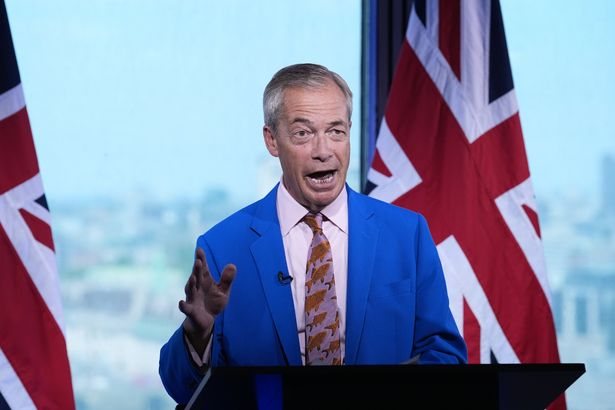
Nigel Farage, the leader of Reform UK, has resigned as the Member of Parliament for Clacton-on-Sea, triggering a by-election in which he intends to stand again. The move has been met with widespread criticism from rival political parties, who have collectively refused to contest the vote, labelling it a «desperate stunt» designed to distract from serious allegations surrounding his undeclared donations.
Farage announced his resignation on Monday afternoon, stating that the people of Clacton «should be the judges of my actions». He confirmed that he would seek to regain the seat in the forthcoming by-election, a tactic that has drawn sharp rebukes from across the political spectrum. Labour, the Conservatives, and the Liberal Democrats have all confirmed that they will not field candidates, arguing that the exercise is a cynical ploy to evade scrutiny rather than a genuine democratic process.
The controversy centres on a series of undeclared gifts and donations that Farage received from George Cottrell, a former associate with a criminal record. The parliamentary commissioner for standards has been urged to investigate the matter, with Kemi Badenoch, the Conservative leader, stating that it was a matter for the commissioner to decide. Farage has denied any wrongdoing, but the pressure has mounted in recent weeks, leading to reports that he had discussed walking away from politics altogether.
Andy Burnham, the Mayor of Greater Manchester, described the resignation and restand plan as a «gimmick designed to distract from serious allegations about funders». He added that the public deserved transparency and accountability from their elected representatives. Burnham’s comments echoed those of other senior figures, who have accused Farage of attempting to reset the political narrative at a time when his conduct is under intense scrutiny.
The decision by the three main parties to boycott the by-election is unprecedented in modern British politics. It effectively leaves Farage as the sole major candidate in the contest, raising questions about the legitimacy of the process. Critics argue that the move undermines democratic accountability, while supporters of the boycott insist that participating would lend credibility to what they see as a manipulative strategy.
Farage has hinted at press regulation in recent statements, though he has stopped short of calling for curbs on media freedom. In his resignation announcement, he said: «For all of the criticism and the attacks, and I would even say abuse that I’ve got from the press, I’ve never once recommended curbing our free press. I think this is one of the amazing things about this country. I would be very worried about a Reform government using government power to control the press. I don’t think that that would be right.»
The by-election is expected to take place within the coming weeks, though no date has yet been set. Farage’s decision to resign and immediately stand again has drawn comparisons to similar tactics used by other politicians in the past, though the scale of the boycott makes this case particularly unusual. Political analysts have noted that the move could backfire if voters perceive it as an attempt to avoid accountability.
The Electoral Commission has been asked to examine the donations issue, though it has not yet announced a formal investigation. Farage has maintained that all his financial dealings were above board and that he has complied with all relevant rules. However, the lack of transparency has fuelled calls for a broader inquiry into the funding of political parties and the conduct of MPs.
Reform UK has defended Farage’s actions, arguing that he is entitled to seek a fresh mandate from his constituents. A party spokesperson said that the by-election would allow the people of Clacton to express their views directly, and that the boycott by other parties was an attempt to silence dissent. The spokesperson added that Farage remained committed to representing the interests of his constituents and to advancing the party’s agenda on issues such as immigration, sovereignty, and economic reform.
The situation has also sparked debate about the role of by-elections in the UK political system. Some commentators have argued that the boycott sets a dangerous precedent, potentially allowing a single candidate to win a seat without facing any meaningful opposition. Others have countered that the parties are within their rights to refuse to participate in what they view as a farce, and that the real issue is Farage’s conduct rather than the mechanics of the election.
As the political drama unfolds, attention is likely to turn to the Clacton electorate, who will ultimately decide whether to return Farage to Parliament. The outcome of the by-election could have significant implications for Reform UK’s standing and for Farage’s future as a political figure. For now, the focus remains on the allegations that prompted his resignation and the broader questions about accountability and transparency in British politics.
77