Politics 5 min read By Bethany Hadley
Hungary’s President Tamás Sulyok Steps Down After Constitutional Amendment
Hungary’s President Tamás Sulyok has agreed to step down after signing a constitutional amendment passed by the ruling Tisza party, citing a serious loss of confidence in his leadership. The move ends his term early, reshaping the political landscape.
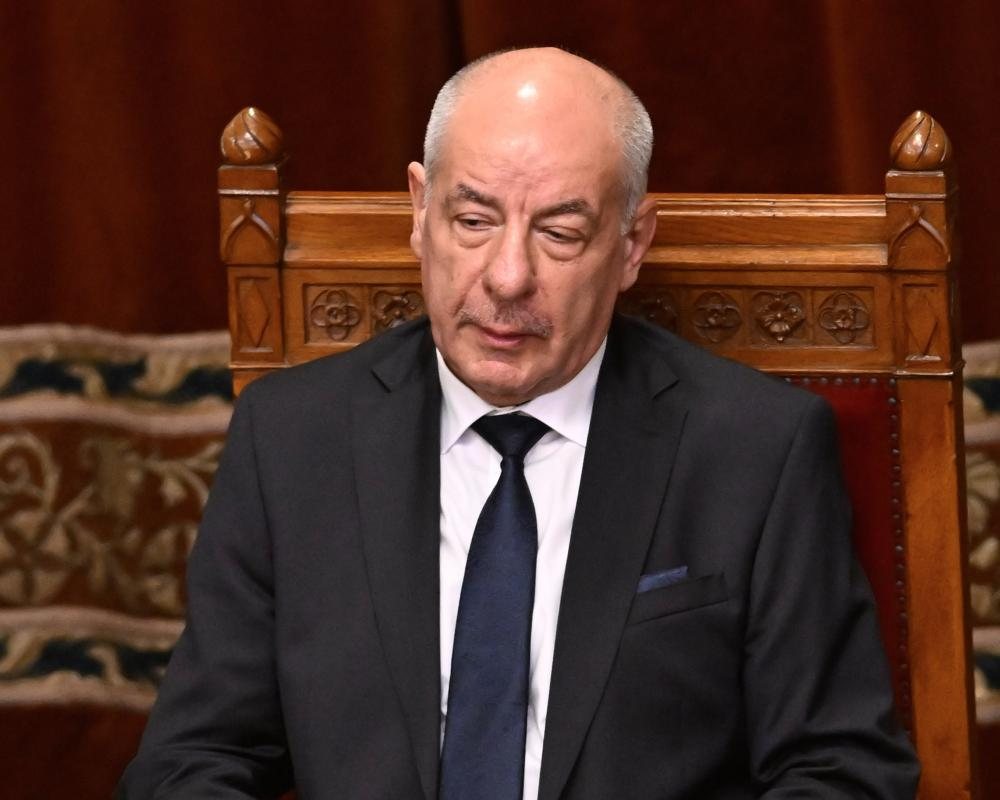
Hungary’s President Tamás Sulyok has agreed to step down after signing a constitutional amendment passed by the ruling Tisza party of Prime Minister Péter Magyar. The amendment, which Sulyok himself signed into law, immediately terminates his term, citing society’s “serious loss of confidence” in a leader who was elected in early 2024 by lawmakers from former Prime Minister Viktor Orbán’s nationalist Fidesz party.
The decision marks a dramatic shift in Hungary’s political landscape. Sulyok, a former constitutional court judge, was elected president in February 2024 as a compromise candidate after Fidesz’s previous nominee, Katalin Novák, resigned amid a scandal over a presidential pardon. At the time, Sulyok was seen as a low-key figure who would avoid controversy, but his tenure has been overshadowed by growing public discontent and political maneuvering.
The constitutional amendment was introduced by the Tisza party, which came to power after defeating Fidesz in the 2026 parliamentary elections. The amendment’s language explicitly references a “serious loss of confidence” in the president, a rare and forceful move in Hungarian politics. By signing the amendment, Sulyok effectively accepted the judgment of the government and the legislature, avoiding a potentially protracted impeachment process.
Political analysts note that the amendment reflects the new government’s determination to distance itself from the Orbán era. Sulyok was elected by a Fidesz-dominated parliament, and his early departure is seen as a symbolic break with the previous administration. The Tisza party has promised to restore democratic norms and reduce executive overreach, and the removal of a president tied to the old guard is a key step in that direction.
The opposition has largely welcomed the move, though some critics argue that the amendment sets a troubling precedent by allowing a simple legislative majority to remove a president without the checks of an impeachment trial. Hungary’s constitution previously required a two-thirds majority and a formal impeachment process for presidential removal. The new amendment lowers that threshold, raising concerns about the independence of the presidency in the future.
Sulyok’s departure also has implications for Hungary’s international standing. The European Union has long criticized Hungary under Orbán for democratic backsliding, and the Tisza government has sought to rebuild ties with Brussels. The removal of a president elected by Fidesz may be seen as a positive signal by EU institutions, though some diplomats caution that the method of removal could itself raise rule-of-law questions.
In his final statement, Sulyok said he accepted the amendment “in the interest of national unity” and urged Hungarians to move forward. He did not criticize the government or the amendment, instead emphasizing the need for stability. His resignation is expected to take effect within days, after which the parliament will elect a new president. The Tisza party has not yet announced a candidate, but speculation centers on a figure with a legal or diplomatic background who can restore public trust in the office.
The episode underscores the volatility of Hungarian politics after more than a decade of Fidesz dominance. The Tisza party, led by Péter Magyar, won a landslide victory in 2026 on a platform of anti-corruption and democratic reform. Since taking office, it has pursued a series of constitutional changes aimed at dismantling what it calls the “Orbán system.” The removal of President Sulyok is the most high-profile of these changes so far.
For ordinary Hungarians, the news has been met with a mix of relief and uncertainty. Many saw Sulyok as a figurehead of the old regime, but others worry about the concentration of power in the hands of a single party. The coming weeks will be crucial as the parliament selects a new president and the Tisza government continues its reform agenda.
83