Politics 3 min read By Alice Ashford
Ann Widdecombe, former Tory minister and Reform UK member, dies aged 78
Ann Widdecombe, the former Conservative government minister and prominent Eurosceptic who later served as a Brexit Party and Reform UK member, has died at the age of 78.
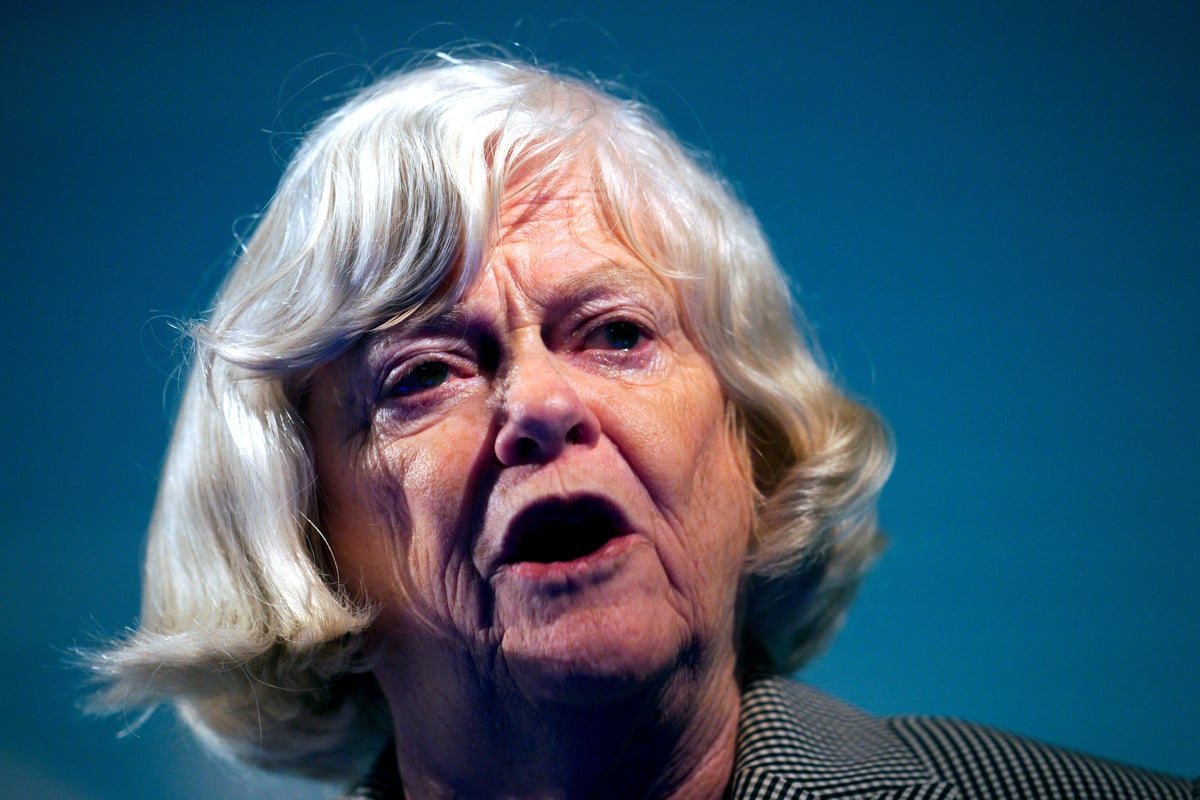
Ann Widdecombe, the former Conservative government minister and prominent Eurosceptic who later became a member of the Brexit Party and Reform UK, has died at the age of 78. Her management confirmed the news, prompting tributes from across the political spectrum. Widdecombe was known for her socially conservative views and a political career that spanned decades, as well as a later turn as a television personality on shows such as Strictly Come Dancing and Celebrity Big Brother.
Widdecombe served as a Member of Parliament for Maidstone and then Maidstone and The Weald from 1987 to 2010. During her time in government under Prime Minister John Major, she held ministerial roles including Minister of State for Prisons and Minister of State for Employment. She was also a vocal supporter of Margaret Thatcher and a key figure in the Conservative Party's right wing, often clashing with modernisers over issues such as abortion, gay rights, and the death penalty.
After leaving the House of Commons, Widdecombe remained active in politics. She was elected as a Member of the European Parliament for the Brexit Party in 2019, representing South West England. Following the party's transformation into Reform UK, she continued to be a prominent figure, advocating for a hard Brexit and criticising the European Union. Her move from the Conservatives to the Brexit Party reflected her long-standing Euroscepticism, which she described as a consistent thread throughout her career.
Beyond politics, Widdecombe became a familiar face on British television. She appeared as a contestant on the BBC's Strictly Come Dancing in 2010, where her dance routines were widely discussed. She later participated in Celebrity Big Brother in 2016, further cementing her status as a public figure known for her outspoken personality. Her television appearances often drew both praise and criticism, but they kept her in the public eye long after her parliamentary career ended.
Widdecombe was born in Bath in 1947 and educated at the University of Birmingham and Lady Margaret Hall, Oxford. She initially worked as a university administrator and later as a business consultant before entering politics. She was appointed to the Privy Council in 1997 and was known for her distinctive speaking style and strong opinions on moral and social issues. She was also a prolific author, writing novels and memoirs, and a regular contributor to newspapers and radio programmes.
Tributes to Widdecombe highlighted her dedication to her principles, even when they were unpopular. Former colleagues described her as a formidable debater and a loyal party member, while critics noted her controversial stances on issues such as homosexuality and immigration. Her death marks the end of an era for a politician who straddled the worlds of traditional conservatism and the populist right, leaving a complex legacy in British public life.
92