Politics 6 min read By Arthur Ellington
Andy Burnham to become UK prime minister on Monday
Andy Burnham is set to become the next prime minister of the United Kingdom on Monday, succeeding Keir Starmer. Known for his empathetic approach and vision to devolve power from Westminster, Burnham's rise marks a significant shift in British politics.
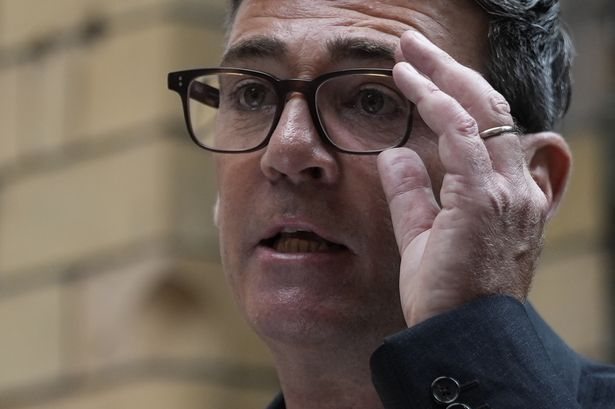
Andy Burnham will become the next prime minister of the United Kingdom on Monday, succeeding Keir Starmer after a transition that has drawn attention to his distinctive political style and long-standing vision for reshaping British governance. The former Greater Manchester mayor, who has spent two decades in public life, is expected to bring a focus on empathy and decentralisation to Downing Street.
Burnham's approach to politics has been characterised by what many describe as a rare quality in modern leadership: genuine empathy. This trait was on full display during his appearance at the Glastonbury Festival in 2022, where he addressed a crowd of about 1,000 people in the Left Field tent, organised by activist and songwriter Billy Bragg. In that session, titled «State of the Nation: Politics in Crisis», Burnham laid out his vision for «rewiring» the United Kingdom by changing systems of politics and authority, collaborating across party lines, and taking power away from Westminster. His performance was noted for being open, self-questioning, and conversational rather than confrontational, even when faced with disruptive Trotskyists in the audience.
The incoming prime minister's first week in office is expected to be intense, with a series of decisions awaiting him on issues ranging from economic policy to public services. Burnham has signalled that he intends to pursue a programme of significant constitutional reform, including greater devolution of powers to regions and cities, a theme he has championed since his time as mayor of Greater Manchester. His critics, however, question whether his ambitious plans can be delivered within the constraints of a tight fiscal environment and a divided political landscape.
One of the early tests for Burnham will be his handling of the WASPI (Women Against State Pension Inequality) campaign. He has agreed to meet with campaigners to discuss redress options for women affected by changes to the state pension age, having expressed discomfort with the way millions of women were treated by previous governments. This issue has been a source of cross-party tension, and Burnham's willingness to engage directly with affected groups is seen as a sign of his commitment to a more consultative style of governance.
Environmental policy is another area where Burnham faces immediate pressure. Thousands of parents have signed a petition organised by Becky Ward, calling on the new prime minister to adapt British infrastructure to cope with record-breaking heatwaves and to commit to renewable energy sources over drilling in the North Sea. Ward's son suffers from seizures triggered by extreme heat, highlighting the human cost of climate inaction. Burnham has previously advocated for a green transition, but activists will be watching closely to see whether his rhetoric translates into concrete policy.
Burnham's rise to the top of British politics has been decades in the making. First elected as an MP in 2001, he served in various ministerial roles under Gordon Brown, including as Secretary of State for Health. After Labour's defeat in 2010, he ran for the party leadership twice, losing to Ed Miliband in 2010 and to Jeremy Corbyn in 2015. He then reinvented himself as mayor of Greater Manchester, a role that allowed him to demonstrate his belief in localism and direct accountability. His tenure as mayor was marked by high-profile battles with the central government over transport funding, housing, and public health, often positioning him as a champion of the North against Westminster.
The transition of power from Starmer to Burnham has been described as orderly, with Starmer delivering what one source called a «final massive blow» as he hands over the reins. The exact nature of that blow remains unclear, but it underscores the competitive nature of internal party dynamics. Burnham's supporters argue that his empathetic style and grassroots experience make him uniquely suited to heal a fractured nation, while sceptics warn that his ambitious agenda may clash with economic realities.
As Burnham prepares to enter Downing Street, the country will be watching to see whether the man who spoke of empathy at Glastonbury can translate that sentiment into effective governance. His first week will set the tone for his premiership, with decisions on the WASPI compensation, climate policy, and constitutional reform all looming. For many, the hope is that Burnham's brand of politics — rooted in listening, collaboration, and a genuine desire to redistribute power — can restore faith in a system that has often felt distant and unresponsive.
91