Business 5 min read By Alice Ashford
Billy Evans’ Haemanthus raises up to $20 million without a product on sale
Haemanthus, the Austin startup run by Billy Evans, partner of convicted Theranos founder Elizabeth Holmes, has reportedly raised as much as $20 million and holds a granted patent, but has yet to launch a commercial product or publish independently validated results.
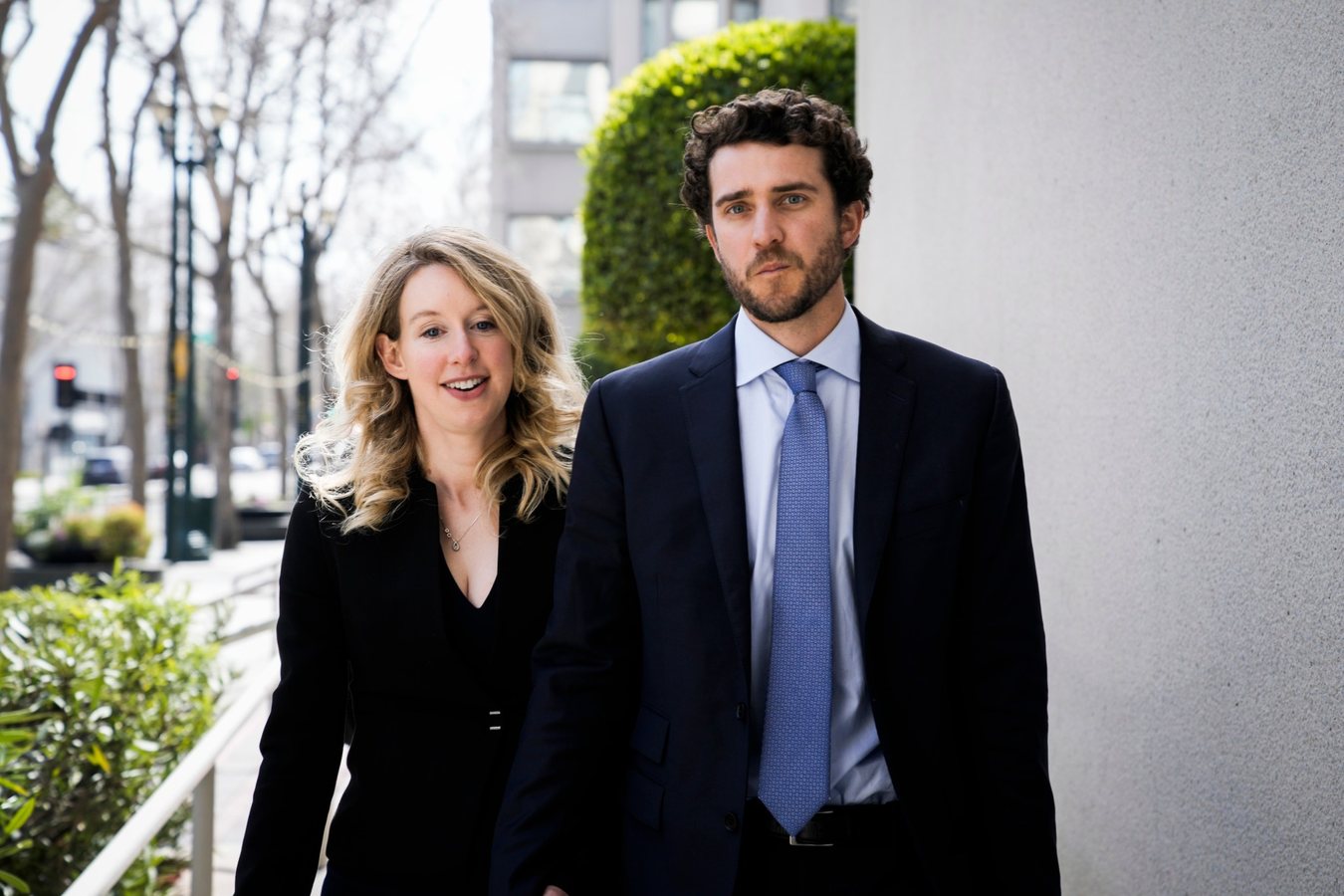
Haemanthus, the Austin-based startup led by Billy Evans, the longtime partner of convicted Theranos founder Elizabeth Holmes, has reportedly raised as much as $20 million and holds at least one granted patent. It has not, at least publicly, launched a product customers can buy or published data showing its technology works, and it has lost its chief technology officer. Interest in the company has grown since the release of the documentary You Can See Everything on October 16, a film by Nathan Fielder and Lance Oppenheim about the couple.
The company says it can use lasers to detect disease in blood, saliva and urine. According to marketing materials reviewed by The New York Times last year, its device scans biological samples « on a molecular level », identifies biomarkers such as glucose and hormones within seconds, and uses artificial intelligence to detect cancer and infections. The underlying technique, Raman spectroscopy, is long established. Forensic investigators use handheld Raman devices to identify suspected drugs at crime scenes, but blood is a much harder problem. The molecules researchers want to detect are often present in tiny amounts, and other components in blood can produce stronger signals that drown them out, according to a scientific review published in Applied Spectroscopy.
Haemanthus has drawn a distinction between its approach and that of Theranos, the company Holmes founded, which claimed it could run conventional laboratory tests on a miniaturised machine using a few drops of blood. « Theranos attempted to miniaturise existing tests », the company wrote on X in May 2025, describing its own approach as fundamentally different. A Raman spectroscopy patent assigned to Haemanthus and granted in January 2025 names two inventors, one of them former chief technology officer Joseph LaChapelle. Eric Potma, a chemistry professor at UC Irvine who consults for the company, told WIRED that the concept is not pulled out of thin air, though he declined to go into detail because of his advisory role. A patent, however, does not establish that a test can accurately diagnose patients.
Evans has listed himself as Haemanthus chief executive since October 2022. He is a grandson of the founders of Evans Hotels, the privately held San Diego company, but in an October 1 statement the company said he is neither an employee nor a shareholder. Evans graduated from MIT in 2015 and later worked at Luminar Technologies, a lidar startup building sensors for self-driving cars, from 2017 until January 2019, according to Forbes. Luminar filed for Chapter 11 bankruptcy in December 2025, nearly seven years after Evans left.
On funding, investor materials reviewed by the Times last year showed Haemanthus initially raised $3.5 million from friends and family. In spring 2025 it began approaching wealthy investors in Austin and the San Francisco Bay Area for a further $15 million. The materials described an eventual wearable device for humans that would take three years and $70 million to develop. WIRED has since reported that the company has received as much as $20 million. A person who spoke with Evans this spring told Forbes that he said early Palantir employees had invested.
The company’s chief technology officer has also left. LaChapelle told Forbes he resigned on March 16, 2026, « due to a conflict of interest associated with a stealth startup I had founded prior to Haemanthus », declining to elaborate. The same person who spoke with Evans told Forbes that Evans said he had let the chief technology officer go, and recalled Evans describing the company as « Theranos 2.0 », a label Haemanthus has publicly rejected. Evans did not respond to Forbes’ request for comment.
Holmes is serving an 11-year sentence for defrauding Theranos investors at a federal prison camp in Bryan, Texas. In May 2025, NPR reported, citing two sources with direct knowledge, that she had been advising Evans from prison, though the nature of that advice was unclear. Haemanthus denied it on X, saying Holmes had « zero involvement » and « no role, now or future ». Evans and Holmes have two children, and Holmes has told People that the couple never legally married.
5