
Politics 6 min read By Callum Montgomery
Andy Burnham promises Labour MPs he will not use party discipline to stifle debate
Andy Burnham has pledged to Labour MPs that he will not use party discipline to stifle debate, as he prepares to become the next party leader and prime minister.
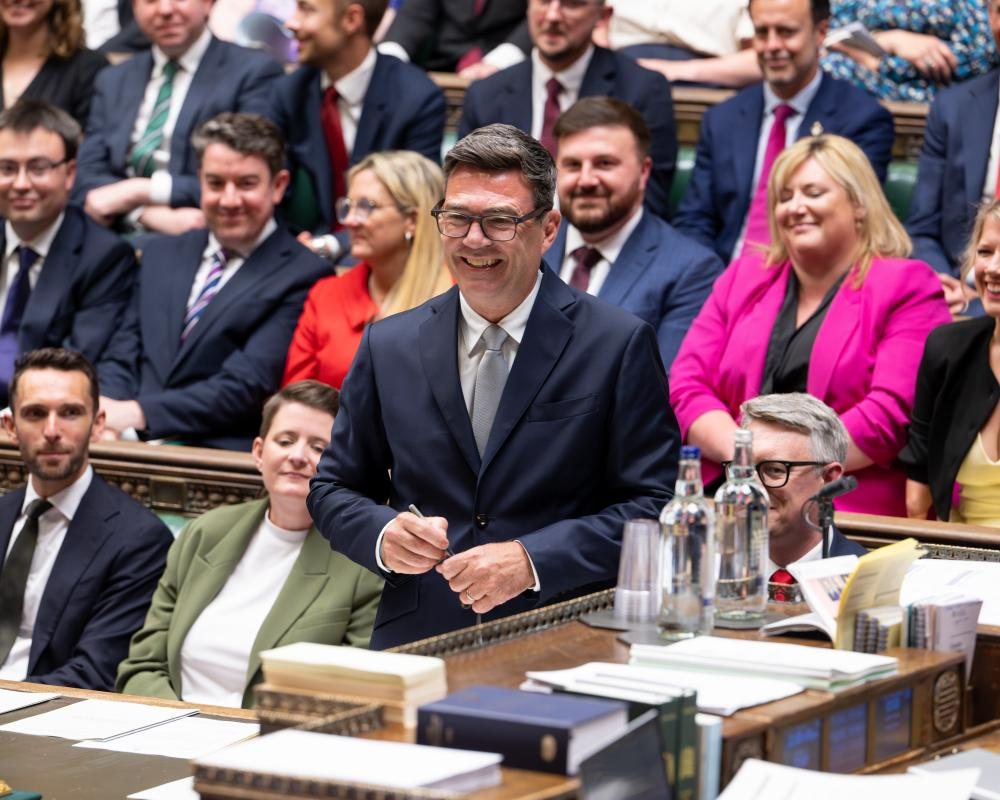
Andy Burnham has promised Labour MPs that he will never use party discipline to «stifle debate», signalling a clear break with the management style of his predecessor, Keir Starmer. In a move designed to address growing frustrations among backbenchers, the prime minister in waiting said MPs should be free to raise problems and policy ideas «without fear or favour».
Burnham’s commitment comes as nominations for the Labour leadership are set to open on Thursday, with the Greater Manchester mayor widely expected to be the only candidate. The former armed forces minister Al Carns confirmed on Wednesday night that he would not seek to enter the race to replace Starmer, effectively clearing the path for Burnham’s coronation.
The pledge marks a deliberate departure from the approach taken by Starmer, who was often criticised by his own MPs for a tightly controlled party machine that limited internal dissent. Burnham’s promise to allow more open debate is seen as an attempt to rebuild trust within the parliamentary party and to present a more inclusive leadership style ahead of his expected transition to Downing Street.
Under party rules, prospective leadership candidates need the backing of at least 81 MPs to secure a place on the ballot. With Carns stepping aside and no other challengers emerging, Burnham is on course to become the next Labour leader without a contested election. This has led to concerns among some party members about a lack of democratic choice, but Burnham’s allies argue that his broad support across the party reflects a genuine consensus.
Burnham’s rise follows a period of intense political turbulence for Labour. Starmer announced his resignation after a series of electoral setbacks and internal divisions over policy direction. The party has struggled to maintain a unified message on key issues such as the economy, public services, and Brexit, and Burnham’s promise of a more open internal debate is intended to address these fractures.
The incoming leader has also signalled that he will prioritise a more collaborative relationship with trade unions and grassroots members, groups that often felt sidelined under Starmer. Burnham has long positioned himself as a figure who can bridge the gap between the party’s traditional working-class base and its more centrist, metropolitan wing.
Political analysts note that Burnham’s leadership style could have significant implications for the governance of the country. If he becomes prime minister, his approach to party management may set the tone for how his government handles dissent within its own ranks and engages with opposition parties. A more open internal culture could also affect the pace and direction of policy-making, particularly on contentious issues such as housing, transport, and devolution.
Burnham’s track record as mayor of Greater Manchester offers some clues about his governing style. He has been praised for his handling of regional transport projects and his advocacy for greater devolution of powers to local authorities. However, he has also faced criticism over delays in implementing key infrastructure schemes and for his management of the city-region’s budget.
The Labour leadership contest, though effectively uncontested, has nonetheless generated significant interest within the party. Several prominent MPs have publicly endorsed Burnham, citing his experience in government and his ability to connect with voters outside the party’s traditional strongholds. His supporters argue that he is best placed to rebuild Labour’s electoral coalition and to challenge the Conservatives effectively at the next general election.
Critics, however, warn that an uncontested leadership election could leave unresolved tensions simmering beneath the surface. They point to the risk that Burnham’s promise of open debate may be tested early in his tenure, particularly if backbenchers push for policies that diverge from the leadership’s preferred agenda.
For now, Burnham’s message is one of unity and renewal. In his conversations with MPs, he has emphasised the need for the party to learn from its recent mistakes and to present a coherent alternative to the Conservative government. His pledge not to stifle debate is a central part of that pitch, aimed at convincing both MPs and the wider public that Labour under his leadership will be more transparent and responsive.
The formal nomination process opens on Thursday and is expected to close within a fortnight. Once confirmed as leader, Burnham will face the immediate challenge of assembling a shadow cabinet and setting out a policy platform that can unite the party and appeal to the electorate. His first major test will be the next round of local elections, where Labour will seek to build on recent gains and demonstrate that it is a credible government in waiting.
91