Politics 6 min read By Arthur Ellington
Andy Burnham pauses early prisoner release scheme for urgent review
Prime Minister Andy Burnham has halted the early release of prisoners under a controversial scheme set up by the previous Labour government, ordering an urgent review after the freeing of PC Andrew Harper's killers sparked public outrage.
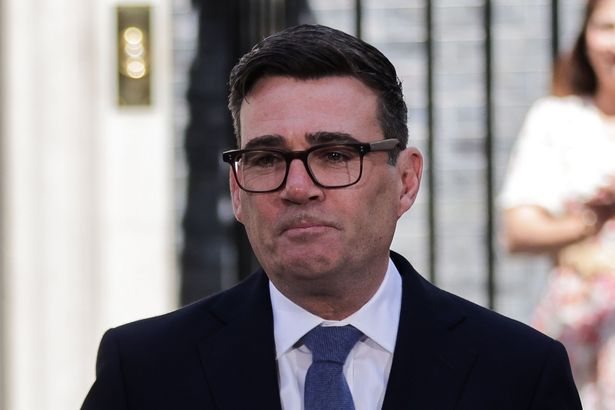
Prime Minister Andy Burnham has announced a pause on the early prisoner release scheme that was due to begin in September, ordering an urgent review of the policy amid growing public anger over the freeing of individuals convicted of killing a police officer. The decision marks a significant shift in the government's approach to prison overcrowding, a crisis that has plagued the justice system for years.
The scheme, originally introduced by the previous Labour government, was designed to alleviate pressure on overcrowded prisons by allowing certain inmates to be released before completing their full sentences. However, it faced intense criticism after the widow of PC Andrew Harper, Lissie Harper, condemned the release of her husband's killers. PC Harper was killed in 2019 when he was dragged along a country road while responding to a burglary in Berkshire. The case drew national attention and led to calls for tougher sentencing laws.
Speaking in central London, Burnham confirmed that no prisoners would be released under the policy until the review is completed. He emphasised that public safety remains his top priority, stating: «Keeping the public safe is always my top priority.» The Prime Minister's intervention comes after weeks of mounting pressure from victims' families, police unions, and opposition politicians who argued that the scheme undermined confidence in the justice system.
The early release programme was originally intended to manage the chronic overcrowding in UK prisons, which have been operating at near capacity for years. According to official figures, the prison population in England and Wales has exceeded 80,000, with many facilities holding inmates in cramped and unsanitary conditions. The previous government had argued that early release was a necessary measure to prevent the system from collapsing entirely. However, critics contended that it prioritised administrative convenience over justice and public safety.
The decision to pause the scheme has been welcomed by campaigners and victims' rights groups, who have long argued that early release policies fail to consider the impact on victims and their families. Lissie Harper, who has become a prominent advocate for tougher sentencing, described the release of her husband's killers as a «betrayal» of the public trust. She has called for a fundamental review of how the justice system balances rehabilitation with punishment.
Burnham's move also signals a broader shift in his government's approach to criminal justice. Since taking office, the Prime Minister has sought to distance himself from the policies of his predecessor, Kemi Badenoch, who had championed the early release scheme as part of a wider reform agenda. Badenoch, speaking at a separate event in central London, criticised Burnham's decision, accusing him of «still thinking like the mayor of Manchester» and lacking ambition for the country. She argued that the pause would exacerbate prison overcrowding and lead to further crises in the justice system.
The review will examine the criteria for early release, the handling of violent offenders, and the broader implications for public safety. It is expected to report back within weeks, with the government pledging to implement its recommendations swiftly. In the meantime, prison authorities are exploring alternative measures to manage overcrowding, including the use of electronic tagging and community-based programmes for low-risk offenders.
The controversy has also reignited debate about the state of the UK's prison system, which has been described by inspectors as «unsafe and inhumane» in some facilities. The Ministry of Justice has acknowledged the challenges, noting that the prison population has grown faster than capacity, driven by longer sentences and tougher laws introduced in recent years. Reform advocates argue that the system needs a comprehensive overhaul, including investment in rehabilitation and alternatives to custody, rather than relying on early release as a stopgap measure.
Burnham's decision is likely to have political ramifications, as it pits his government against both the previous administration and some within his own party who support the early release scheme. The Prime Minister has sought to position himself as a pragmatic leader willing to make difficult decisions, but the move may also be seen as a concession to public opinion ahead of the next general election. Polls suggest that a majority of voters oppose early release for violent offenders, and the issue has become a flashpoint in the ongoing debate about law and order.
As the review gets under way, the government faces the challenge of balancing the need to reduce prison overcrowding with the imperative to maintain public confidence in the justice system. The outcome of the review will be closely watched by victims' groups, prison reform advocates, and political opponents alike, as it could set the direction for criminal justice policy for years to come.
110