Economy 4 min read By Bethany Hadley
Warsh signals Fed may need to hike rates if above-target inflation persists
Kevin Warsh, a candidate for Federal Reserve chair, has signalled that the central bank may need to raise interest rates if inflation remains above its 2% target, a stance that could shape US monetary policy debate.
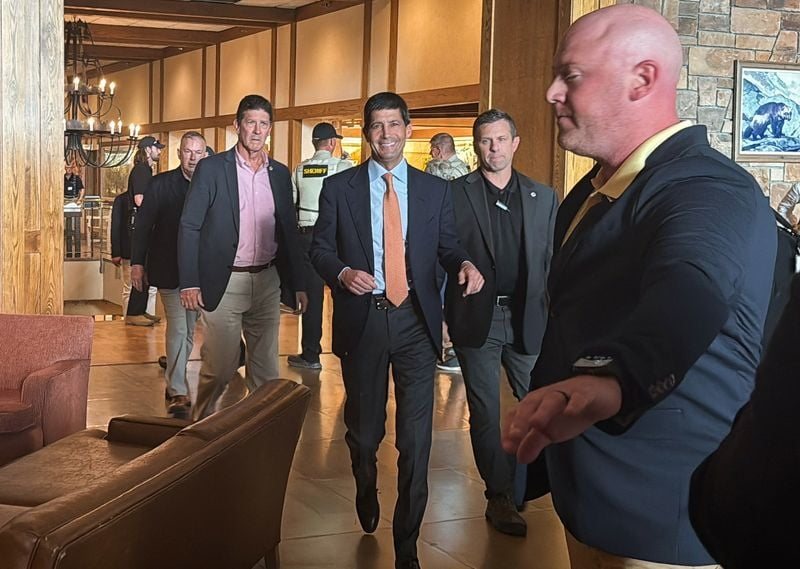
Kevin Warsh, a prominent contender to lead the Federal Reserve, has indicated that the US central bank may need to raise interest rates if inflation continues to run above its 2% target. The remarks, delivered at the Jackson Hole economic symposium, signal a potential shift in monetary policy direction and have drawn attention from markets and policymakers alike.
Warsh, who previously served as a Fed governor and has been floated as a candidate for the chairmanship, argued that the current policy stance may not be sufficiently restrictive to bring price growth back to target. His comments suggest that the central bank could be forced to reverse course and tighten policy further if inflation proves stubborn, a scenario that would have significant implications for borrowing costs, business investment, and household finances across the British and global economies.
The speech comes at a critical juncture for the Federal Reserve, which has been navigating a delicate balance between curbing inflation and avoiding a sharp economic slowdown. While recent data has shown some cooling in price pressures, Warsh cautioned that the progress may not be enough to guarantee a return to the central bank's long-run objective. He emphasised that the Fed must remain vigilant and prepared to act decisively if necessary, even if that means raising rates again after a period of relative stability.
Market analysts have interpreted Warsh's remarks as a signal that the next phase of US monetary policy could be more hawkish than previously anticipated. Treasury yields moved higher following the speech, and traders adjusted their expectations for future rate decisions. For British businesses and investors with exposure to US markets, the prospect of higher rates raises questions about the cost of dollar-denominated debt and the strength of the dollar against sterling.
The Jackson Hole symposium has historically served as a platform for central bankers to outline their thinking on key policy challenges, and Warsh's intervention adds a new layer of uncertainty to the global rate outlook. His potential appointment to the top Fed job would mark a significant change in leadership style and policy priorities, given his reputation as an inflation hawk and his criticism of the Fed's recent approach to quantitative easing.
Observers note that Warsh's stance aligns with a broader debate within the Federal Reserve about how long to maintain restrictive policy. Some officials argue that the central bank should begin easing soon to support the labour market, while others, including Warsh, contend that premature cuts could reignite inflationary pressures. The outcome of this debate will be closely watched by finance ministries, central banks, and corporate treasurers worldwide, as US rate decisions continue to influence global capital flows and economic conditions.
For now, Warsh's comments stop short of a formal commitment to hike rates, but they underscore the sensitivity of the current policy environment. With inflation still above target in several major economies, the path of US interest rates remains one of the most closely monitored variables in global finance. Any move by the Fed to tighten further would ripple through currency markets, commodity prices, and international trade, affecting British exporters and consumers alike.
49