Economy 6 min read By Callum Montgomery
The Economic Case for Daylight Saving Time Is Smaller Than It Looks
Daylight saving time began with a powerful efficiency story: put more human activity into natural evening light and save energy. Modern evidence shows a much more local and technology-dependent effect.
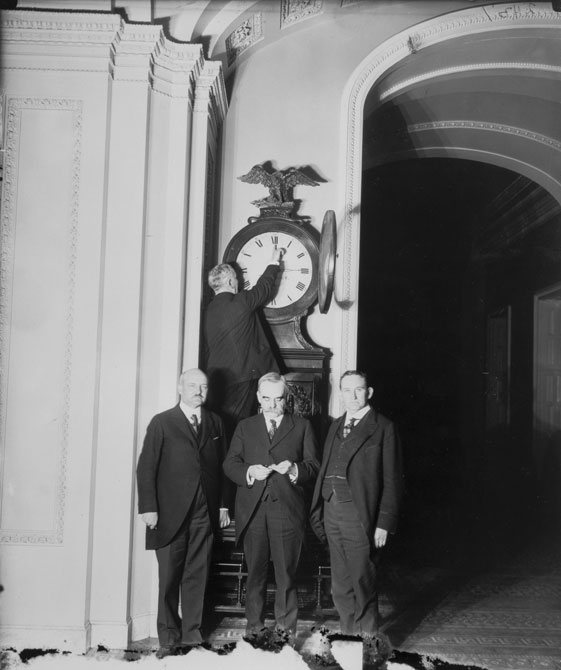
Daylight saving time was built around an economic intuition that once seemed almost self-evident. Move an hour of usable light toward the evening, when people are awake and active, and households will need less artificial lighting.
That logic helped turn seasonal clock changes from an eccentric reform idea into public policy. It remains one of the most familiar arguments for keeping them. Yet the modern energy system has changed faster than the slogan.
Efficient lighting now represents a different share of household demand than it did when summer-time schemes first spread. Heating, cooling, appliances and electronic loads matter more. An hour of bright summer evening can reduce lighting use while increasing air-conditioning demand. A darker morning can have its own heating and electricity effects.
A wider Science Official review shows that the result is not a universal energy dividend but a policy whose outcome depends on climate, latitude, building stock, technology and behaviour.
A national saving measured in hundredths of a percent
One of the clearest U.S. tests followed the 2007 extension of daylight saving time by four weeks. The Department of Energy estimated that the change saved about 1.3 terawatt-hours of electricity.
At grid scale, that is a substantial quantity of electricity. As a share of national annual consumption, however, it was about 0.03%. Estimated primary-energy savings were about 0.02%.
Those figures matter because they put the political language of “energy savings” into proportion. The effect was not zero, but it was too small to treat daylight saving time as a major national energy policy.
Even that result cannot simply be exported to every region. A natural experiment in Indiana, using residential electricity bills, found that daylight saving time increased household electricity demand by about 1% overall. Reduced lighting was outweighed by additional heating and, especially, air-conditioning use.
Western Australia produced another pattern. Researchers found little change in total electricity use but a meaningful shift in the timing of demand, including late-afternoon consumption. Studies in southern Norway and Sweden, by contrast, reported reductions in electricity use.
The disagreement is economically informative. It suggests that daylight saving time behaves less like a fixed efficiency measure and more like a change in demand scheduling.
The clock redistributes economic activity too
Energy is only one part of the economic argument. Later daylight can be valuable to businesses built around evening activity: outdoor recreation, hospitality, shopping districts and leisure venues all operate in a social environment where light affects when people are willing to stay outside.
But those benefits are not automatically net gains for an economy. The same policy can impose costs on activities concentrated in the morning. Transport, construction, agriculture, schools and early-shift work experience the daylight distribution differently. The central difficulty is measurement: a pound spent during a brighter evening may have been shifted from another hour rather than created by the clock.
This is why claims that permanent daylight saving time will broadly “boost the economy” deserve the same caution as claims about large energy savings. Some sectors may benefit, some may not, and national totals are much harder to establish than local preferences.
Coordination may be the strongest economic argument left
There is still a powerful economic reason for common time rules: coordination.
Modern economies depend on synchronized schedules across transport, finance, logistics, broadcasting, schools and cross-border business. A government can move the legal clock for millions of people at once. The alternative — asking every employer, railway, school and venue to adopt its own seasonal hours — would preserve biological time more neatly in theory but create practical friction.
That helps explain why clock policy persists even when its original energy rationale weakens. The system is not only about saving electricity. It is a collective scheduling convention.
The United States is now testing how much that convention is worth. The House passed legislation in July 2026 that would end seasonal switching and make daylight saving time permanent for most of the country. The Senate still has to act.
From an economic perspective, the choice should not be framed as “saving daylight.” There is no daylight to save. The real decision is how to price and distribute a scarce daily resource — useful natural light — across households, firms and institutions that operate at different hours.
58