Economy 5 min read By Callum Montgomery
Romania’s Political Transition Puts Fiscal Credibility on Watch
J.P. Morgan representatives and other investors warned that government changes could slow reform and deficit reduction, turning political continuity into a financing issue.
Foreign investors have given Romania’s political transition a clear financial test: can a temporary change in government happen without interrupting fiscal reform?
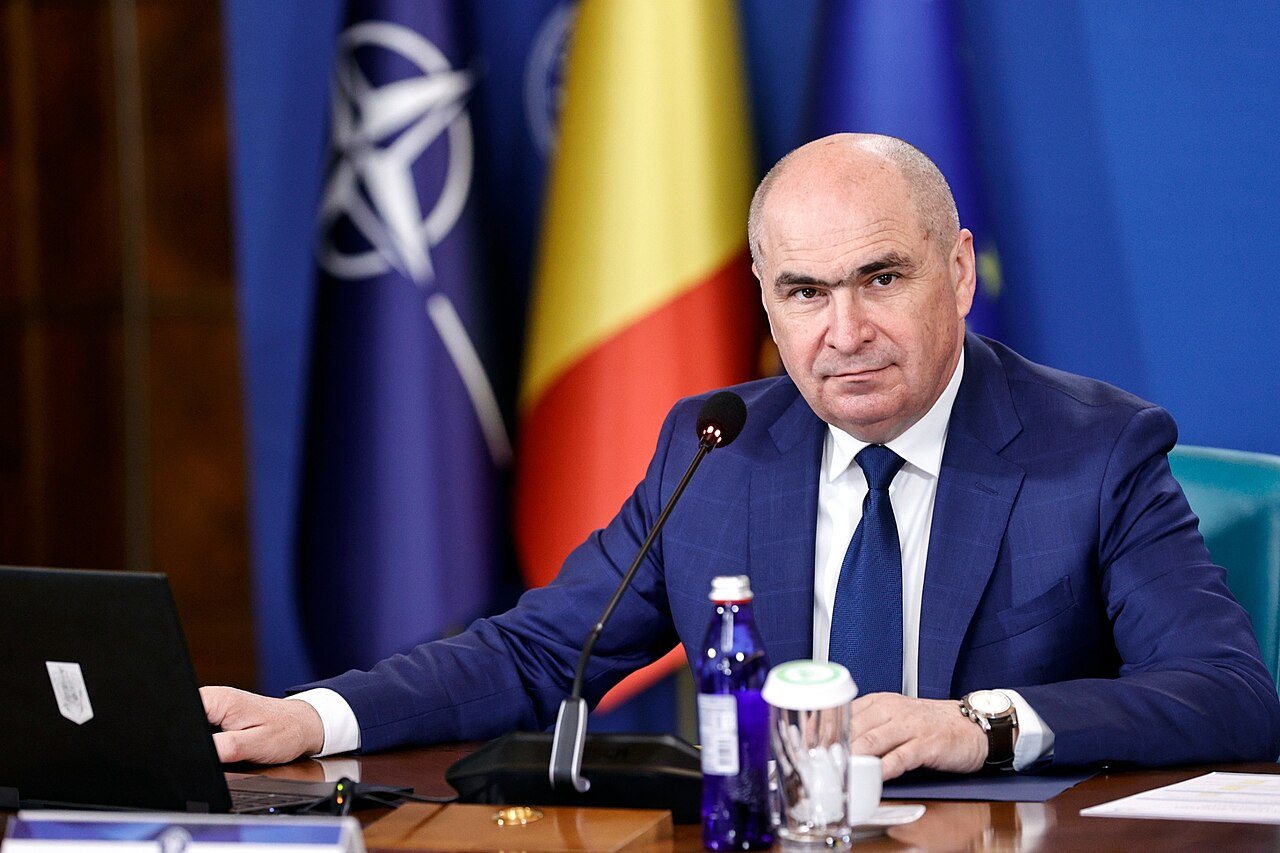
Interim Prime Minister Ilie Bolojan met a delegation at Victoria Palace on Sept. 8 that included representatives of J.P. Morgan, foreign-owned companies and international financial institutions. According to the Romanian government, the discussion focused on public finances, the budget deficit, sovereign financing costs, European funds and the continuation of fiscal consolidation.
The investors’ message was notably conditional. They praised measures taken over the past year to reduce the deficit and control public spending, saying those steps had helped sustain confidence in Romania’s economy. But they also warned that changes in the government’s composition could slow reforms, weaken spending control and alter the trajectory of deficit reduction.
For businesses, that distinction matters more than the identity of an interim office-holder. A company making a multi-year investment needs to estimate taxes, labour costs, infrastructure availability, public demand and financing conditions. Political uncertainty becomes commercially relevant when it makes those assumptions less reliable.
Romania’s fiscal challenge sits at the centre of that calculation. A large deficit increases the state’s borrowing needs and can place pressure on financing costs. If investors expect consolidation to stall, the concern can feed into bond pricing and the cost of capital more broadly. Companies then face a less predictable environment even if their own operations are sound.
Bolojan told the delegation that Romania urgently needs a fully empowered government and a responsible prime minister able to continue fiscal consolidation over the coming years. His proposed route was familiar but difficult: tighter control of public spending, more efficient public administration and a stronger prioritisation of investment.
The government is also trying to maximise the grant component of the EU-backed National Recovery and Resilience Plan before the end of the year. That money is strategically important because it can preserve investment while domestic fiscal policy is being tightened. The trade-off is execution: reforms and milestones must continue to move even while the political system is in transition.
From a business perspective, this makes government capacity as important as government stability. A cabinet can survive politically yet fail to deliver procurement, administrative reform or European-fund absorption. Conversely, a political transition can remain economically manageable if the institutions responsible for the budget and investment pipeline continue to function consistently.
The meeting included Finance Minister Alexandru Nazare, State Treasury director Ștefan Nanu and Bolojan’s honorary adviser Ionuț Dumitru. Their presence points to the issues investors are likely to watch next: the state’s funding programme, spending execution, revenue performance and whether investment projects keep their place when budgets are tightened.
There is also a governance question. Fiscal consolidation frequently fails not because the target disappears, but because every individual spending cut has a constituency and every reform has an implementation cost. A government with a weak mandate may postpone politically difficult decisions, creating a gap between the published fiscal path and the measures needed to achieve it.
That is why predictability featured so strongly in the investors’ comments. Predictability does not mean taxes or spending can never change. It means changes arrive through a credible process, with enough visibility for companies and lenders to adjust. Sudden reversals are more damaging than a clearly signalled, even if demanding, consolidation plan.
Romania’s next government will therefore inherit more than a political mandate. It will inherit a credibility balance sheet. The measures already taken have bought some confidence, according to the investors at Victoria Palace, but that confidence depends on continuity.
The immediate market test will be whether a fully empowered cabinet keeps the deficit-reduction programme, maintains control over public spending and uses European grants without delaying reform. If those three lines hold, political turnover may remain a governance event. If they do not, it will become a financing and investment story very quickly.
76