Business 4 min read By Arthur Ellington
Saylor Says Banks Will Lend Against Bitcoin Without Congress as Deutsche Bank Awaits Approval
Michael Saylor claims banks will soon offer bitcoin-backed lending without new legislation, while Deutsche Bank is reportedly waiting for regulatory approval to enter the market.
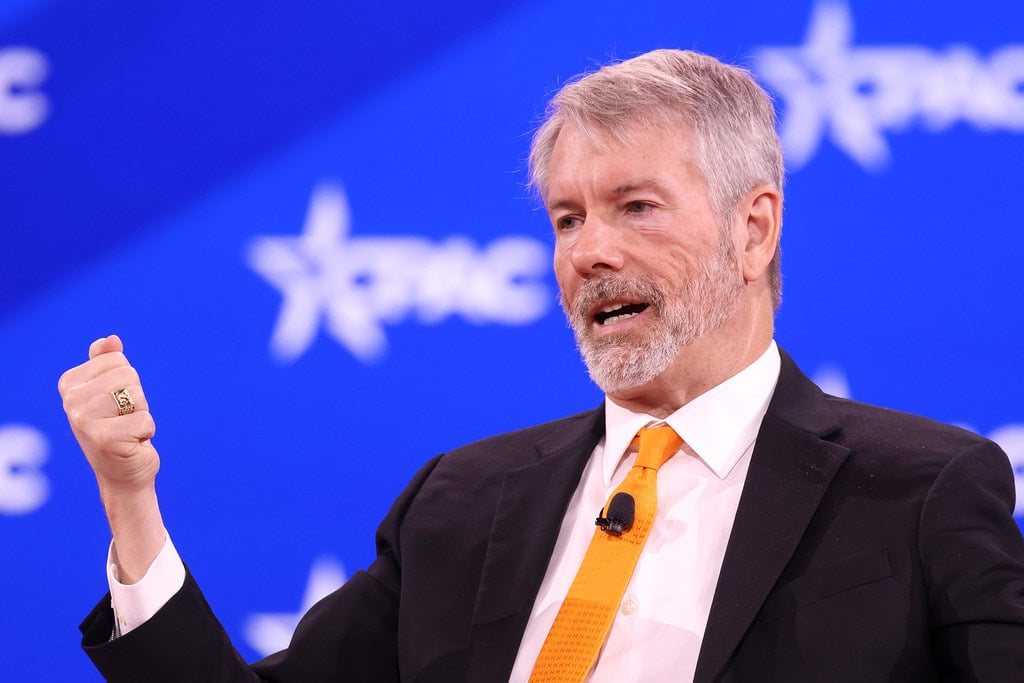
Michael Saylor, the executive chairman of Strategy and one of the most prominent corporate advocates for bitcoin, has said that banks will begin lending against bitcoin without any new act of Congress. His remarks suggest that the regulatory framework already exists for financial institutions to accept the cryptocurrency as collateral, and that the main obstacle is internal caution rather than legal prohibition.
Saylor’s intervention comes as Deutsche Bank, one of Europe’s largest lenders, is reportedly waiting for approval to move into bitcoin-backed lending. The German bank has been building out its digital asset custody and trading services, and its interest in collateralised crypto lending signals that mainstream institutions are preparing for a market that could scale quickly once supervisory clarity is confirmed.
The prospect of banks lending against bitcoin matters because it would allow holders to borrow fiat currency without selling their coins, creating liquidity without triggering a taxable disposal. For companies such as Strategy, which holds a large bitcoin treasury, access to bank credit against that asset could provide a cheaper way to fund operations or further purchases. For banks, it opens a new line of business at a time when traditional lending margins are under pressure.
Yet the practice is not without risk. Bitcoin’s price is volatile, and a sharp drawdown can leave borrowers facing margin calls or liquidation. Banks would need robust risk models, custody arrangements and loan-to-value ratios to avoid losses. Saylor’s argument is that these are ordinary credit decisions, not matters requiring fresh legislation. If he is right, the next phase of bitcoin adoption may be driven by balance sheets rather than by Capitol Hill.
Deutsche Bank’s position is telling. The lender has already received a crypto custody licence in Germany and has partnered with technology providers to offer digital asset services. Waiting for approval suggests that it sees bitcoin lending as a natural extension of custody, but one that requires sign-off from supervisors who remain cautious about crypto exposure. Other global banks are watching closely, and a green light from German regulators could encourage similar moves in London, Zurich and Singapore.
For British readers, the development is relevant because the UK has been trying to position itself as a hub for digital asset innovation while maintaining strict prudential standards. The Bank of England and the Financial Conduct Authority have both warned that crypto collateral can amplify shocks if not properly managed. If Deutsche Bank proceeds, it will provide a test case for how far traditional lenders can go without new laws, and whether the existing rulebook is sufficient to contain the risks.
Saylor has long argued that bitcoin is superior to cash and that banks will eventually treat it as prime collateral. His latest comments push that thesis further, implying that the debate has moved from whether banks can lend against bitcoin to when they will start. Deutsche Bank’s pending approval suggests the answer may be sooner than many expect.