Economy 5 min read By Arthur Ellington
MSCI chief warns markets are underpricing physical climate risk
The head of index provider MSCI says financial markets are failing to price the physical risks of extreme weather, with only 27% of large firms making substantial disclosures and asset losses potentially underestimated by 70% or more.
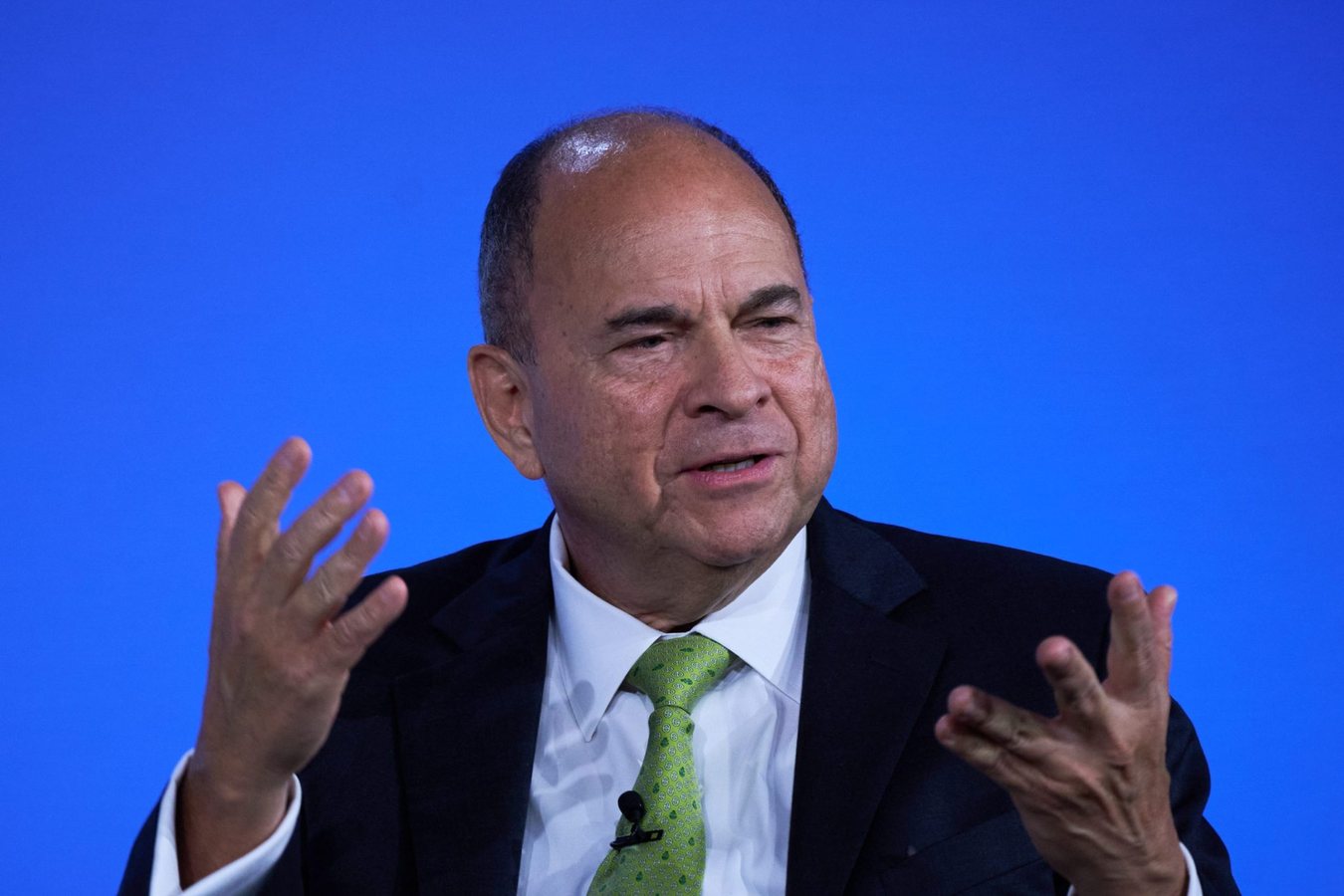
Global financial markets are significantly undervaluing the physical risks posed by extreme weather, according to the chief executive of MSCI, the index and analytics provider whose data underpins trillions of dollars in investment. In a commentary published by Fortune, the MSCI chief argues that this mispricing is not a distant concern but a present and measurable failure that is already visible in corporate accounts and investment portfolios.
The warning comes after a summer of climate records. North America, Africa and Asia experienced their hottest July on record, while Western Europe endured its hottest June and July combined. Global average sea surface temperatures hit an all-time high, some of Europe's largest rivers fell to their lowest recorded levels, and record-breaking rainfall struck China, Japan, South Korea, Pakistan, Canada, Hawaii, Missouri, Indiana, West Virginia and New York. The World Meteorological Organization has forecast a «very strong» El Niño event in the months ahead, which could drive further extremes.
The economic costs are mounting. Between 2020 and 2024 the world saw 99 extreme-heat events, compared with just 14 across the whole of the 1980s, according to an Allianz report. Over a similar period, from 1980 to 2023, the annual global cost of weather-related hazards rose from about $23bn to nearly $156bn, according to research by First Street, now part of MSCI. Separate analysis by MSCI and First Street found a sixfold increase since 2000 in the share of US public companies making off-cycle revenue disclosures linked to physical climate impacts.
Despite this, corporate transparency remains thin. When MSCI and First Street examined annual reports from more than 25,000 firms between 2023 and 2025, they found that only 27% made a substantial disclosure explaining how physical climate risks had affected or could affect their performance. Researchers in Europe have shown that ignoring physical risk can lead investors to underestimate potential asset losses by 70% or more.
The MSCI chief argues that physical risk does not exist in isolation. It increasingly overlaps with geopolitical tensions, tariffs, supply-chain rewiring, the energy transition and the artificial-intelligence boom. Extreme weather or geopolitical turmoil can disrupt shipping routes and manufacturing, as seen at the Panama Canal, the Strait of Hormuz, in Germany and in Taiwan. The AI boom cuts both ways: data centres are consuming vast amounts of electricity, much of it fossil-fuel generated, pushing emissions higher, while their locations make them vulnerable to heatwaves, wildfires and flooding. BloombergNEF has projected that by 2035 US data centres alone will burn more natural gas than all but four countries. Insurers view these facilities as some of the world's most valuable insured assets, complicating the data-centre opportunity.
Over the longer term, however, AI could accelerate climate progress by helping to decarbonise hard-to-abate industries, improve emissions detection, modernise electrical grids, integrate renewables, enhance battery technology and optimise agriculture. AI supply chains are already expanding from chips into electrical grids, turning utilities and equipment makers into critical parts of a new technology ecosystem.
For investors, AI also makes it easier to compile location-based intelligence with asset-level precision, helping them measure exposure to extreme weather as well as geographic concentrations across supply chains, tariff policies and energy-transition mandates. Better data and tools would allow markets to price physical risk more accurately, the MSCI chief argues, and to recognise the opportunities it creates. Building climate resilience will require enormous investment in electrical grids, battery storage, power plants, and transport and logistics networks. Countries and companies must scale up infrastructure to manage rising temperatures while future-proofing key value chains. That will not happen without strong support from capital markets, and the best way to encourage it is to give investors the data they need to evaluate and price physical risk. The world is moving in that direction, the MSCI chief concludes, but it needs to move faster.
2