
Business 4 min read By Callum Montgomery
Fortescue's Forrest Bets Billions on Green Mining and Ukraine Rebuild
Andrew Forrest, executive chairman of iron ore giant Fortescue, is pursuing a $1 billion plan to eliminate fossil fuels from mining by 2030 while funding Ukraine's reconstruction, testing whether green industry and profit can coexist.
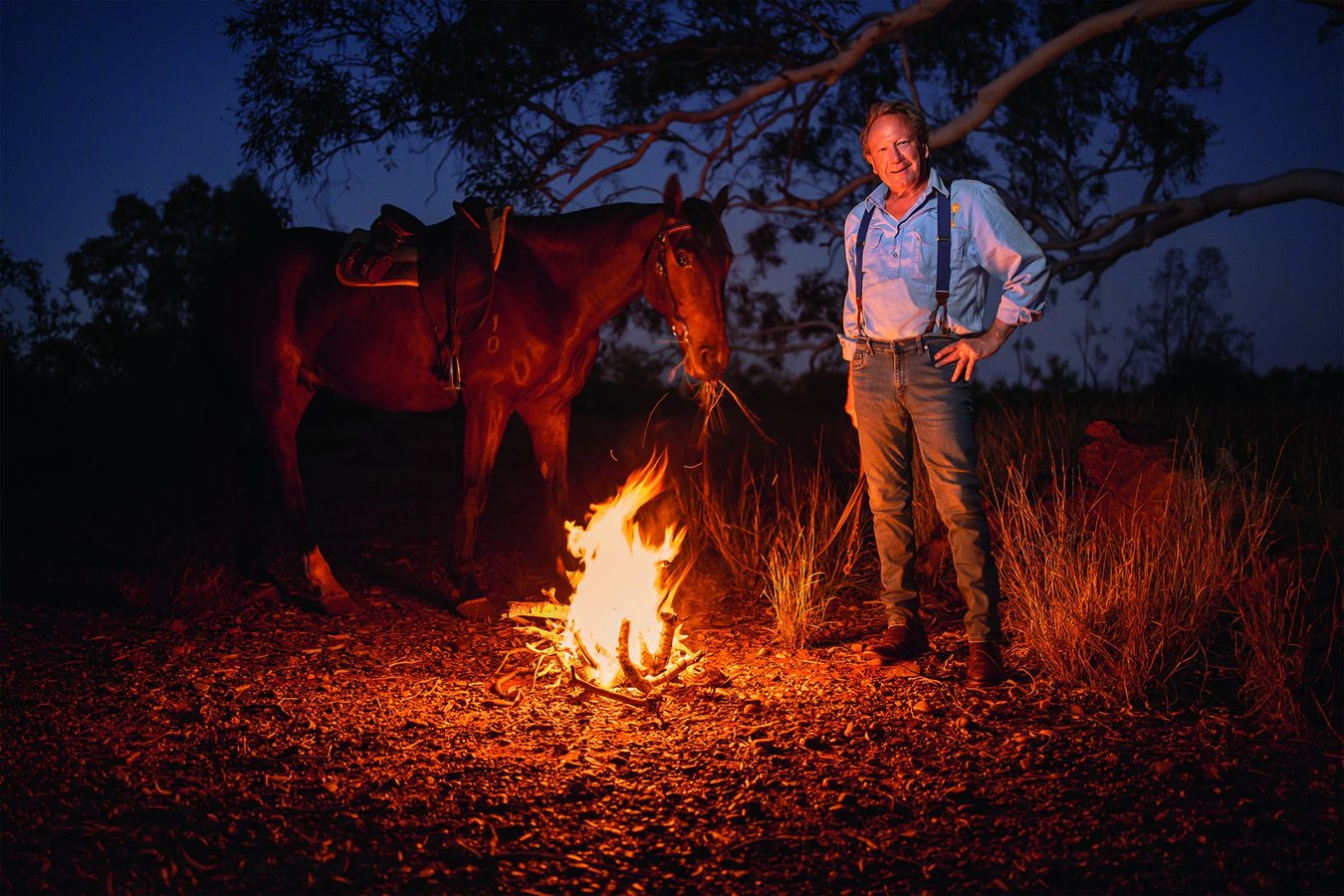
Andrew Forrest, the executive chairman of iron ore producer Fortescue, is staking his company's future on an ambitious plan to eliminate fossil fuels from its mining operations by 2030, a deadline he describes as «Real Zero». The strategy sets Fortescue apart from larger rivals BHP and Rio Tinto, both of which have scaled back their climate targets in recent years, and comes as many global corporations retreat from net-zero commitments amid political hostility in the United States.
Forrest, 64, founded Fortescue in 2003 to break the grip of BHP and Rio Tinto on the iron ore market. His timing captured China's construction boom, and the company now produces nearly 222 million tons of iron ore annually, generating $17 billion in revenue. In August, Fortescue reported a 9% increase in revenues for the year ending in July, though its earnings remain less than a third of those of its two older competitors.
The green push has personal roots. Forrest says his daughter Sophia prompted him to think about climate change in the 2010s, leading him to cut oil and gas use at Fortescue's mines and research green hydrogen as a renewable fuel. He dismisses carbon capture, a favoured solution of the oil industry, as a «feel-good notion» pushed by «super lazy politicians». A serious hiking accident in 2015, which left him wheelchair-bound for months, deepened his focus on environmental threats after he began studying climate change's impact on ocean life.
Forrest has also become a prominent supporter of Ukraine since Russia's full-scale invasion in February 2022. He wears a Ukrainian flag pin and has committed tens of millions of dollars to the country's war effort and reconstruction, framing the investment as part of a broader vision in which green industry and geopolitical resilience reinforce each other.
The stakes are considerable. If Forrest succeeds, he could cement Fortescue's position as a trailblazer in decarbonising one of the world's most polluting industries, valued at $3 trillion. Success would also undercut claims that environmental ambition and profitability are incompatible. Failure, however, could vindicate those rivals who have argued that deep emissions cuts are too costly to sustain.
Forrest's combative style has made him a notable figure far beyond Australia. He has waged a five-year legal battle against Meta over deepfake advertisements that used his image to promote cryptocurrency scams. When the White House criticised one of his environmental speeches last January as «vague, radical left-wing climate goals», Forrest responded: «I am entitled to say whatever I damn well wish.»
His 36.7% stake in Fortescue, which he founded after being pushed out of an earlier mining venture, has made him one of Australia's ten richest people, with an estimated fortune of $11.35 billion. Yet it is the decarbonisation gamble, rather than his wealth, that is drawing international attention. «If we could stand up removing all fossil fuels, and if we could do that and maintain our position, then that becomes the hallmark», he says. «Everything else is going to be easier than mining. Everyone else has no excuse.»
The transformation is centred on the Pilbara, a remote, red-earth region of Western Australia about the size of Spain, where temperatures regularly exceed 50 degrees Celsius and barely 65,000 people live. It is there that Forrest intends to prove that a mining giant can run without oil and gas, a test that will be watched closely by investors, regulators and competitors alike.
4