Economy 5 min read By Arthur Ellington
Eurogas chief calls Neptun Deep a crucial step for Europe's energy security as Romania turns net exporter
The president of Eurogas, Cristian Signoretto, says significant progress on the Neptun Deep gas project is a crucial step for European energy security, with Romania set to become a net exporter to the EU.
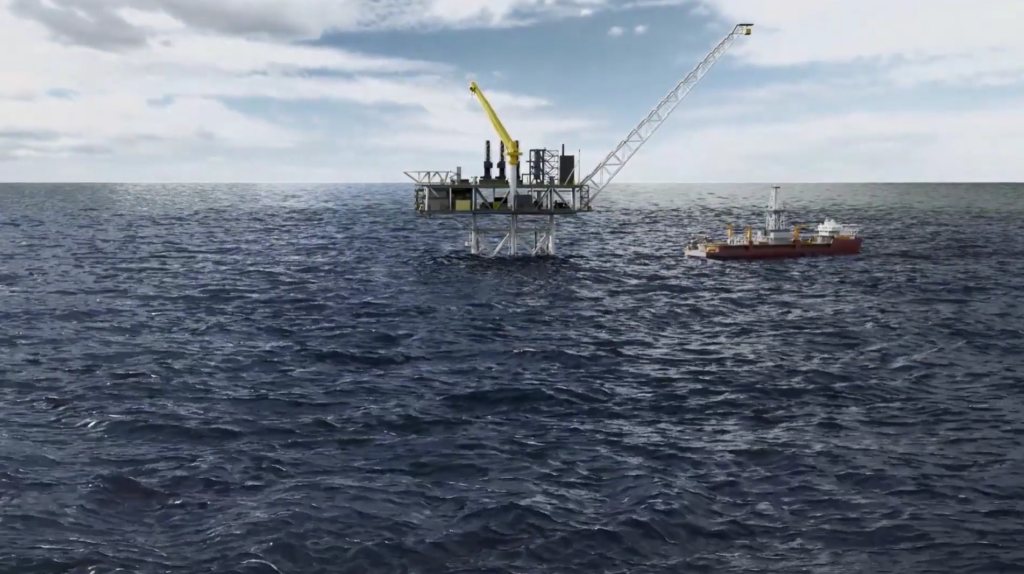
The head of Europe's main natural gas industry association has described the Neptun Deep project in the Black Sea as a crucial step for the continent's energy security, as Romania prepares to become a net exporter of gas to the European Union.
Cristian Signoretto, president of Eurogas, said the significant progress recorded in the project represents a clear strategic gain for Europe. «Eurogas considers domestic production a strategic asset,» he said, adding that the advance made on Neptun Deep is «clearly» a crucial step for the security of energy supplies across the bloc.
The intervention places the Romanian offshore development at the centre of a wider European debate about reducing reliance on imported gas and strengthening internal supply. Eurogas, which represents the European natural gas sector, has consistently argued that domestically produced gas should be treated as a strategic resource rather than a transitional afterthought.
Neptun Deep is the largest gas project in the Romanian Black Sea and is expected to transform the country's position in regional energy markets. Once production begins, Romania is forecast to move from being a net importer to a net exporter of gas to the EU, a shift that would alter supply flows in south-eastern Europe and offer an additional source of non-Russian molecules to the wider market.
The project has been closely watched by Brussels and by industry players as a test of whether Europe can develop new upstream gas capacity while pursuing its longer-term decarbonisation goals. Supporters argue that domestic production lowers the continent's exposure to external shocks and price volatility, while critics question the pace of the transition away from fossil fuels.
For Romania, the stakes extend beyond energy security. The development is expected to generate substantial investment, tax revenue and employment, and to reinforce the country's role as a logistical and commercial hub for gas in the region. The Black Sea has emerged as one of the EU's most promising frontier areas for natural gas, with several neighbouring states also seeking to tap offshore reserves.
Signoretto's remarks come as European policymakers continue to weigh measures aimed at shielding households and businesses from future supply disruptions. The EU has accelerated efforts to diversify energy sources since 2022, and domestic projects such as Neptun Deep are increasingly framed as part of that strategy.
The Eurogas president's assessment adds weight to Bucharest's argument that the project deserves political and regulatory support. It also signals that the European gas industry views Romania as a potential anchor of regional supply, capable of contributing to the bloc's energy mix for years to come.
Romania has attracted growing foreign investment in recent years, with the stock of direct investment from abroad reaching nearly 135 billion euros by the end of 2025, according to official data. Germany remains the largest source of foreign capital, followed by Austria, France, the United States and Italy. Net income for foreign shareholders reached 11.5 billion euros in 2025, with roughly a third of profits reinvested locally.
That broader investment backdrop underlines the significance of large-scale energy projects for Romania's economy. Neptun Deep is among the biggest single investments in the country's energy sector and is seen as a catalyst for further industrial activity linked to gas processing, transport and power generation.
With Europe still navigating uncertain global gas markets, the project's progress will be monitored closely by governments, regulators and investors alike. For now, the message from Eurogas is unambiguous: domestic production such as Neptun Deep is not merely a national project but a component of Europe's collective energy resilience.
4