

Business 5 min read By Bethany Hadley
Zocdoc chief says healthcare cannot be disrupted from the outside
The chief executive of Zocdoc argues that decades of failed attempts by Walmart, IBM, Amazon and others show healthcare resists disruption playbooks and can only be fixed from within the existing system.
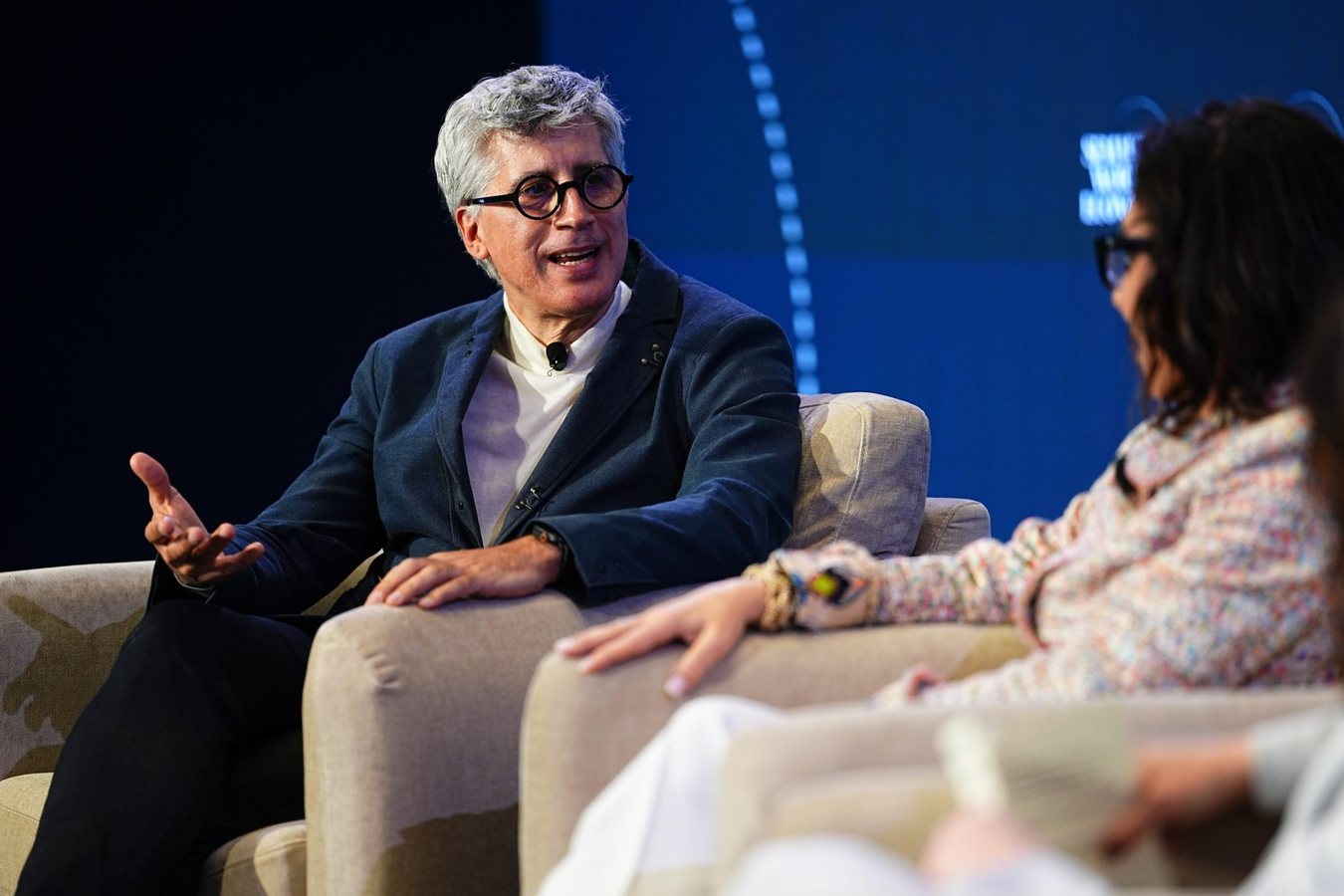
Healthcare cannot be reinvented from the outside by companies applying the standard disruption playbook, according to the chief executive of Zocdoc, who has spent three decades in health technology and nearly two decades building the medical appointment booking platform.
Writing after a series of high-profile retreats by large corporate entrants, he argues that the sector is not a technology problem but a complex systems and incentives problem, with trillions of pounds of capital tied up in hospitals, physician groups, insurers, pharmacies, electronic health records, regulations and clinical workflows built up over decades.
The track record is stark. Haven, the joint venture launched in 2018 by Amazon, Berkshire Hathaway and JPMorgan Chase to simplify health benefits and lower costs for their combined 1.2 million employees, disbanded in February 2021 after fewer than three years, following a string of executive departures including chief executive Atul Gawande.
Walmart Health opened clinics in 2019 offering primary and dental care at low, transparent prices. In April 2024 the retailer announced it would close all 51 clinics across five states, along with its virtual-care service, saying the business was not a sustainable model.
IBM Watson Health launched in 2015 promising to use artificial intelligence to improve cancer treatment recommendations. Seven years later, in 2022, IBM sold the bulk of the unit, including Watson for Oncology, to the private equity firm Francisco Partners in a deal reportedly worth about $1bn, a fraction of the roughly $4bn IBM had invested.
Babylon Health, the UK-founded startup that promised AI-powered primary care through an app, went public via a SPAC in 2021 at a valuation above $4bn. Two years later, in August 2023, its US operations filed for bankruptcy and its UK business was sold off in a fire-sale deal.
With AI ushering in the next technology cycle, healthcare is once again being described as ripe for disruption. The Zocdoc chief acknowledges that AI is a genuine breakthrough with the capacity to improve many things, but warns it can equally accelerate healthcare's broken incentives. Technological breakthroughs, he argues, do not magically generate a working healthcare system.
The core problem, in his view, is that disruption playbooks assume one part of a system can be reinvented and the rest will conform. Healthcare does not work that way. Providers, hospitals, insurers, records systems, regulations and workflows are interconnected, and an innovation that does not fit the existing tracks will not travel far, however fast it may be.
Companies that build around the system may create niche products and even valuable businesses, but they remain on the fringes, lacking the scale to solve healthcare's largest problems. Others assume the existing system will bend to their brilliance, a belief the Zocdoc chief describes as wishful and potentially fatal thinking.
His conclusion is that healthcare is not disruptable from the outside in, only fixable from the inside out. Zocdoc's own approach, he says, was to connect to health systems, physician practices, insurers and electronic health records rather than expect them to adapt. That meant integrating with more than 200,000 providers across 200 specialties, matching more than 10,000 insurance plans and building over 175 calendar integrations, while accounting for bespoke scheduling rules and regulations.
The approach requires building fewer walled gardens and more bridges, connecting what exists instead of trying to replace it. It is slower and harder, but the Zocdoc chief insists it is not anti-innovation; it is anti-delusion and pro-progress.
The stakes are high. Patients still struggle to find a doctor who takes their insurance and wait an average of 31 days for a visit, while 20 to 30 per cent of providers' appointment openings go to waste. Administrative work and burnout continue to weigh on clinicians, and premiums and costs keep rising. Without change, he warns, the status quo will break the bank, public health, or both.
His prescription is fewer moonshots and more incremental progress, with innovation matched to pragmatism so that change actually reaches scale. For investors and executives now eyeing AI's potential in medicine, the message is that ambition alone will not overcome the incentives and infrastructure that have absorbed earlier waves of disruption.