Business 6 min read By Bethany Hadley
What Greenlink's Dobby detour says about infrastructure risk
The Telegraph says fan objections helped shift the cable route at Freshwater West. For project developers, the episode is a lesson in social licence, route optionality and early stakeholder engagement.
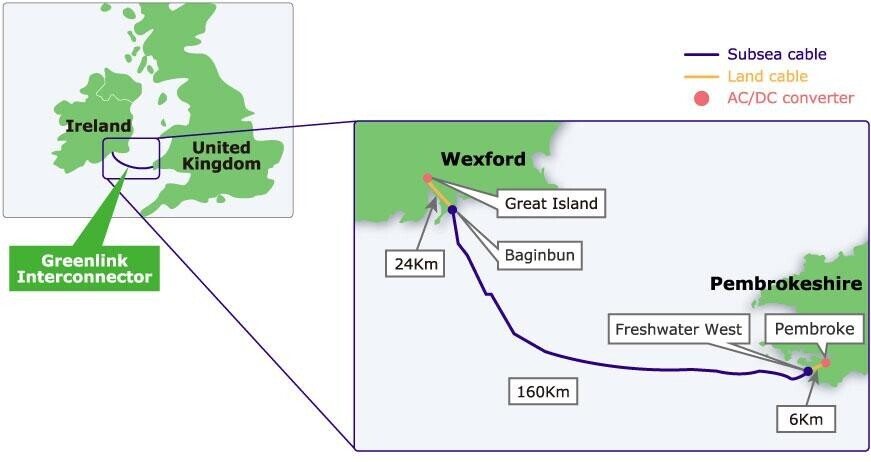
Infrastructure developers usually model planning risk through permits, land rights, environmental constraints, procurement and financing. Greenlink adds a less conventional category: the cultural meaning attached to a location by a global fan community. The Telegraph reported that former project director Simon Ludlam said the route near Freshwater West was altered after Harry Potter fans objected to the cable passing close to an unofficial memorial to Dobby.
The £430 million figure in The Telegraph’s headline refers to the Greenlink project as a whole. It is not a reported bill for the route adjustment, and none of the official sources reviewed publishes a discrete cost for avoiding the memorial. That matters commercially. The case is not evidence that a pile of fan tributes imposed hundreds of millions of pounds of extra expenditure. It is evidence that route flexibility can absorb a reputational and planning issue before it becomes a larger problem.
Greenlink’s own consultation record shows that flexibility was built into the development process. In 2018 the project said several underground cable routes and multiple converter-station locations were under consideration in Pembrokeshire. Ludlam said constructive responses had helped refine the proposal and asked for further views on the route options. In 2019, after a petition and public concern about Freshwater West, Greenlink published a detailed clarification and continued to invite feedback.
The Welsh landfall at Freshwater West was always a sensitive engineering point. The cable reaches shore there and then continues underground toward the Pembroke substation. To avoid an open trench across the beach and dune system, the project used horizontal directional drilling. That method placed cable ducts below the surface, reducing direct disturbance to both protected dunes and recreational use. The relevant Welsh onshore approvals were secured in 2020.
The fan issue emerged because Freshwater West had accumulated another kind of value. The National Trust confirms that the beach was used for Harry Potter and the Deathly Hallows, including Shell Cottage and Dobby’s death scene. Fans subsequently created an informal memorial with stones, messages, socks and other items. It may not resemble a conventional heritage asset, but it functions as a cultural destination with international visibility.
For developers, that is a reminder that stakeholder mapping based solely on formal ownership or statutory designation can miss important constituencies. A location associated with a global film franchise can attract people who do not live locally but can still generate petitions, media attention and political pressure. The cost of ignoring them may be measured less in compensation than in delays, redesign, legal challenge or reputational damage.
Greenlink ultimately demonstrated that stakeholder pressure and project delivery are not mutually exclusive. The interconnector moved through approval, construction and testing and entered commercial operation in 2025. Its capacity is about 500 MW. Ireland’s government has described it as an important energy-security asset that increased the state’s electricity interconnection capacity and provides another route for balancing supply between Ireland and Great Britain.
There is an additional irony in the Dobby case. The National Trust later asked fans to stop leaving physical tributes at the memorial because socks, trinkets and paint from decorated stones could enter the marine environment. The organization has also documented wider visitor pressure at Freshwater West. The cultural asset that fans wanted protected from infrastructure therefore creates environmental management costs of its own.
That tension is useful for business and policy readers. “Social licence” does not mean automatically granting every request made by a vocal community. It means understanding competing forms of value and designing a project that can survive scrutiny. At Freshwater West, the developer had to navigate energy security, protected landscape, tourism, construction logistics and, according to Ludlam, fan attachment to a fictional character.
The broader lesson is that optionality has financial value. A project that keeps multiple route choices open during consultation can respond to unexpected constraints more cheaply than one that locks in a design before it understands the local environment. Greenlink’s public record shows route refinement before construction, while the finished interconnector shows that adaptation did not prevent delivery.
The Dobby story will attract attention because it sounds improbable, but the underlying governance is entirely conventional. Large assets cross places with histories, identities and communities. Those factors can be difficult to price, yet they affect the probability that a project reaches operation. For Hublcore’s audience, the most important part of Greenlink’s “magical” detour is therefore a familiar business principle: the cheapest route on a map is not always the lowest-risk route to completion.
45