Business 5 min read By Alice Ashford
Doctor's Frustration With Medical Records Shaped Husband's Career in Healthcare Innovation
A physician's daily battles with paper records in the 1970s and 1980s pushed her computer-scientist husband toward a career building digital tools for medicine, a partnership that began when the two met washing dishes as immigrants.
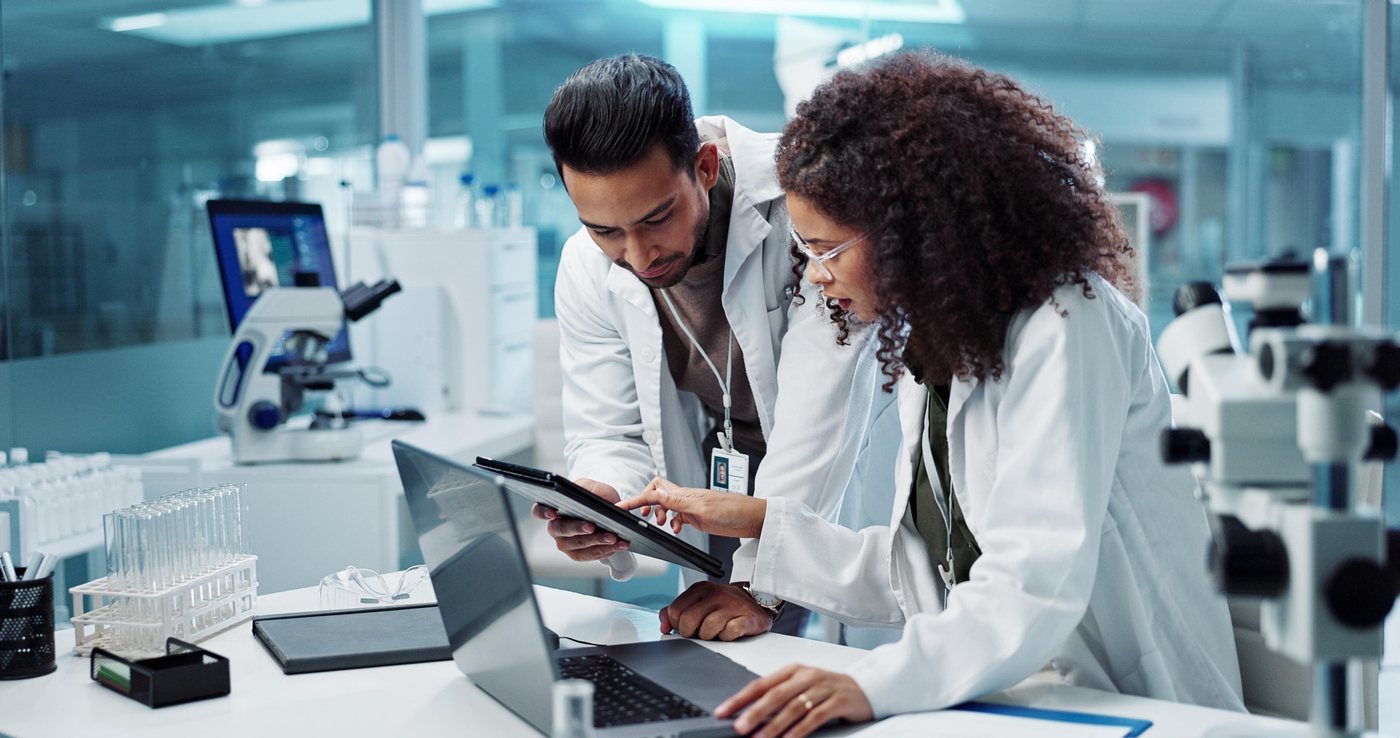
A doctor's frustration with the cumbersome reality of medical records became the catalyst for her computer-scientist husband's career in healthcare innovation, a partnership that began decades earlier when the two met washing dishes as immigrants in 1970.
The couple's story traces how a clinician's daily encounters with paper-based record-keeping — the delays, the illegible handwriting, the files that could not follow a patient from one department to another — shaped the direction of a technologist's professional life. What began as household conversation about the obstacles of hospital administration turned into a sustained effort to apply computing power to the problems of clinical information.
Their meeting in 1970, while both were working in a kitchen, came at a time when each was navigating the particular pressures of building a life in a new country. The shared experience of starting from the bottom of a labour market, with limited language and few professional networks, forged a partnership that would later move into the field of healthcare technology.
The doctor's frustration was not abstract. Medical records in that era were overwhelmingly paper-based, often handwritten, and frequently incomplete. Clinicians could spend significant portions of a working day chasing files, deciphering notes, or duplicating information that had already been recorded elsewhere. For a practising physician, the inefficiency was not merely administrative — it had direct consequences for patient care, from delayed test results to repeated procedures.
Those frustrations, relayed at home over years, became a problem statement for a computer scientist looking for meaningful work. Rather than treating computing as an end in itself, the husband began to see the clinical environment as a domain where data handling, storage, and retrieval could deliver tangible improvements. The shift was gradual but decisive: the household conversation became a professional mission.
The couple's trajectory reflects a broader pattern in the development of health information technology, where clinicians and technologists who worked closely together produced some of the most durable innovations. Doctors understood what was broken in practice; computer scientists understood what was possible in principle. The overlap between those two forms of knowledge was, and remains, relatively rare.
Their story also illustrates the role immigrant professionals have played in building the systems that underpin modern healthcare. Arriving with skills but without established reputations, both partners had to prove themselves in environments that were not always welcoming. The kitchen job that brought them together was a starting point, not a destination, and the years that followed involved the kind of persistent effort that is difficult to summarise in a single career arc.
For the doctor, the frustration with records was a daily reality that many colleagues shared but few had the means to address. For the computer scientist, it was an opportunity to apply technical training to a problem with clear human stakes. The result was a life's work shaped as much by a marriage as by any single professional decision.
The partnership also highlights how innovation in healthcare often emerges from close observation of frontline work rather than from laboratories alone. The problems that matter most to clinicians — the ones that consume time, create risk, and erode morale — are not always visible to those outside the system. Living with someone who confronted those problems every day gave the computer scientist an unusual vantage point.
Their experience predates the digital transformation that would eventually reshape hospitals, clinics, and general practice. But the underlying logic — that information should be accessible, accurate, and useful at the point of care — remains central to debates about health technology today. The couple's early efforts belong to the prehistory of that transformation, when the case for computerising medicine still had to be made.
What the story makes clear is that the impetus for change often comes from those closest to the difficulty. A doctor's irritation with a filing system, shared with a partner who understood computation, became a career. The two immigrants who met washing dishes in 1970 built a life together, and in doing so, contributed to the long, unfinished work of making medical information serve patients better.
5