Business 6 min read By Bethany Hadley
Micro1 bids $12.5m for Spirit Airlines data to outbid Google
Palo Alto startup Micro1 has offered $12.5 million for bankrupt Spirit Airlines' archive of emails, documents and operational records, beating Google's $10 million bid. A court-appointed privacy watchdog wants more time to investigate Micro1, and unions have objected over the handling of personal data. A bankruptcy court hearing is set for 16 September.
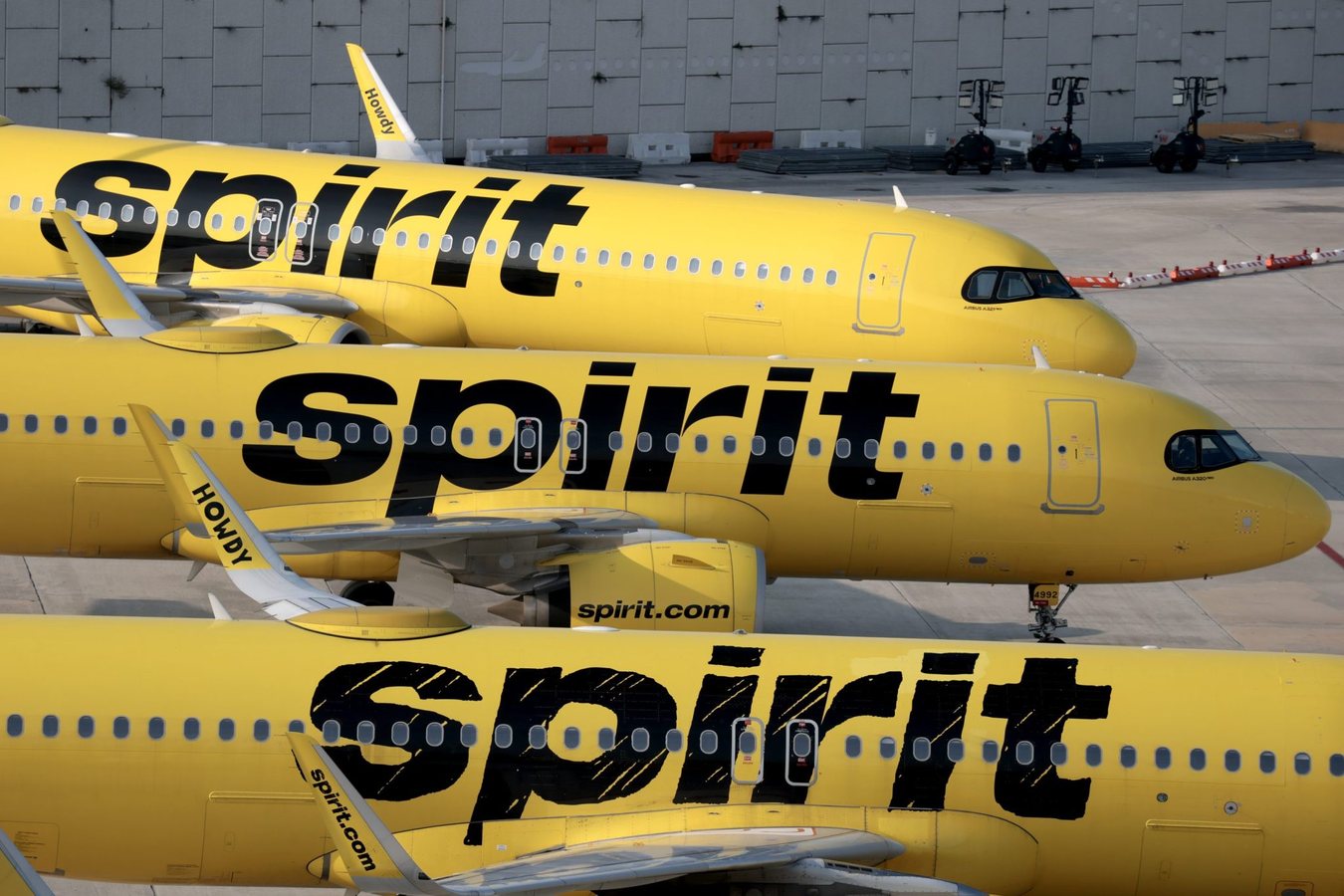
A little-known Palo Alto startup has moved to outbid Google for the personal and operational data of bankrupt Spirit Airlines, in a contest that underlines how fiercely AI companies are now competing for fresh sources of human-generated information.
Micro1, founded in 2022, has proposed paying $12.5 million for decades of Spirit's documents, emails and internal records, according to a filing in the airline's bankruptcy proceedings. That tops Google's previous leading bid of $10 million. Google had itself outbid Mercor, another supplier of data to AI developers, which had offered $7.5 million. No sale has yet received court approval, and a hearing is scheduled for 16 September.
The proposed sale has already drawn objections. Unions representing flight attendants and consumer privacy advocates have filed legal challenges, arguing that the dataset contains sensitive personal information belonging to former Spirit employees and customers that may not be properly redacted or anonymised before it changes hands. The pilots' union has separately argued that some safety records should remain confidential even after de-identification.
Lucy Thomson, the court-appointed consumer privacy ombudsman reviewing the matter, disclosed in a report filed with the bankruptcy court on the night of 8 September that Google had offered to narrow the personal data included in the sale as the parties negotiate safeguards for passenger information embedded in Spirit's operational systems. Google's lawyers told her the de-identified data would be used to train AI models. Thomson has said she needs more time to investigate Micro1 if the bankruptcy court considers the startup as the buyer.
Micro1 has responded with additional privacy commitments as part of its bid, alongside a 25 per cent price premium. The company has offered to exclude sensitive employment material, store records in the United States, destroy raw employment records after processing and give an independent reviewer a 1 per cent sample of the de-identified assets before any onward transfer. It said subsequent transfers would be confined to named AI laboratory customers bound by confidentiality and no-reassociation agreements, although the filing did not identify them.
The scale of Spirit's archive helps explain the sums being discussed. The asset schedule lists roughly 100 million emails, 500 million Microsoft Teams items, and code and operational records. Customer profiles and customer lists are excluded, and passenger fields embedded in the included systems must be de-identified.
Micro1 began life helping companies hire engineers. Its founder, Ali Ansari, started the business in 2022 while studying computer science and mathematics at UC Berkeley. Early products included an AI interviewer and a marketplace for technical workers. In early 2025 the company moved into supplying human-generated training data, with specialists who evaluate models and help build simulated environments in which AI agents can practise tasks.
In a LinkedIn post explaining the Spirit proposal, Ansari framed AI's future as a bet on «the messiness of the real world and the brilliance of the humans working inside it». He said that realism allows training environments and tasks to match the conditions models face when deployed. Investors valued Micro1 at $500 million when it raised a $35 million Series A round in September 2025. By August 2026 its gross annualised run rate had reached $500 million, according to TechCrunch, citing an unnamed person familiar with the company.
Its court filing describes a fast-moving data-buying operation. Micro1 said it had completed more than 50 data transactions in the preceding 45 days, without identifying the sellers, prices or AI laboratory customers. It offered to buy Spirit's archive with cash on hand and to cover the cost of de-identification and independent review.
There is no reliable market average for the data of a failed company, and public figures mix completed deals, unsigned proposals and advertised rates. Among the examples identified, $12.5 million is the largest. Jonathan Siddharth, chief executive of Turing, which supplies human experts and training data to AI developers, told The Information his company had bought five to ten failed-startup codebases, paying an average in the tens of thousands of dollars each. Dori Yona, chief executive of SimpleClosure, which helps startups shut down and sell assets, told Forbes the service had processed nearly 100 deals in the preceding year, recovering more than $1 million, with payments typically between $10,000 and $100,000 per company. SimpleClosure said in September that its number of AI buyers had grown ninefold compared with 2025, and more than 350 companies have listed assets since April on AssetHub, its marketplace for selling or licensing code and workplace data to AI labs.
The competition reflects a broader squeeze on training material. Frontier models learn from enormous collections of books, websites and public code, and a 2025 Epoch AI report commissioned by Google DeepMind projected that the available supply of public human-generated text could be fully used before 2030 under prevailing trends. That prospect is pushing AI developers towards private corporate archives, and towards bankruptcy courts, in search of data that cannot be scraped from the open web.