

Business 4 min read By Alice Ashford
China's car exports surge past last year's total as domestic sales slump
Chinese passenger car exports exceeded 6.2 million units in the first eight months of 2026, surpassing the whole of last year, as weak domestic demand and Western tariffs push manufacturers to seek growth overseas.
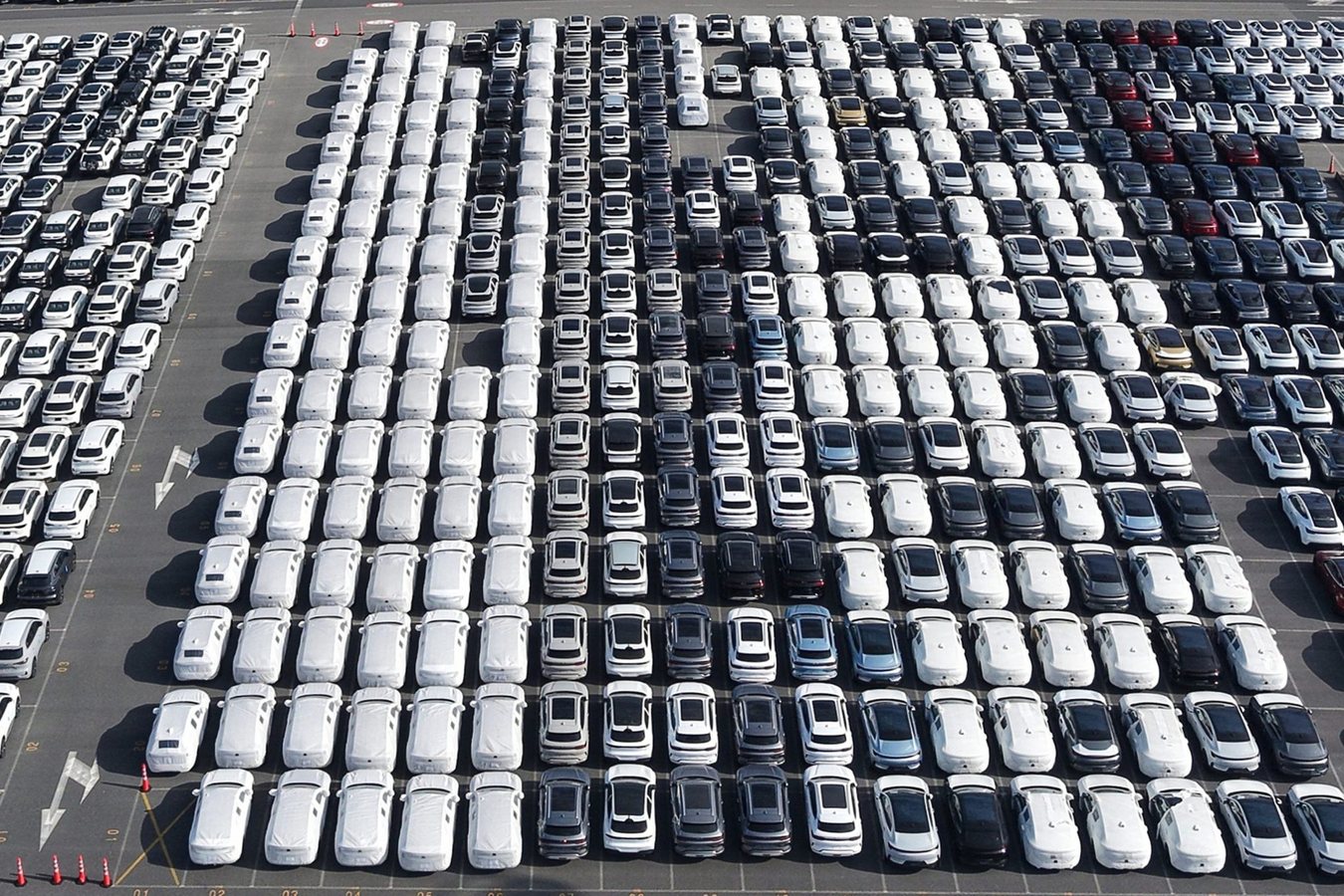
China's passenger car exports have already surpassed last year's total in the first eight months of 2026, according to the China Association of Automobile Manufacturers (CAAM), as the world's largest car exporter redirects capacity overseas amid a deepening slump at home.
Exports of passenger vehicles jumped 67.1 per cent year-on-year in August to around 890,000 units, CAAM said, driven by strong demand for plug-in hybrids and pure electric vehicles. More than 6.2 million passenger cars were shipped abroad between January and August, exceeding the roughly 6 million exported in the whole of 2025, when total vehicle exports of all types reached 7.1 million units.
S&P Global Ratings expects China to achieve full-year passenger vehicle export growth of between 50 and 70 per cent, a pace that would cement its dominance of global car trade. Stephen Chan, an associate director at the ratings agency, attributed the stronger-than-expected performance to competitive pricing and improving quality. «It's likely that strong export growth will largely mitigate the domestic weakness,» he said.
That domestic weakness is stark. Passenger car sales in China fell 25.6 per cent year-on-year in August to just below 1.5 million vehicles. The home market is under pressure from intense competition and price wars, while a slowing economy has undermined consumer confidence, leaving carmakers with little choice but to look abroad for growth.
Chinese manufacturers have found receptive buyers in Europe, Latin America, Africa and Southeast Asia, even as hefty tariffs have effectively kept most Chinese-made passenger cars out of the United States. The energy shock stemming from the Iran war and rising fuel prices have also pushed more drivers of petrol and diesel vehicles to switch to electric models, adding momentum to Chinese EV exports.
Analysts at Morgan Stanley said in a recent research note that weak domestic demand is increasing carmakers' incentives to redirect capacity overseas. Chinese automakers are also moving beyond simply exporting vehicles, setting up more factories abroad and shifting towards local assembly and manufacturing. That strategy is designed to ease the impact of trade barriers and reduce logistics costs, according to the bank.
The shift towards overseas production marks a significant evolution for China's car industry, which has moved in little more than a decade from a domestic-focused manufacturer to the world's leading exporter. Western efforts to curb the influx of Chinese vehicles have been mixed, with tariffs slowing but not stopping the flow. Instead, Chinese brands have deepened their presence in markets where trade restrictions are lighter or where demand for affordable electric vehicles is growing fastest.
For British and European consumers, the continued surge means more choice and pressure on legacy manufacturers, which are already grappling with the transition to electric power and rising competition on price. For policymakers, it raises fresh questions about how far trade defences can reshape an industry in which China now holds a decisive cost advantage.
Whether the export boom can continue at its current pace remains uncertain. S&P's forecast of 50 to 70 per cent growth implies some moderation from August's 67.1 per cent rise, but the underlying drivers — competitive pricing, quality gains and weak domestic demand — show little sign of fading. With more Chinese factories being built overseas, the country's carmakers are positioning themselves not just as exporters but as long-term participants in the markets they serve.
60