Business 7 min read By Arthur Ellington
Andy Burnham becomes seventh British prime minister in a decade
Andy Burnham has become Britain's seventh prime minister in a decade, succeeding Keir Starmer after a Labour leadership contest. Markets are watching closely as the former Greater Manchester mayor forms his cabinet, with speculation about Ed Miliband's role in the new government.
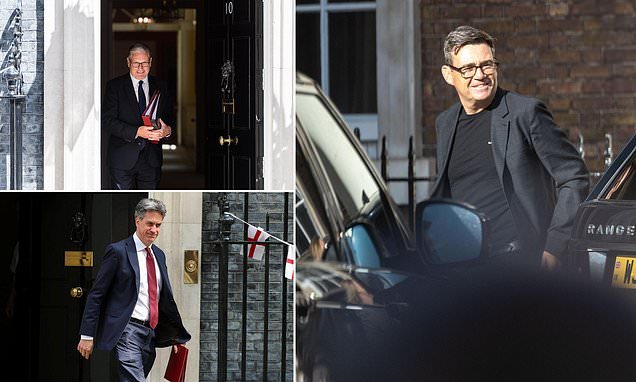
Andy Burnham has taken office as Britain's seventh prime minister in a decade, following a formal invitation from King Charles III to form a government. The former Greater Manchester mayor succeeds Keir Starmer after winning the Labour Party leadership contest, marking another rapid turnover at the top of British politics.
Burnham's ascent to Number 10 comes amid heightened scrutiny from financial markets, which are closely watching his cabinet appointments and policy direction. Investors are particularly focused on the potential role of Ed Miliband, the former Labour leader who served as Climate Change Secretary under Starmer and is seen as a key figure on the party's left wing. Market analysts have expressed caution about what they describe as a possible shift toward more interventionist economic policies under Burnham's leadership.
The new prime minister inherits a challenging economic landscape. Britain continues to grapple with sluggish growth, persistent inflationary pressures, and a cost-of-living crisis that has strained household budgets across the country. Public finances remain under pressure, with high levels of government debt limiting fiscal room for manoeuvre. Business groups have called for stability and a clear economic strategy to boost investment and confidence.
Burnham's political career has been defined by his tenure as mayor of Greater Manchester, where he oversaw significant transport and housing projects, as well as his earlier roles as Health Secretary and Culture Secretary under Gordon Brown's government. His time in Manchester earned him a reputation as a pragmatic politician capable of working across party lines, though critics point to mixed results on key local issues such as homelessness and bus franchising.
The transition of power follows a period of intense political turbulence in Britain. Since 2015, the country has seen seven different prime ministers, reflecting deep divisions within both major parties and the electorate. The Conservative Party, which held power for much of that period, cycled through five leaders amid Brexit chaos, the COVID-19 pandemic, and internal rebellions. Labour's return to government under Starmer in 2024 was short-lived, as internal disagreements over economic strategy and public spending led to a leadership challenge that ultimately elevated Burnham.
Financial markets have reacted with caution to the change in leadership. The pound has experienced modest volatility, while gilt yields have edged higher as traders price in uncertainty about fiscal policy. Analysts at major investment banks have noted that Burnham's cabinet choices will be crucial in determining market sentiment. A key test will be his appointment of a Chancellor of the Exchequer, with speculation centring on whether he will choose a figure seen as fiscally conservative or one aligned with more expansive spending plans.
Ed Miliband's potential return to a senior cabinet role has drawn particular attention. Miliband, who led Labour from 2010 to 2015, has been a vocal advocate for accelerated climate action and greater state intervention in energy markets. During his time as Climate Secretary, he pushed for ambitious renewable energy targets and tighter regulation of fossil fuel companies. Some business leaders have expressed concern that his influence could lead to policies that increase costs for industry and deter investment in the North Sea oil and gas sector.
Burnham has sought to reassure the business community, emphasising his commitment to economic stability and partnership with the private sector. In his first public remarks as prime minister, he stressed the importance of creating conditions for growth while addressing inequality and regional disparities. He has signalled that his government will prioritise investment in infrastructure, skills training, and green technology as drivers of long-term prosperity.
The new prime minister also faces immediate challenges on the international stage. Relations with the European Union remain a sensitive issue, with ongoing disputes over post-Brexit trade arrangements and Northern Ireland protocol implementation. Burnham has indicated a desire for a more constructive relationship with Brussels, though he has ruled out rejoining the single market or customs union. Meanwhile, the war in Ukraine continues to demand sustained British support, and the government must navigate an increasingly complex geopolitical environment, including tensions with China and the need to maintain strong ties with the United States.
Domestically, the new administration will be judged on its ability to deliver tangible improvements in public services. The National Health Service remains under severe strain, with waiting lists at record highs and staff morale low. Schools, local councils, and the justice system are all facing funding pressures. Burnham has promised a renewed focus on public service reform, but he will need to balance these ambitions with fiscal constraints and the demands of his party's various factions.
The coming days will see Burnham appoint his full cabinet and set out his legislative agenda. The first major test will be a parliamentary vote on his government's programme, expected within weeks. With a working majority in the House of Commons, he has the immediate ability to pass legislation, but maintaining party unity will be essential to avoiding the kind of internal strife that has destabilised previous administrations.
As Britain adjusts to its seventh prime minister in a decade, the central question remains whether Burnham can provide the stability and direction that has eluded his recent predecessors. Markets, businesses, and the public will be watching closely for early signals of his priorities and governing style.
94