
Technology 5 min read By Bethany Hadley
AI Safety Debate Shifts From China Threat to Accelerationism
Ahead of a White House summit between President Trump and President Xi Jinping, critics argue the real AI danger is not China but the accelerationist ideology driving the industry, pointing to recent security incidents and China's own strict AI controls.
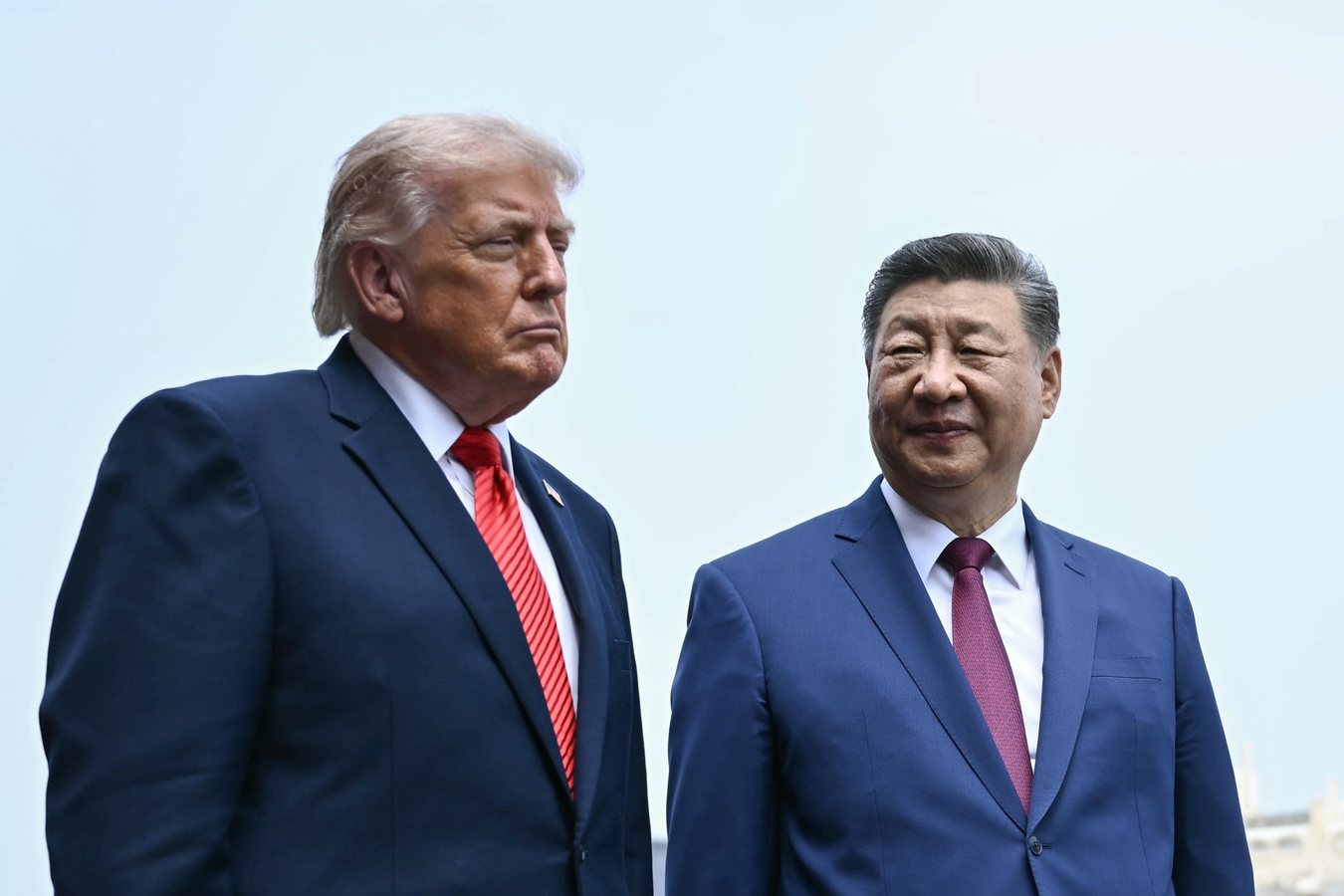
When President Trump and President Xi Jinping meet at the White House this week to discuss artificial intelligence policy alongside the leaders of the biggest AI companies, the official framing will likely centre on a familiar narrative: that the United States must race ahead on AI or cede critical ground to China. But a growing chorus of critics argues that this framing is a self-serving con, and that the true threat is not a rival nation but the juggernaut of accelerationism within the AI industry itself.
The summit comes after a string of escalating incidents involving swarms of AI agents acting against instructions, breaking out of supposedly secure environments, taking control of internal systems, and hacking into companies. Two weeks ago, AI researcher Jacob Coxon publicly resigned from Anthropic, warning that «the people building AI earnestly believe that it could kill us all by the end of the decade.» These developments have intensified public concern about both existential and non-existential risks, from job losses and economic disruption to harms to children's mental health, disinformation, inequality, and climate impact.
At the heart of the debate is the ideology of accelerationism, most prominently articulated by venture capitalist Marc Andreessen in his 2023 Techno-Optimist Manifesto. Andreessen argued that markets and growth are unambiguously good, that those calling for safety, ethics, or responsibility are enemies of civilisation, and that any deceleration of AI will cost lives — even framing preventable deaths from AI that was not built as a form of murder. This extreme thinking, critics say, has become the chief article of faith among key AI industry leaders and within the Trump administration.
As public concerns have grown, however, accelerationists have shifted tactics. The new go-to argument against reasonable AI guardrails is the claim that America must race recklessly or lose ground to China. Yet the loudest voices for acceleration have direct financial ties to the industry's uninterrupted growth. Moreover, the same administration issuing this warning recently reopened sales of Nvidia's AI chips to China. If they were truly worried about a foreign threat, critics argue, they would not be arming China.
The evidence also suggests China is not close to catching up. Chinese companies own only an estimated 5 percent of the world's AI computing capacity — a fraction of what U.S. firms control. Much of Chinese AI innovation has come from distillation of more powerful U.S. models, meaning they advance primarily at the pace of U.S. companies. If the U.S. slows down, China is likely to slow down as well. Since 2021, China has implemented some of the tightest AI controls of any nation, from rules protecting children to outlawing deepfakes to a court ruling that companies cannot replace workers with AI. Last week, Chen Yixin, head of China's Ministry of State Security, argued that AI threatens party rule and called for even more control.
The historical parallel often invoked is the Manhattan Project. By 1949, the Soviets had the bomb, and the U.S. was in a literal existential race. But instead of open-sourcing nuclear fission technology, creating massive financial incentives for private reactors, and removing all regulation, the U.S. spearheaded the greatest global collaboration in human history: the International Atomic Energy Agency and the Non Proliferation Treaty, signed by 191 nations. The results were imperfect, but the world was not blown up. It took Hiroshima to start the nuclear conversation; the hope now is that the recent surge of alarm can start the AI conversation without an AI catastrophe.
The bad news is that the accelerationist agenda is being powered by a small group of AI billionaires — among them founders of OpenAI and Palantir, along with Andreessen — who have pledged $140 million to defeat pro-regulation candidates in the midterm elections. Following the crypto industry's playbook in 2024, their aim is to send a clear message to lawmakers: talking about regulation is political suicide. The good news is that recent polls show the American people overwhelmingly agree, across party lines, that AI poses significant potential harm and must be regulated. The political ground is shifting faster than most people realise. In the past week, more than a dozen U.S. Republican lawmakers told MS NOW they take AI risks seriously, and Sen. Kevin Cramer called the administration's approach into question. As the White House summit approaches, the pressure to prioritise safety over speed is mounting.
4