Sports 4 min read By Callum Montgomery
FIFA president Infantino in fight to save job after World Cup sell-off plan collapses
Gianni Infantino has been forced to abandon a controversial plan to sell parts of the World Cup to private investors, prompting UEFA to declare no confidence in his leadership and intensify calls for him to resign.
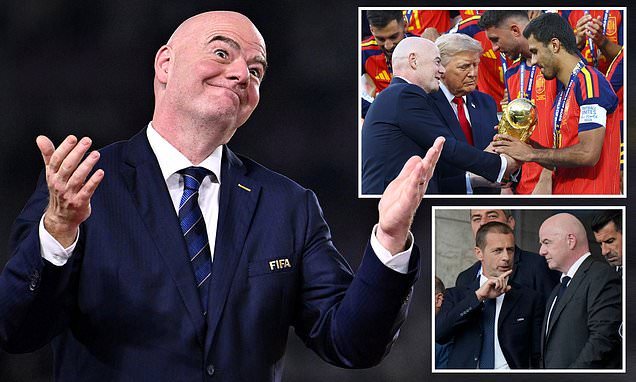
FIFA president Gianni Infantino is fighting to save his job after being forced into an embarrassing retreat over a controversial plan to sell parts of the World Cup to private investment. The reversal drew an immediate declaration of no-confidence from UEFA, European football’s governing body, and renewed calls for Infantino to stand down.
Infantino admitted defeat on Saturday morning after his proposal met fierce resistance across the sport. He said he would return to discussions about football’s growth «in the spirit of shared interest in our game». The climbdown followed the rejection of the plan by three continental confederations, with UEFA having warned its member nations that they would boycott FIFA events if the scheme went ahead.
UEFA has now formally declared that it has lost confidence in Infantino’s presidency. Football chiefs in Europe are reported to be looking at ways to remove him from office, with the collapse of the World Cup investment plan seen as a tipping point in a presidency already marked by controversy.
The proposed sell-off had been intended to bring private capital into the World Cup, one of the most valuable properties in global sport. Critics argued that handing a share of the tournament to outside investors threatened the integrity and governance of the game. The plan was widely portrayed as a power grab that would cement Infantino’s control while generating huge sums for FIFA.
Infantino’s position has been further undermined by an awkward exchange involving former United States president Donald Trump. Asked whether he had any knowledge of the FIFA president’s plan, Trump denied any involvement, responding, «Who?» The dismissive reply added to the sense of humiliation surrounding Infantino and was seized on by his detractors.
Among those calling for change is former England midfielder Peter Reid, who said Infantino must go «for the good of the game». His intervention reflected a broader mood among former players and administrators who believe FIFA’s reputation has been badly damaged.
The Guardian’s Nick Ames wrote that Infantino had «demolished trust in football’s integrity and governance», leaving the credibility of world football’s governing body on the floor. Ames argued that every day Infantino remains in power was «a fresh stain» on the institution, and that UEFA’s call for a boycott and declaration of no-confidence should be only the opening moves in a campaign to dethrone him.
The developments represent the most serious challenge yet to Infantino’s authority. While FIFA has not commented on the prospect of a leadership challenge, the combination of a failed flagship policy, a formal declaration of no-confidence from UEFA and public ridicule from figures such as Trump leaves Infantino facing the biggest crisis of his presidency.
The World Cup investment plan was intended to secure the long-term financial future of FIFA’s flagship competition. Yet the speed and scale of the backlash suggest that even the most powerful figures in football cannot push through changes that are seen as self-serving. UEFA’s boycott threat, in particular, raised the prospect of a split in the global game, with European nations prepared to walk away from FIFA events rather than accept the plan.
There are no signs that the pressure on Infantino will ease. His supporters may try to present the climbdown as a willingness to listen, but his opponents see it as evidence of poor judgment and an unwillingness to accept accountability. With UEFA openly hostile and calls for his removal growing louder, the immediate question is no longer whether Infantino’s position is under threat, but how long he can hold on.