Sports 6 min read By Bethany Hadley
Cristiano Ronaldo’s World Cup Swansong Continues as Portugal Face Spain in Last 16
Portugal face Spain in the World Cup 2026 last 16, with Cristiano Ronaldo leading the attack in what is expected to be his final appearance on the global stage. The match in Dallas sees one change to the Portuguese lineup, while Spain remain unchanged after their win over Austria.
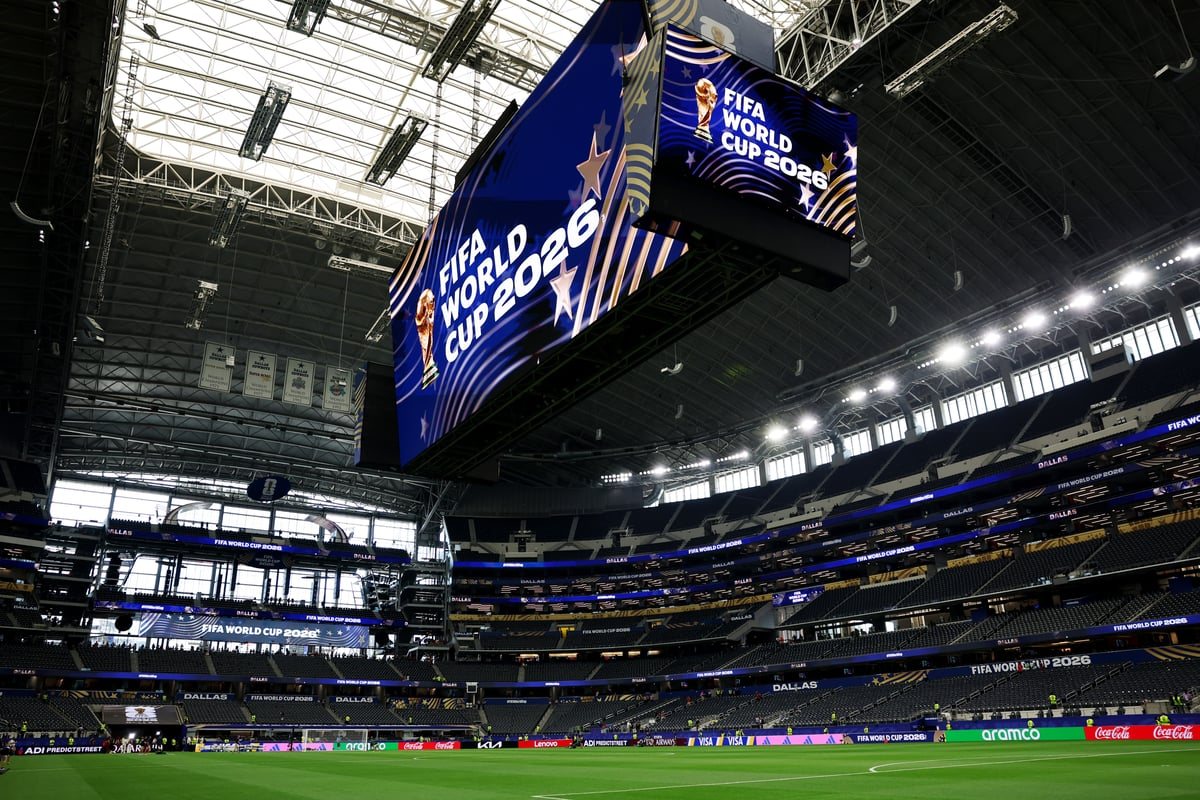
Portugal and Spain meet in the World Cup 2026 last 16 in Dallas, with Cristiano Ronaldo continuing his likely final campaign on the international stage. The Iberian derby carries enormous weight for both sides, as the winner advances to the quarter-finals and keeps their title hopes alive.
Portugal enter the match after a hard-fought 2-1 victory over Croatia in the group stage, a result that secured their place in the knockout rounds. Manager Roberto Martinez has made one change to the starting lineup, bringing João Félix into the attack in place of Rafael Leão, who drops to the bench. The adjustment signals a tactical shift aimed at unlocking Spain’s disciplined defence.
Spain, meanwhile, have opted for continuity. After sweeping aside Austria in their previous match, head coach Luis de la Fuente has named an unchanged starting XI. The decision reflects confidence in a squad that has shown cohesion and attacking fluidity throughout the tournament. Spain’s possession-based style will pose a significant challenge for Portugal, who will need to be compact and clinical on the counter.
The match is being played at the AT&T Stadium in Arlington, Texas, with kick-off scheduled for 2pm local time, 3pm EDT, 8pm BST, and 5am AEST. The venue, which typically hosts American football and major concerts, has been transformed for the World Cup and is expected to draw a large crowd, including significant contingents of Portuguese and Spanish supporters.
Cristiano Ronaldo’s presence adds an emotional dimension to the fixture. At 41 years old, the five-time Ballon d’Or winner is widely expected to retire from international football after this tournament. His performances in the group stage have been mixed, but he remains Portugal’s most dangerous attacking threat and a focal point for the team’s ambitions. The prospect of facing Spain, a traditional rival, adds further intensity to what could be his final World Cup appearance.
Spain’s squad features a blend of experienced internationals and emerging talent. Pedri, Gavi, and Lamine Yamal have been instrumental in the team’s creative play, while Rodri anchors the midfield with composure and defensive discipline. Up front, Álvaro Morata leads the line, supported by wingers who stretch defences and create space. Spain’s ability to control possession and dictate the tempo will be key to their chances of progressing.
Portugal’s strength lies in their defensive organisation and counter-attacking speed. With Rúben Dias at the heart of the backline and João Cancelo providing width from full-back, the team has a solid foundation. In midfield, Bruno Fernandes and Bernardo Silva offer creativity and vision, capable of unlocking Spain’s defence with incisive passes. The inclusion of João Félix adds unpredictability in the final third, though his form has been inconsistent at club level.
The historical rivalry between Portugal and Spain adds an extra layer of significance to the match. The two nations have met 40 times previously, with Spain holding a slight edge in wins. Their most recent encounter in a major tournament came at the 2010 World Cup, when Spain defeated Portugal 1-0 in the round of 16 en route to winning the tournament. That result remains a painful memory for Portuguese fans, and the current squad will be eager to reverse the outcome.
Beyond the immediate stakes, the match carries implications for the broader World Cup landscape. The winner will face either France or England in the quarter-finals, depending on results elsewhere. Both potential opponents are formidable, but the Iberian derby is seen as one of the most competitive matchups in the round of 16, with neither side entering as clear favourites.
Fan reaction has been intense on social media, with supporters from both nations expressing anticipation and anxiety. Portuguese fans have rallied around Ronaldo, hoping for a fitting farewell, while Spanish supporters are confident in their team’s form and depth. The atmosphere in Dallas is expected to be electric, with thousands of travelling fans adding to the spectacle.
As the match approaches, both teams have completed their final preparations. Portugal’s training sessions have focused on defensive shape and quick transitions, while Spain have worked on maintaining possession and exploiting gaps in the opposition’s defence. The tactical battle between Martinez and de la Fuente will be closely watched, with each manager seeking to outmanoeuvre the other.
For Portugal, the match represents an opportunity to honour Ronaldo’s legacy with a deep run in the tournament. For Spain, it is a chance to assert their credentials as serious contenders. Regardless of the outcome, the Iberian derby promises to be a compelling contest that captures the essence of World Cup football.

79