Politics 4 min read By Alice Ashford
US launches Operation Economic Outcast as Iran’s economy buckles under inflation
Washington’s new sanctions campaign, Operation Economic Outcast, targets Iran’s financial system as food inflation soars and the rial depreciates, deepening hardship for ordinary Iranians.
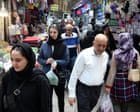
The United States has launched a new sanctions campaign against Iran, named Operation Economic Outcast, as the country’s economy buckles under runaway food inflation, fuel shortages and a rapidly depreciating currency. For many Iranians, the fresh measures appear superfluous given the grim conditions already gripping daily life, with petrol stations closed and foreign exchange reserves running thin.
The campaign is designed to intensify pressure on Tehran’s financial infrastructure, with Washington signalling further action against banks involved in Iranian transactions. Treasury Secretary Scott Bessent has indicated that additional institutions will be targeted in an effort to clamp down on the flow of money into the country, according to the Associated Press. The move follows years of sanctions that have already isolated Iran from much of the global banking system.
The economic fallout is being felt acutely on the ground. Food inflation has accelerated sharply, pushing basic staples beyond the reach of many households, while the rial’s slide has eroded purchasing power. The lack of foreign exchange reserves has compounded the problem, leaving importers unable to secure the currency needed to bring in essential goods. Petrol stations have shut in parts of the country, a symptom of deeper supply disruptions linked to the financial squeeze.
Analysts have questioned whether the new campaign will achieve its stated aims. Commentators at Al Jazeera have pointed to the looming failure of Operation Economic Outcast, arguing that sanctions alone are unlikely to force a change in Tehran’s behaviour while they deepen the suffering of ordinary citizens. The debate echoes longstanding criticism of punitive economic measures, which often hit civilian populations hardest without delivering the political outcomes intended by their architects.
The timing of the campaign is significant. Iran’s economy was already under severe strain before the latest measures, with inflation running at levels that have made basic goods unaffordable for many families. The new sanctions are expected to push more Iranians into poverty, according to observers, as the cost of food and other essentials continues to climb. The currency’s depreciation shows no sign of abating, and the absence of a credible foreign exchange buffer leaves the central bank with limited room to intervene.
For Washington, the campaign represents a continuation of its maximum pressure approach, which has sought to isolate Iran economically in response to its nuclear programme and regional activities. The focus on banks is intended to close remaining loopholes that allow Tehran to access hard currency and finance its operations. However, the practical effect on the ground is likely to be further hardship for a population already enduring one of the most severe economic crises in the country’s recent history.
The situation raises difficult questions about the effectiveness of sanctions as a tool of statecraft. While they impose real costs on the target government, they also carry significant humanitarian consequences. With food inflation soaring and the currency in freefall, the gap between the intended political pressure and the lived reality of ordinary Iranians has rarely been wider. The coming months will test whether Operation Economic Outcast can achieve its objectives or whether it becomes another chapter in the long and troubled history of economic warfare.
61