Politics 4 min read By Arthur Ellington
Trump Turns Geographic Names Into Instruments of Political Branding
“New America” for New Mexico is still only a proposal, but it fits a presidency that increasingly uses federal naming power to convert maps into political messaging.
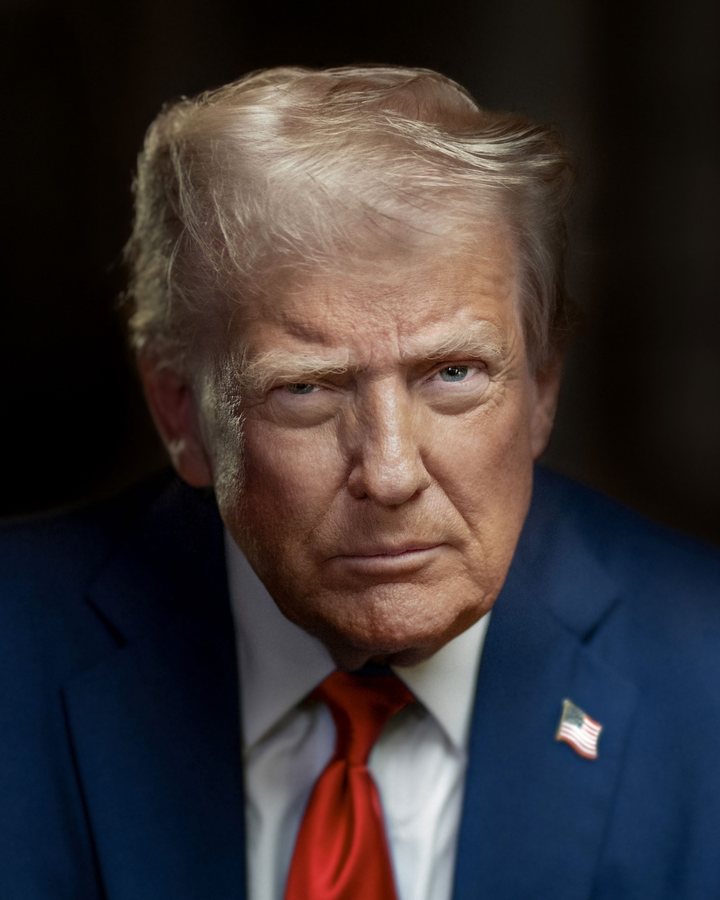
Donald Trump’s latest naming idea is not a policy programme in the usual sense. It is a branding exercise aimed at one of the most durable things government can print: a map.
On September 6, the U.S. president endorsed a suggestion that New Mexico should become “New America.” He presented the alternative as more prestigious and attractive, while also accusing the state of widespread vote cheating without citing evidence. New Mexico’s certified 2024 results show Kamala Harris won the state, with 478,802 votes to Trump’s 423,391.
The immediate legal effect is zero. Trump has not issued an executive order changing the state’s name. What he has done is make the proposal part of presidential communications, including an AI-style video in which the word “Mexico” on a state welcome sign is replaced with “America.” That makes the idea useful even before any institution acts on it: a name can function as a political product before it becomes an administrative fact.
Trump has already demonstrated that he is willing to move from slogan to federal order. Executive Order 14172 directed U.S. agencies to use “Gulf of America” instead of Gulf of Mexico. Executive Order 14422, signed on August 27, 2026, instructed the Interior Department and the Board on Geographic Names to replace Lake Ontario with “Lake America” in the federal naming system.
The practical reach of those moves is narrower than the rhetoric. Washington can dictate federal terminology and influence platforms that rely on U.S. government data. It cannot force Canada, Mexico or international institutions to use the same terms. That gap between domestic administrative power and international recognition is precisely why the branding value may matter more than universal adoption.
New Mexico adds a different institutional problem. It is a constituent state, not a federal geographic feature. The president’s post does not itself alter the state’s legal identity. More importantly, the current name is not a recent expression of Mexican statehood that Washington inherited. Nuevo México was used for the region centuries before the United States existed. University of New Mexico archival material says the name had already been in use for more than 270 years when Congress organised the territory in 1850.
That history turns “New America” into an exercise in political repositioning. The new name would signal that a place is being made more visibly national by replacing a Spanish-derived name with a U.S.-centric use of “America.” Yet the terminology contains a built-in contradiction. In English, America is indeed a standard shorthand for the United States. Geographically, however, the Americas include many nations, and North America includes the United States, Canada and Mexico.
The message is therefore not that New Mexico is moving from something non-American to something American. It is that one definition of American identity is being elevated above others. A historic regional name becomes less desirable because it contains the word Mexico; a new name becomes more desirable because it contains the political brand America.
For institutions, this is more than a semantic curiosity. Governments define standards, databases and official documents, and those standards can propagate into commercial maps, contracts and media. Naming power can shape public perception even where international agreement is absent.
For Trump, the strategy also has a low-cost advantage. It creates highly visible conflict around symbols, forces opponents to respond and reinforces a message of national primacy without requiring a complex legislative programme. Whether New Mexico ever changes its name may be secondary. The political return arrives as soon as the argument begins.
65