Politics 4 min read By Arthur Ellington
Russia’s war economy is exposing the limits of elite protection
A Pladrom investigation traces arrests across drone makers, defence plants and regional government, then connects them to the removal of Yabloko’s federal election list. The common theme is conditional access to power rather than durable institutional protection.
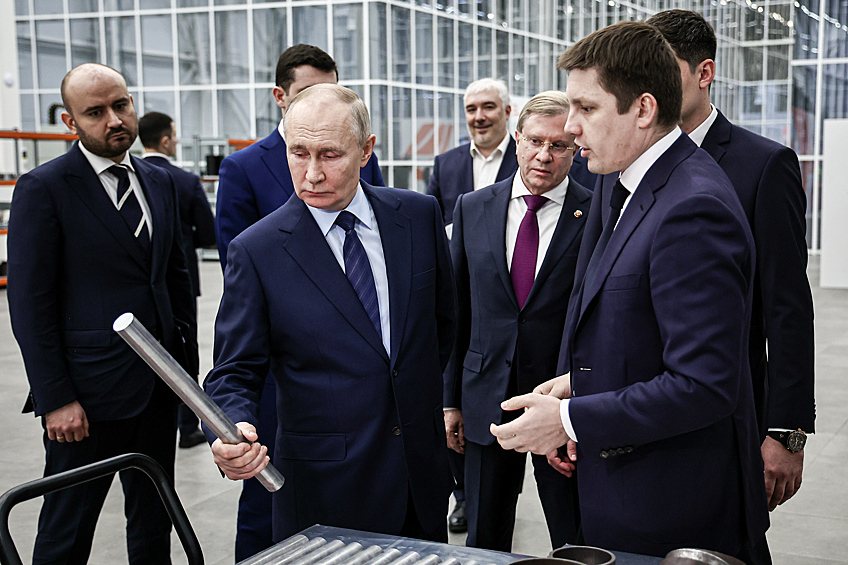
A new investigation by Pladrom brings together cases that sit at the junction of Russia’s war economy and its political system. Drone executives, managers at strategic defence plants and former regional officials have been arrested or sentenced during the past year. At the same time, the legal space available to the registered opposition party Yabloko has narrowed sharply.
Yuri Kozarenko offers the most striking image of that shift. In January 2025, as head of Transport of the Future, he showed Vladimir Putin drone development and production in the Samara region. By May 2026, the former chief executive was in pre-trial detention on a large-scale fraud charge. The public case file does not establish that the allegation concerns defence procurement, and guilt has not been determined. The institutional point is different: proximity to a strategic state project did not provide immunity.
In Buryatia, Aerocom chief Viktor Yankov was detained in a case directly linked by investigators to public money used for drone systems intended for combat tasks. Further up the industrial hierarchy, Krasmash director Alexander Gavrilov and Uralvagonzavod deputy director Dmitry Semizorov were arrested in separate cases in 2026. Gavrilov had recently registered for United Russia’s preliminary vote. Semizorov is accused of embezzlement connected with a state defence order and denies wrongdoing.
The Semizorov hearing illustrates the tension inside the system. Prosecutors did not support detention, while Uralvagonzavod warned that his absence could damage execution of the defence order. The court nevertheless sent him to pre-trial detention. Operational importance to the war-industrial programme was therefore not enough to outweigh the criminal process.
There are also final convictions rather than pending accusations. Former Kursk governor Alexei Smirnov received 14 years in a high-security penal colony, while his former deputy Alexei Dedov received 17. Former Bryansk deputy governor Alexander Petrochenko was sentenced to 10 years. The cases differ and should not be treated as evidence of a single coordinated purge, but together they show that membership of the governing apparatus is a conditional asset.
Political science offers a useful framework. Russia has often been described as a patronal system in which personal networks, access to patrons and selective rewards and punishments carry unusual weight. Such systems can mobilise resources quickly, but they also make protection contingent. The value of a relationship lasts only while the relationship itself remains politically useful.
Yabloko shows the political counterpart. The party was not banned as an organisation and remained legally registered. Its federal list was initially approved for the September Duma election. On 10 August, however, the Supreme Court cancelled that registration after a challenge by the pro-Kremlin Rodina party. Yabloko said it would appeal.
There is no public evidence that the Kremlin directly managed Yabloko. A more defensible description is that it functioned for years as a permitted, institutionally constrained opposition party inside a tightly controlled electoral field. Individual politicians faced prosecution or restrictions while the organisation itself survived. The latest court decision suggests that even that limited form of legal opposition has become less secure.
For investors and policymakers, the broader message is not merely about Russian corruption or electoral repression. It is about institutional risk. Access to state capital, procurement and political platforms can be substantial, but the rules governing that access are not necessarily durable. In a patronal system, protection is a relationship, not a right.
61