Politics 4 min read By Arthur Ellington
Poland’s Patriot dilemma exposes NATO’s air-defence supply problem
Warsaw may release more interceptors to Ukraine, but the decision rests on whether allied backfill and European industrial capacity can protect Polish readiness.
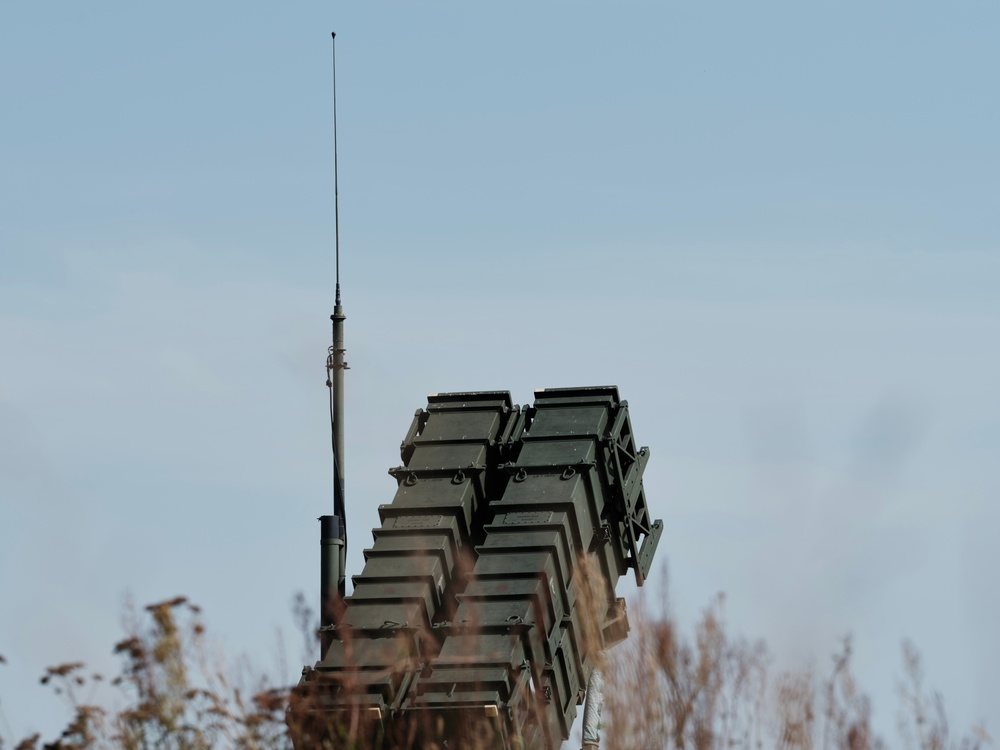
Poland’s renewed willingness to consider another Patriot missile transfer to Ukraine is less a standalone aid decision than a stress test for NATO’s air-defence supply system. Prime Minister Donald Tusk said on 30 July that Warsaw would consider further assistance, including Patriots, only weeks after saying that Poland did not plan another transfer because its own stock was limited.
The immediate change in risk perception came from the war itself. During a large Russian strike on Ukraine, Polish airspace was violated and an armed missile fell in the Lublin region. The episode strengthened both sides of Warsaw’s argument: Ukraine needs more interception capacity to stop Russian weapons before they approach NATO territory, while Poland also needs to preserve enough missiles to respond if those weapons cross the border.
Poland’s previous PAC-3 transfer was therefore structured around allied coordination. Defence Minister Wladyslaw Kosiniak-Kamysz said the release followed consultations with NATO and U.S. command in Europe and remained within a margin that did not reduce Polish air-defence capability. Deputy Defence Minister Cezary Tomczyk said Warsaw also received assurances of rapid reinforcement from NATO and the United States in the event of a direct threat.
That backfill model is becoming central to European defence policy. National stockpiles are finite, and Patriot interceptors are high-demand assets. Ukraine’s request in early July to around 40 partners was explicit: release missiles already in storage now and replace them later through contracted deliveries. In effect, Kyiv is asking allies to convert industrial promises into immediate battlefield inventory.
For NATO, the weakness is temporal. A missile can leave a depot this week; the replacement may not emerge from a factory for months or longer. That gap makes political trust and logistics as important as procurement budgets. A government can sign a large future order and still be reluctant to give away the interceptor physically available today.
Warsaw’s answer is increasingly industrial. Deputy Defence Minister Magdalena Sobkowiak-Czarnecka proposed in Washington that the United States, Ukraine and Poland cooperate on Patriot missile production, with Poland presenting itself as a secure location outside the war zone. She said further negotiations would follow. Poland has also announced arrangements connected with PAC-3 servicing in Europe.
Those steps fit a broader shift in European defence economics. Governments are trying to move from emergency donations toward distributed production, maintenance and pooled purchasing. Poland’s location gives it a natural role: it is a major logistics route for Ukraine, a NATO frontline state and a rapidly expanding defence customer. But the strategic value only materialises if industrial access translates into real throughput.
The unresolved U.S. licensing track adds another layer. President Volodymyr Zelenskyy said President Donald Trump had agreed to license Patriot missile production for Ukraine, though the White House had not publicly confirmed the statement at the time. A Polish-based production proposal could offer a politically safer route for some capacity while keeping it closely linked to Ukrainian demand.
The next Polish transfer, if approved, will therefore be watched for more than its size. It will indicate whether NATO’s replacement architecture is credible enough for a frontline member to release scarce interceptors twice, and whether the alliance can turn a collection of national stocks into something closer to a shared air-defence reserve.
62