
Politics 5 min read By Arthur Ellington
Modi and Xi Push Business Links and Border Peace as India-China Ties Revive
Indian Prime Minister Narendra Modi and Chinese President Xi Jinping have agreed to strengthen commercial ties and maintain calm along their disputed border, signalling a revival of relations between the two Asian powers after years of tension.
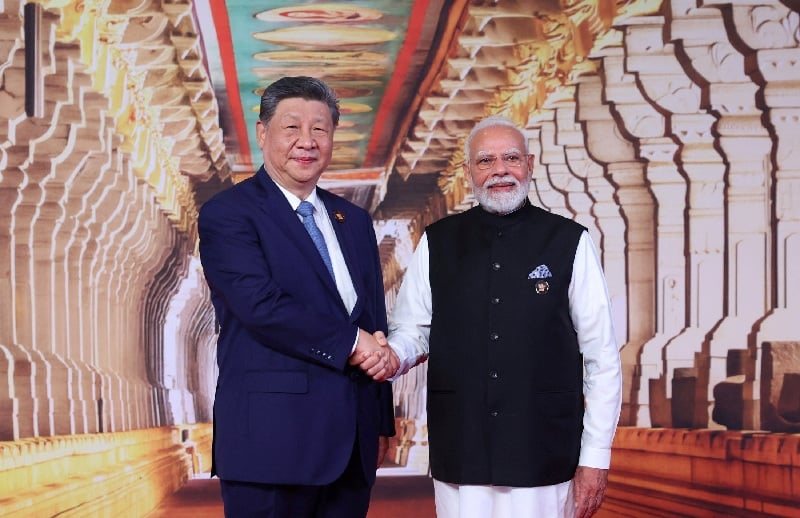
Indian Prime Minister Narendra Modi and Chinese President Xi Jinping have moved to deepen business links and preserve peace along their contested border, the clearest sign yet that relations between the two most populous nations are recovering after a prolonged period of friction.
The two leaders used their latest engagement to push for closer commercial cooperation, with both sides acknowledging that trade and investment between India and China carry weight not only for their own economies but for global supply chains and the wider Asian region. The emphasis on economic ties marks a shift away from the security-dominated agenda that has shaped bilateral relations in recent years.
At the centre of the renewed engagement is the long-running border dispute, which has repeatedly brought the two armies into confrontation along the Line of Actual Control. Both governments have stressed the importance of maintaining peace and tranquillity in the border areas, a formula that has served as the foundation for previous attempts to stabilise ties. Keeping the frontier calm is widely seen as a precondition for any broader improvement in the relationship.
The thaw carries significant implications for British and international businesses. India and China are major trading partners and competitors, and any easing of tensions between them can affect investment flows, manufacturing supply chains, and the cost of goods across Asia and beyond. Companies with exposure to either market, or to the wider Indo-Pacific region, will be watching closely for concrete measures that follow the diplomatic language.
For much of the past decade, relations between New Delhi and Beijing have been strained by border clashes, trade restrictions, and strategic rivalry. The two countries have also competed for influence across South Asia and the Indian Ocean, while China's deepening ties with Pakistan have remained a persistent source of concern in India. The latest push for business links and border peace suggests both sides now see value in managing their differences rather than allowing them to escalate.
Analysts caution that the improvement remains fragile. The border dispute is unresolved, and previous rounds of de-escalation have sometimes unravelled. Trust between the two governments is limited, and domestic political pressures in both countries constrain how far either leader can go in making concessions. Even so, the direction of travel is notable: a sustained effort to keep channels open and to prioritise economic engagement over confrontation.
The revival also comes against a shifting global backdrop, with trade tensions, technological competition, and questions over the reliability of international supply chains prompting many governments and companies to reassess their exposure to single markets. A more stable relationship between India and China could influence those calculations, particularly for firms weighing where to manufacture, source, or invest.
What happens next will depend on whether the two sides can translate their stated commitments into practical steps. Observers will look for progress on border disengagement, the resumption of direct flights and business travel, and any easing of restrictions that have hampered trade and investment. Each of those measures would provide a clearer signal that the revival is more than a diplomatic gesture.
For now, the message from both capitals is one of cautious re-engagement. Modi and Xi have placed business links and border peace at the heart of their efforts, betting that economic cooperation can provide a stable foundation for a relationship that has too often been defined by rivalry. Whether that bet pays off will shape not only the future of Asia's two largest economies but the wider geopolitical landscape in which Britain and its allies operate.