
Politics 4 min read By Bethany Hadley
Anthony Fauci invokes Fifth Amendment at Senate Covid origins hearing
Dr Anthony Fauci refused to answer questions before a Senate committee, invoking his constitutional right against self-incrimination and accusing Senator Rand Paul of an “unhinged obsession” with him.
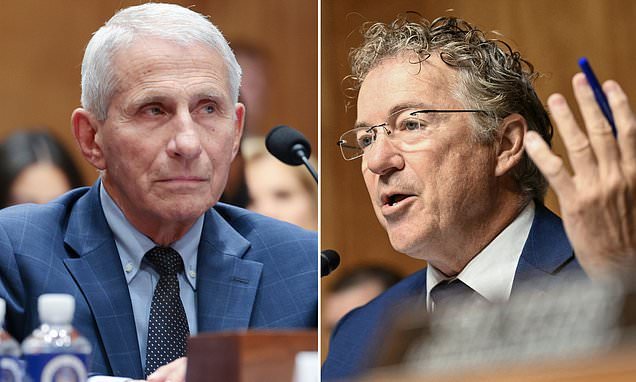
Dr Anthony Fauci, the former director of the National Institute of Allergy and Infectious Diseases who served as a key adviser to both Donald Trump and Joe Biden during the Covid-19 pandemic, invoked the Fifth Amendment on Wednesday during a contentious Senate hearing on the origins of the coronavirus. Appearing before the Senate Homeland Security and Governmental Affairs Committee, Fauci repeatedly declined to answer questions, accusing the committee’s chair, Republican Senator Rand Paul of Kentucky, of having an “unhinged obsession” with him.
The hearing, focused on the still-debated origins of Covid-19 and the role of risky research, quickly became a partisan showdown. Fauci, who has been a central figure in the US pandemic response, stated that he was exercising his constitutional right not to incriminate himself. His decision to remain silent marked an extraordinary moment in the long-running political battle over pandemic accountability and the lab-leak theory.
Senator Paul, a longstanding critic of Fauci, pressed the doctor on his involvement in funding gain-of-function research at the Wuhan Institute of Virology. However, Fauci refused to engage, saying only that he would rely on his Fifth Amendment protections. Paul accused Fauci of hiding behind the amendment and of being unwilling to provide transparency to the American people. Fauci’s lawyer was also briefly ejected from the hearing, adding to the tense atmosphere.
The Democratic ranking member on the committee, Senator Gary Peters of Michigan, condemned the proceedings. Peters noted that while Congress has a legitimate interest in examining the origins of the pandemic and the safety of scientific research, Wednesday’s hearing did not represent a fair or bipartisan inquiry. He argued that the hearing had become a vehicle for personal attacks rather than a serious investigation, and that Fauci’s invocation of the Fifth was a direct consequence of the aggressive tone set by the committee chair.
This is not the first time Fauci has faced intense scrutiny from Republican lawmakers. Since the pandemic began, he has been a frequent target of criticism from those who question the efficacy of lockdowns, masks, and vaccine mandates, as well as the funding streams that supported research at overseas laboratories. The lab-leak hypothesis, which suggests that the coronavirus may have accidentally escaped from a Chinese laboratory, remains unproven but continues to fuel political divisions in Washington.
Fauci’s refusal to testify marks a significant escalation in the ongoing conflict between Congress and former pandemic officials. Legal experts noted that invoking the Fifth Amendment does not imply guilt, but it does complicate efforts to obtain a definitive account of early pandemic decision-making. The hearing concluded without any new evidence or testimony regarding the virus’s origins, leaving the partisan gap on the issue as wide as ever.
The confrontation has reignited debate over the balance between congressional oversight and individual rights. Some lawmakers have called for further investigations, while others argue that the pursuit of past officials has become a political distraction. The Biden administration has not commented directly on the hearing, but White House officials have previously stated that they support independent scientific inquiry into Covid-19 origins.
Fauci, who stepped down from his role at NIAID in 2022, remains a polarising figure in American public life. His testimony — or lack thereof — is likely to feature prominently in the midterm election campaigns later this year, as Republicans continue to press for accountability over the pandemic response.