Economy 4 min read By Alice Ashford
Warsh Signals Monetarist Shift at the Federal Reserve
Federal Reserve Chair Kevin Warsh has publicly embraced key monetarist principles, marking a significant departure from his predecessor's approach and reigniting a decades-old debate about the role of money in economic policy.
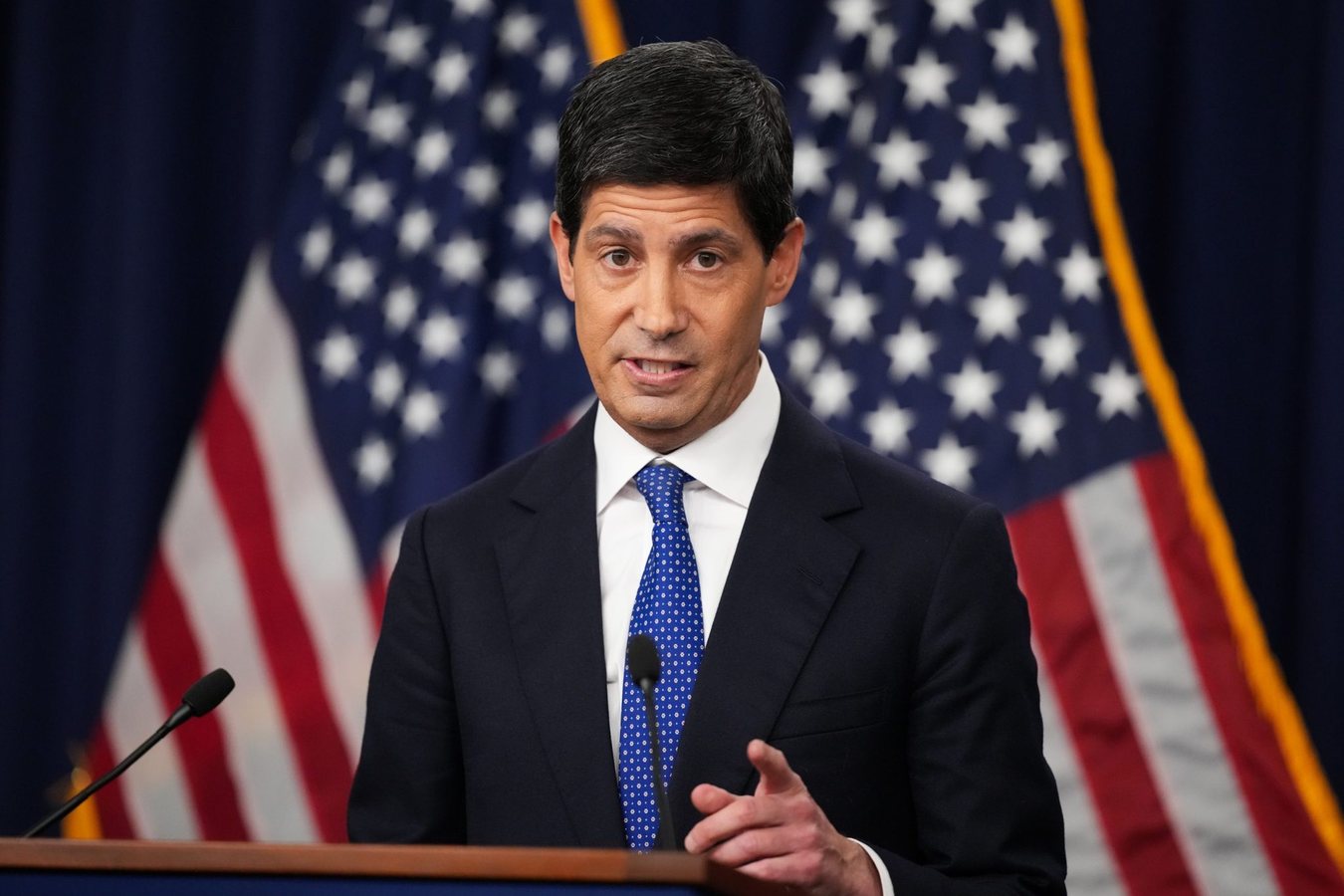
Federal Reserve Chair Kevin Warsh has signalled a significant shift in the central bank's intellectual framework, publicly embracing key tenets of monetarism in recent remarks. The change marks a departure from the approach of his predecessor, Jerome Powell, who consistently rejected the doctrine, and has reignited a long-dormant debate about the role of money and banking in economic policy.
Monetarism, a school of thought most closely associated with economist Milton Friedman, holds that the quantity of money in circulation is the primary driver of both economic activity and the overall price level. Its advocates argue that monetary policy is best conducted by targeting the rate of growth of the money supply, rather than focusing on interest rates or short-term data points. The doctrine has been out of fashion in academia for decades, with most mainstream macroeconomic models excluding money and banking entirely.
Warsh first hinted at his leanings at the Fed's Jackson Hole Symposium in August, outlining principles that linked changes in the money supply to economic activity and inflation. He elaborated further during his post-Federal Open Market Committee press conference on September 16, offering a series of responses that align closely with monetarist thinking.
When asked about the impact of individual price changes, such as those for energy or food, Warsh stated that the Fed cannot address specific prices but can ensure that relative price changes do not generate second and third-order effects. He emphasised that the central bank is responsible for overall price changes, not relative ones. Monetarists would go further, arguing that unless there has already been excess money growth, relative price shifts cannot translate into sustained changes in the overall price level.
On the question of how rate hikes affect lower-income groups, Warsh said the Fed does not deal in questions of distribution, focusing instead on aggregates like the labour market, GDP, total spending, and overall inflation. He conceded, however, that the lowest income classes — those without financial assets who live from paycheck to paycheck — would benefit most from stable prices. This, too, reflects a monetarist perspective.
Warsh also dismissed the influence of the most recent CPI data on the Fed's decision to raise rates, arguing that «datapoints are noisy» and that what mattered was the trend, which remained too high. His response accords with the monetarist view that short-term inflation forecasts are not feasible due to excessive noise in the data. Monetarist analysis, by contrast, can provide a range for price levels over a one-to-three-year horizon.
Finally, when asked about the level of the Federal Funds rate relative to its «neutral» rate, Warsh said that while he had studied the concept — known as the Wicksellian real rate — it was of academic interest but had no bearing on the Fed's practical decision-making. This again comports with monetarist views, which hold that administered rates can be both a driver and a consequence of prior monetary growth, making a Wicksellian framework of equilibrium rates unreliable.
The shift is notable given the Fed's long-standing rejection of monetarism, both on and off the record. Mainstream economists have largely failed to anticipate major inflationary episodes, including the post-COVID surge, a failure that monetarists attribute to the exclusion of money and banking from their models. Warsh's public embrace of monetarist principles suggests the central bank may be rethinking its fundamental approach to monetary policy at a time when inflation remains a persistent concern.