Economy 5 min read By Alice Ashford
Trump's Red-Dyed Diesel Order Defers 24-Cent Federal Tax but Economists Warn of Higher Farm Costs
An executive order allowing red-dyed diesel on public roads defers the 24.4-cent federal excise tax through December, but economists say the measure will not lower pump prices and may raise costs for farmers and construction firms.

An executive order signed by President Donald Trump temporarily allows red-dyed diesel to be used on public roads and defers the federal excise tax normally charged on highway fuel until the end of the year. The order, signed onstage at a campaign rally in Grand Island, Nebraska, directs the Treasury Department to defer payment without interest or penalties and to examine ways of eliminating the deferred bill entirely.
Red-dyed diesel is chemically identical to the fuel sold at filling stations but is marked with a red dye so inspectors can confirm it is being used only for off-road purposes such as agricultural vehicles. It is normally sold without the federal diesel tax, which stands at 24.4 cents per gallon — a 24.3-cent excise charge plus a 0.1-cent fee for the Leaking Underground Storage Tank fund, according to the U.S. Energy Information Administration.
Trump described the fuel as «tax-free» at the rally, but the tax has not been abolished. The order defers payment and asks the Treasury to explore eliminating the deferred amount. The White House has claimed truckers will save more than $100 per fill-up, but that figure assumes states also suspend their own diesel taxes, which the order encourages but cannot require. On a 250-gallon fill-up for an 18-wheeler, the federal deferral is worth about $61.
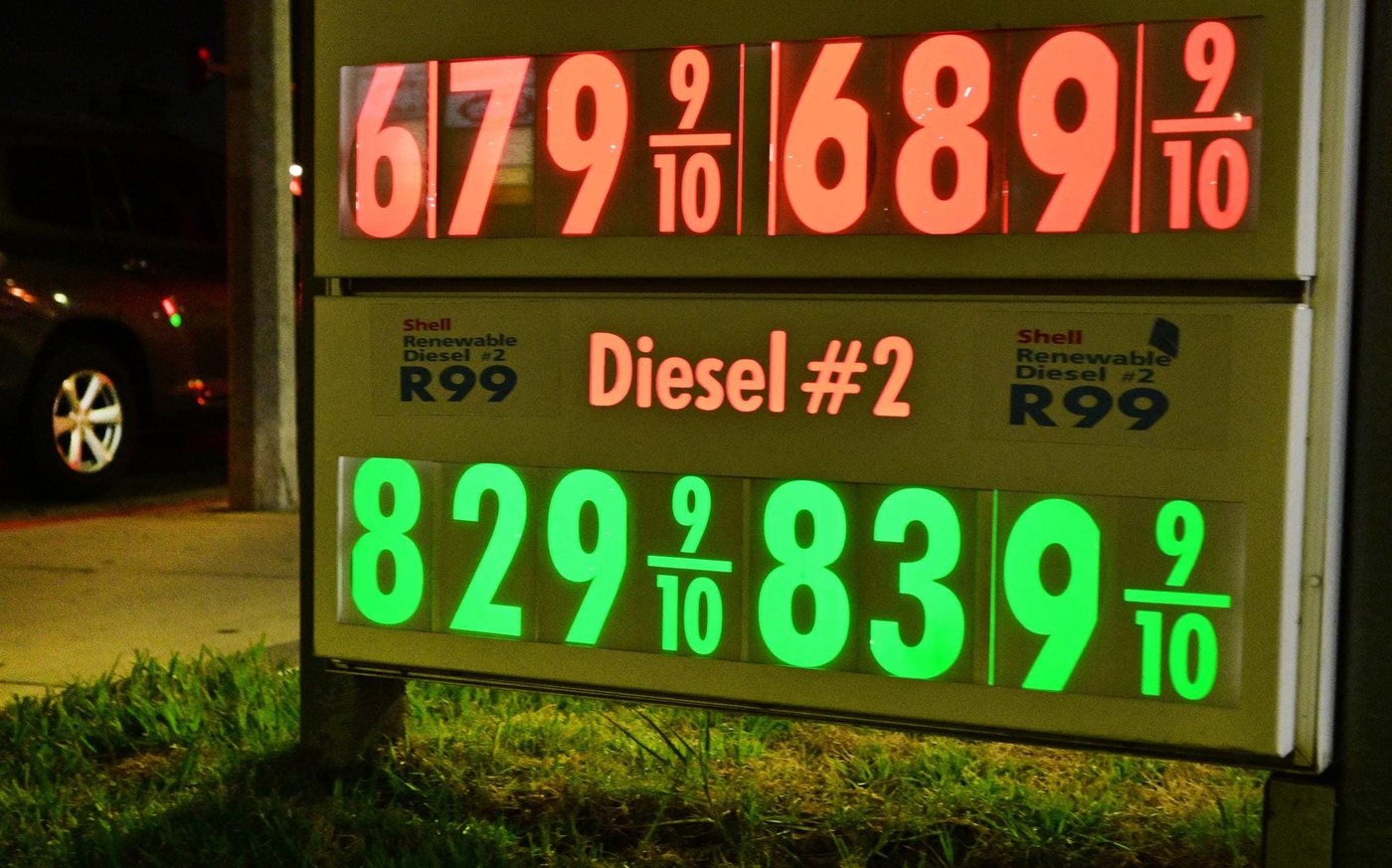
The measure arrives as diesel prices hover near record highs, squeezing truckers and farmers in the middle of harvest season. Diesel averaged about $6.20 a gallon nationally in the week of October 5, down from a peak of roughly $6.53 in late September, according to the EIA. Before the U.S. and Israel launched their war against Iran in late February, the national average was about $3.76, according to AAA. A 24.4-cent deferral amounts to roughly 4% of the current price.
Economists say the order is unlikely to deliver meaningful relief because it does not change the fundamentals of supply and demand. Gilbert Metcalf, a visiting professor at the MIT Sloan School of Management and a former deputy assistant secretary for environment and energy at the U.S. Treasury Department, said the measure would not bring more diesel to market. «On the supply side, it's not going to lead to any more diesel coming online, all it does is change some of the diesel that's out there to be usable by anyone,» he said. «But that doesn't change the total amount of diesel that's out there. And if you look at U.S. refineries, they're operating at near record capacity levels. There's no ability to process more or create more diesel.»
Metcalf warned that the demand side could produce an unintended consequence. «If we shift some of that diesel into road use, what does that mean? It means that the diesel is going to be more expensive for farmers and other off-road use, like construction,» he said. Farmers who already burn red-dyed diesel in their tractors and combines do not gain a new tax break from the order, and opening the fuel to highway drivers may raise the effective price they pay.
Alan Krupnick, a senior fellow at Resources for the Future and director of its Industry and Fuels Program, explained that red-dyed diesel is «the same as regular diesel, but dyed red so inspectors can make sure it's being sold only for off-road uses, such as for agricultural vehicles.» It is sold tax-free, he said, to give agriculture and other heavy off-road users a break.
Diesel prices have surged primarily because of two overseas conflicts: the war with Iran, which has disrupted tanker traffic through the Strait of Hormuz, and the Russia-Ukraine war, where Ukrainian drone strikes on Russian refineries prompted Moscow to restrict its own diesel exports. With global supply tight and U.S. refiners already running hard, the system has little slack. Only a return to more stable global production and refining is likely to have a lasting impact on domestic diesel prices, and a temporary tax deferral may backfire if it drives up fuel costs for farmers, construction firms and other off-road users.
3