Economy 4 min read By Bethany Hadley
Treasury could reprice US gold reserves to $1 trillion, analyst warns of backlash
Revaluing the US gold hoard at market prices would add about $1 trillion on paper, but Fidelity's Jurrien Timmer warns the move would backfire on the dollar, inflation and Treasury yields.
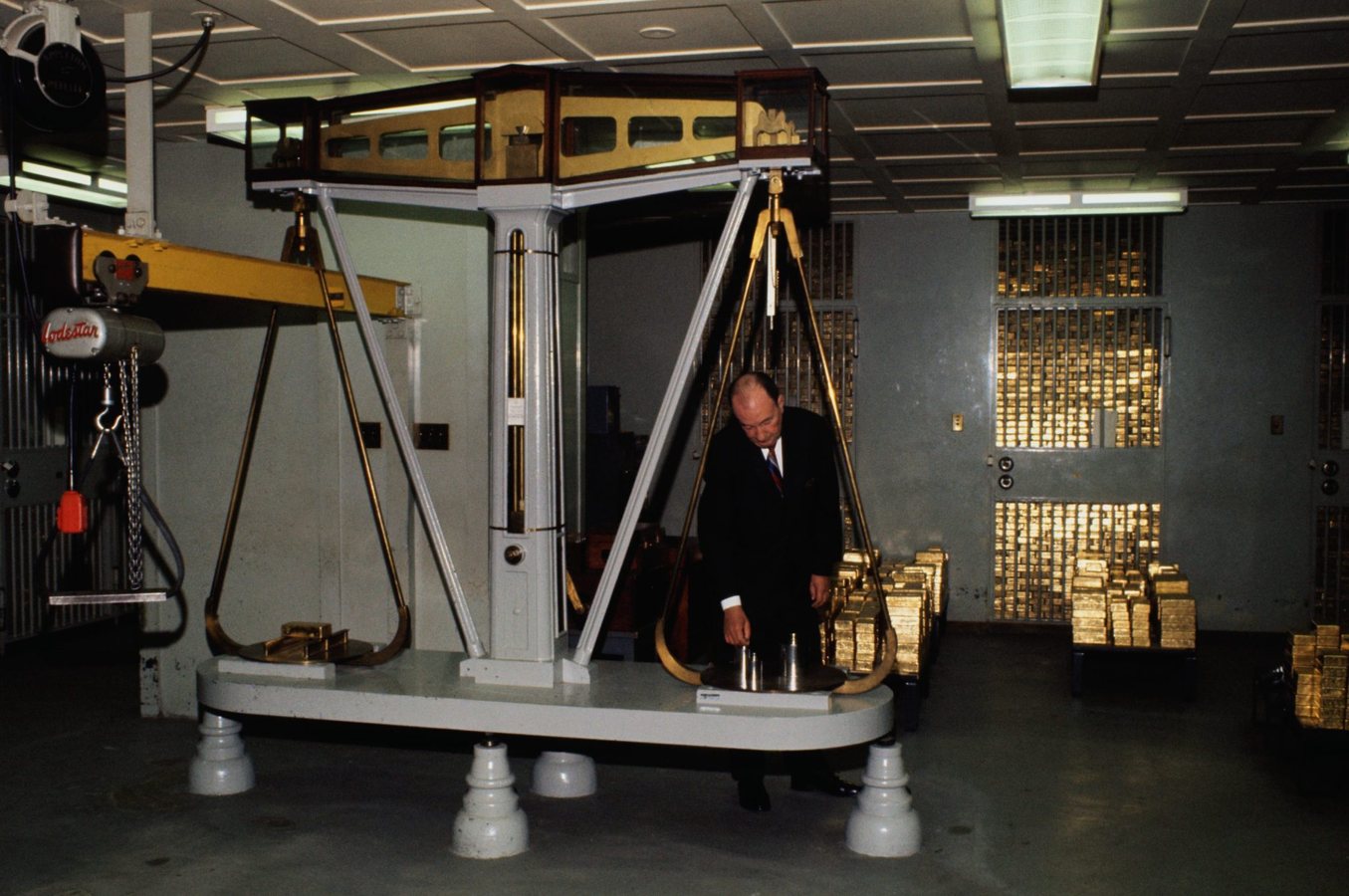
The United States holds the world's largest official gold reserves, roughly 261.5 million ounces, and repricing that stockpile at today's market value could add around $1 trillion to the government's balance sheet. Jurrien Timmer, director of global macro at Fidelity Investments, has warned that such a move would "backfire in a big way", even though it has resurfaced as an idea in Washington.
The appeal of the idea is clear. The federal budget deficit is running at about $2 trillion a year, and debt-interest costs now top $1 trillion annually. Treasury yields have climbed to their highest levels in more than 20 years, adding pressure on government finances. Officials have already tried unconventional steps to ease that pressure, including buybacks of longer-dated debt and an intervention to support the yen that allowed Japan to avoid selling its Treasuries.
The gold is carried on the books at a fixed price set by Congress in 1973, $42.22 per ounce, unchanged since. At that rate the hoard is recorded at just over $11 billion. At gold's current price of around $4,000 an ounce, it would be worth about $1 trillion. Timmer described the idea as an "old meme" that periodically resurfaces, noting that it would be "far-fetched" but that he had learned not to be surprised by policy moves. He added that any such action would require congressional approval.
Interest in the gold stockpile has been revived by recent comments from Treasury Secretary Scott Bessent. Last year he said the government would "monetize the asset side of the U.S. balance sheet" and create a sovereign wealth fund, which fuelled speculation that repricing gold could be part of that plan. The administration later said the idea was not under serious consideration. In July, Bessent said the gold at Fort Knox was "present and accounted for" and added that the U.S. held "over a trillion dollars at current market value". Separately, a recent congressional bill proposing a strategic bitcoin reserve also suggested repricing US gold holdings. Last year President Donald Trump questioned whether the gold at Fort Knox was actually there. Treasury gold is also held in Denver, at the New York Fed and at West Point, New York.
Timmer's central warning is that a sudden injection of $1 trillion would weaken the US dollar and feed inflation, which is already picking up. He also argued that the term premium on Treasury yields, the extra return investors demand for holding long-term debt, would rise further. Yields have already climbed this year on expectations of Federal Reserve rate increases, robust economic growth and persistent inflation, and the term premium has also risen. Risks that could push it higher include geopolitical turmoil, a fiscal crisis or an economic downturn.
Other countries have revalued their gold reserves over the past 30 years. A Federal Reserve economist noted last August that Germany, Italy, Lebanon, Curacao and St Maarten, and South Africa had done so. Italy, Curacao and St Maarten used the proceeds through their central banks, while South Africa, Lebanon and Germany passed the windfall to their central governments. The same Fed note cautioned that revaluation does not solve a debt problem on its own. Gross US debt has reached about $40 trillion, with annual deficits still around $2 trillion. "While reducing the debt stock using revaluation proceeds improves the fiscal situation at the margin, drawing on revaluation proceeds may not address larger structural challenges," the note said.
4