Economy 3 min read By Arthur Ellington
S&P Says Neptun Deep Could Squeeze US LNG Flows Through Greece
An analysis by rating agency Standard & Poor's shows that the new Black Sea field Neptun Deep will reduce the space for US liquefied natural gas reaching Europe through terminals in Greece and the Vertical Corridor.
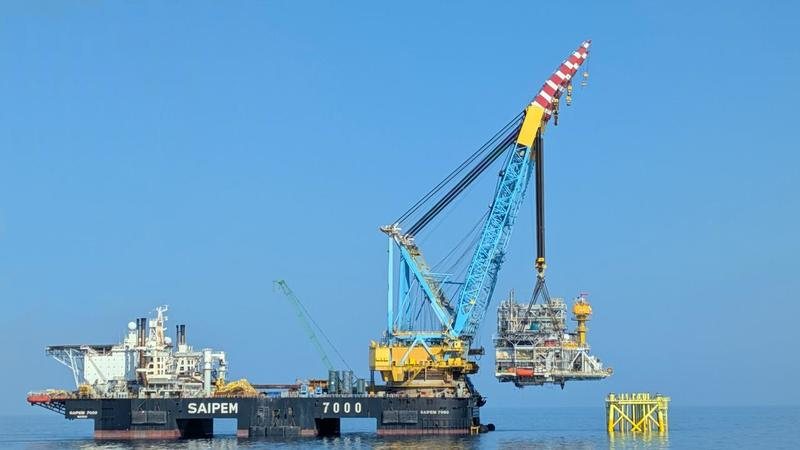
The Neptun Deep field in the Black Sea could restrict the United States' ability to deliver liquefied natural gas (LNG) to Europe via Greece, according to an analysis published by the rating agency Standard & Poor's. The project, operated by OMV Petrom and Romgaz, is set to begin production next year and will compete directly with American volumes that reach Europe after regasification in Greece and are then transported through the Vertical Corridor.
The S&P analysis stresses that Romanian gas will not be the only source of pressure. The agency expects gas coming from Turkey to also enter into competition with American LNG on regional markets. For American exporters, this means a more crowded market, in which gas volumes must find their place alongside regional sources that arrive more cheaply and via shorter routes.
The change matters for Romania, which aims to become an important gas supplier for Central and Southeast Europe. Production from Neptun Deep is seen as a lever for energy security and for reducing dependence on imports, especially as the European Union seeks to diversify its supply sources.
At the same time, the Romanian Government faces major budgetary pressures. Finance Minister Alexandru Nazare has set three priorities: attracting European funds, implementing financing through the SAFE instrument, and reducing the budget deficit. Discussions held in Brussels with European Commissioner Valdis Dombrovskis focused in particular on payment requests No. 5 and No. 6 under the National Recovery and Resilience Plan (PNRR), the assessment of which is, according to the minister, the immediate task.
The SAFE instrument, intended for defence spending, infrastructure and industrial capacity, is expected to generate a first payment request of approximately 1.2 billion euros. Payment is expected by the end of the year, but it is conditional on the assessment and approval of the request. The exact timetable for the funds remains uncertain, and the authorities have not yet announced a firm date for disbursement.
The 2027 budget is shaping up to be just as difficult. Pressures come from public investment, personnel expenses, pensions and rising defence spending. The conclusion of the PNRR also changes the structure of European financing, and the minister noted that the budget cannot be built by simply adding up the spending requests of institutions.
The government states that the message conveyed to rating agencies and investors is one of fiscal consistency. The declared aim is to protect Romania's sovereign rating and reduce the state's borrowing costs. In this context, the development of Neptun Deep and the management of public finances appear as two connected files, in which the country's stability and credibility are considered essential.
Source: profit.ro
5