Economy 4 min read By Bethany Hadley
Oil Majors Race to Tap Arkansas Lithium Brines
A deep brine well in Arkansas and East Texas could transform the United States' lithium supply, while oil companies such as ExxonMobil and Chevron are already securing acreage.
A geological formation in the southern United States could significantly reduce the country's dependence on China for lithium, and the major oil companies have already secured positions there. The so-called Smackover Formation extends across southern Arkansas and East Texas and contains a brine aquifer with unusually high lithium concentrations. About a century ago, drilling in this layer first struck oil.
Demand for lithium is growing rapidly. Global demand already exceeds 1.5 million tons per year and has risen by more than 400 percent during the current decade. By 2035, it could approach a level of around four million tons, according to estimates. The demand is driven above all by electric vehicles, grid energy storage, data centers and robotics.
The United States currently accounts for only a little more than one percent of global lithium production. The most important domestic source is Albemarle's Silver Peak mine in Nevada. China also dominates processing and battery manufacturing. Against this backdrop, the Smackover Formation is gaining importance.
Standard Lithium is planning the South West Arkansas Project, whose first phase envisages annual production of 22,500 tons. The company cites a possible potential of 150,000 tons per year and plans to begin construction in the first quarter of 2027. After the first phase, 45,000 tons are to be produced annually, and the Franklin project could reach up to 70,000 tons. The oil company Equinor holds 45 percent of the venture. The company received a grant of 225 million dollars from the Department of Energy. Offtake agreements exist with Trafigura and LG Energy Solution.
EnergyX of Austin is also pursuing a project in the region. The Project Lonestar is to deliver 15,000 tons, with construction scheduled to begin at the end of 2027. A pilot plant with a capacity of 250 tons is to go into operation later this year. According to the company, there is also an offtake agreement for 100,000 tons with Trafigura worth around two billion dollars, which is considered the largest contract for direct lithium extraction. By 2031, EnergyX plans to expand to 50,000 tons.
Large oil producers are also active. ExxonMobil says it holds the largest position in the region with more than 400,000 net acres, and a pilot project called Pine is to start next year. Chevron announced an acreage of 125,000 acres last year. For the oil industry, the venture is an obvious fit, as it has experience with deep drilling and brines.
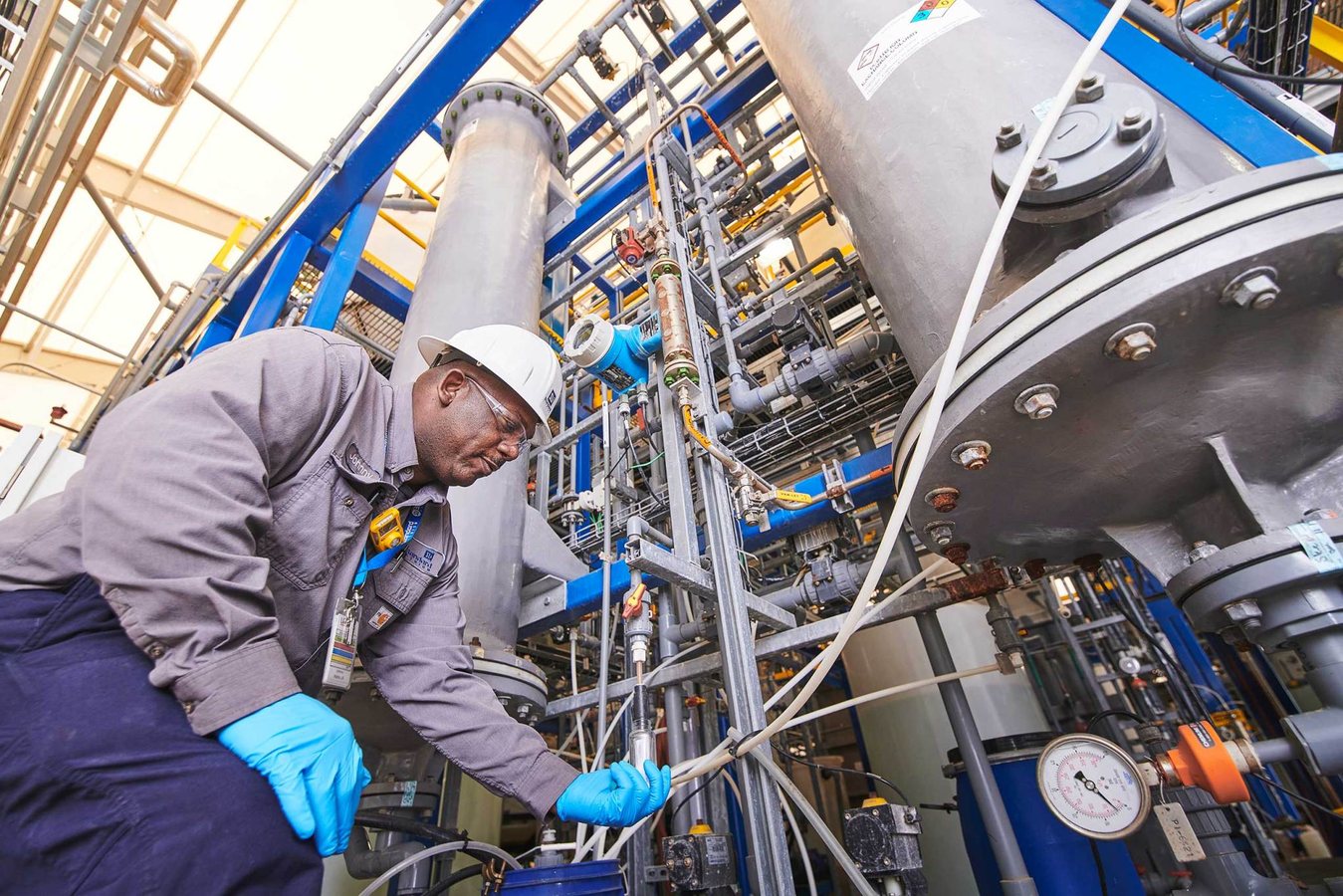
The process used is called direct lithium extraction, or DLE. Brine is pumped up, the lithium is filtered out, and about 90 percent of the liquid is returned underground. Fracking is not necessary. The process takes about two days, whereas classic evaporation in basins takes about two years. The drawback: DLE has not yet been proven on a commercial scale, and the costs of facilities and drilling are high at the outset.
Analyst Max Yerrill of BMO is skeptical but considers the technology necessary. He sees a further uncertainty in possible price manipulation by China, which could put pressure on new US producers. At the same time, the Trump administration has eliminated tax credits for electric vehicles, weakening domestic demand. Tesla has also discontinued the Cybertruck model, while robotaxi providers such as Waymo, Avride and Zoox are growing.
The economic viability of lithium production in Smackover has therefore not yet been demonstrated. For comparison, Lithium Americas is working on a project in Thacker Pass, Nevada, with 40,000 tons, which could later be expanded to 160,000 tons.
Source: fortune.com
8