Economy 7 min read By Bethany Hadley
Andy Burnham to announce new North Sea oil drilling plans despite Labour manifesto pledge
Greater Manchester Mayor Andy Burnham is reportedly preparing to announce new oil and gas drilling in the North Sea, directly challenging Energy Secretary Ed Miliband's net zero policies and Labour's 2024 manifesto commitment to halt new licences.
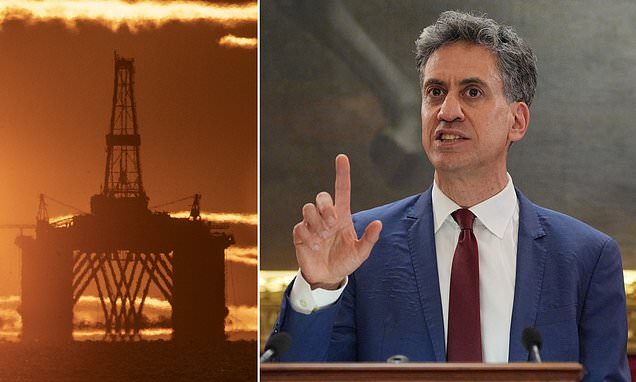
Greater Manchester Mayor Andy Burnham is reportedly preparing to announce new oil and gas drilling in the North Sea, a move that would directly challenge Energy Secretary Ed Miliband's net zero agenda and contradict Labour's 2024 manifesto pledge to issue no new North Sea licences. The development signals a growing rift within the Labour Party over energy policy and the pace of the transition away from fossil fuels.
According to reports, Burnham is expected to unveil the plans as part of a broader push to bolster energy security and create jobs in the North Sea region. The announcement would mark a significant departure from the position taken by Sir Keir Starmer's government, which has committed to ending new oil and gas exploration in British waters as part of its climate strategy. Miliband, a long-standing advocate for aggressive climate action, has been a key architect of the government's net zero policies.
The move has been met with criticism from environmental groups and some Labour MPs, who argue that it undermines the party's credibility on climate change. However, supporters of the plan contend that continued domestic production is necessary to reduce reliance on foreign imports and protect energy-intensive industries. The North Sea Transition Authority, which regulates offshore oil and gas, has previously warned that a rapid halt to new drilling could lead to higher energy prices and job losses in Scotland and northern England.
Labour's 2024 manifesto, which Burnham has publicly promised to honour, explicitly stated that the party would not issue new North Sea licences. The manifesto argued that the UK must lead the global transition to clean energy and that new fossil fuel projects are incompatible with the country's legally binding net zero targets. Burnham's reported plans therefore represent a direct challenge to the government's authority and could force a confrontation with Downing Street.
The timing of the announcement is particularly sensitive, coming as the government prepares to publish its long-awaited energy strategy and ahead of the COP29 climate summit later this year. Critics have accused Burnham of playing politics with the climate crisis, while his allies insist that he is simply responding to the economic realities facing the North Sea industry. The region has seen a sharp decline in investment in recent years, with several major oil companies scaling back their operations due to regulatory uncertainty and rising costs.
The North Sea oil and gas sector supports tens of thousands of jobs, many of them in constituencies that voted heavily for Labour in the last general election. Burnham is believed to be positioning himself as a champion of working-class communities that fear being left behind by the green transition. His stance echoes that of some trade unions, which have called for a «just transition» that protects jobs and skills while moving towards a low-carbon economy.
Miliband, who has made climate action the centrepiece of his political identity, is unlikely to welcome the challenge. The Energy Secretary has repeatedly stressed that the UK must lead by example and that new fossil fuel projects are incompatible with the country's climate commitments. He has also pointed to the falling cost of renewable energy as evidence that the transition is both necessary and economically viable.
The internal dispute comes at a difficult time for the Labour government, which is already grappling with a cost-of-living crisis, sluggish economic growth, and mounting pressure from environmental activists. The party's net zero policies have been a source of tension between its traditional industrial base and its younger, more environmentally conscious supporters. Burnham's intervention could force the government to clarify its position on North Sea drilling and potentially accelerate the development of a compromise that balances climate goals with energy security.
Industry analysts have noted that any new drilling projects would take years to come on stream and would have a limited impact on the UK's overall carbon emissions. However, the symbolic importance of the decision is significant, as it would signal whether the government is willing to prioritise domestic production over its international climate commitments. The UK has already reduced its emissions by more than 50% since 1990, but the independent Climate Change Committee has warned that further progress requires a rapid phase-out of fossil fuels.
Burnham's reported plans have also reignited debate about the role of regional mayors in shaping national policy. As Mayor of Greater Manchester, Burnham has significant autonomy over local economic development but has no formal role in energy policy. His decision to wade into the North Sea drilling debate suggests he is seeking to influence the national conversation and position himself as a potential future leader of the Labour Party.
The government has so far declined to comment on the reports, but sources close to Miliband have indicated that the Energy Secretary is determined to stick to the manifesto commitment. A spokesperson for the Department for Energy Security and Net Zero said that the government remains committed to its net zero targets and that any new drilling would be subject to rigorous environmental assessments.
The controversy is likely to dominate the political agenda in the coming days, as both sides seek to rally support for their positions. For Burnham, the gamble is whether he can win over public opinion and force a change in government policy without damaging his own political standing. For Miliband, the challenge is to defend the government's climate agenda without appearing out of touch with the economic concerns of voters.
92