Culture 3 min read By Bethany Hadley
Walter Scott: 194 Years Since His Death
Scotland marks 194 years since the death of Sir Walter Scott, the poet and novelist who shaped historical fiction and romanticised his homeland for readers worldwide.
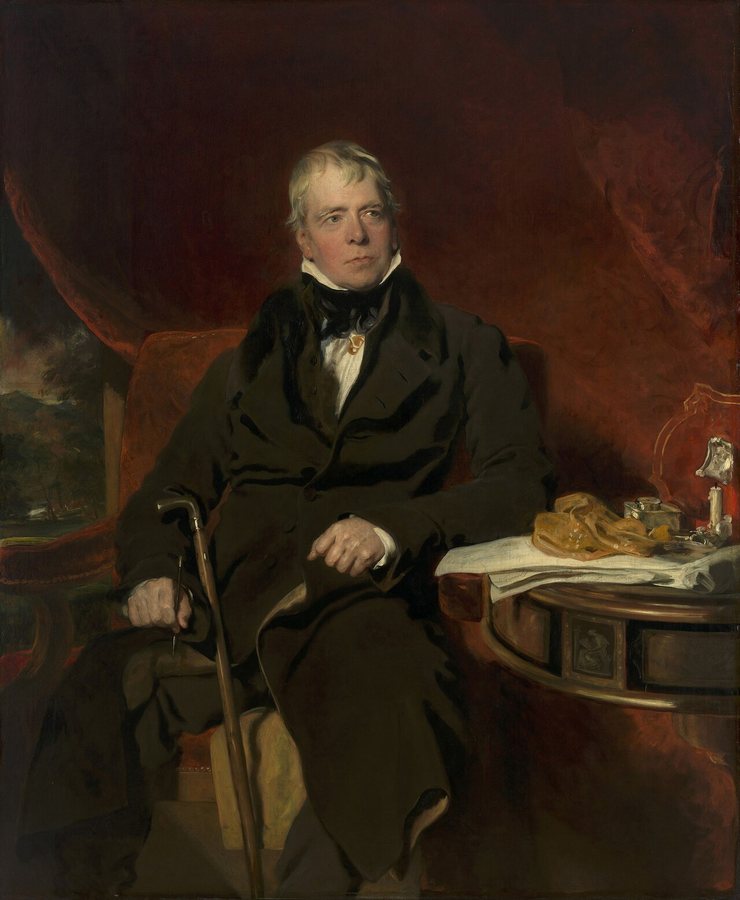
Scotland marks 194 years since the death of Sir Walter Scott, the poet and novelist whose historical romances reshaped European literature and fixed a romantic image of his homeland in the minds of readers across the world. Scott died on 21 September 1832, and the anniversary falls on that date.
Born in Edinburgh in 1771, Scott trained as a lawyer before turning to writing. He first won fame as a poet with works such as The Lay of the Last Minstrel and The Lady of the Lake, which drew on the ballads and landscapes of the Scottish Borders. He then turned to prose and, for much of his career, published novels anonymously, earning the nickname «the Great Unknown». Among the best known are Waverley, Rob Roy, Ivanhoe and The Heart of Midlothian.
His influence extended well beyond Scotland. By setting stories against real historical events and giving ordinary characters a role in them, Scott helped establish the historical novel as a popular form. Writers in Britain, Europe and North America followed his example, and his books were widely translated. Ivanhoe, set in medieval England, became one of the most widely read novels of the nineteenth century.
Scott was also a prominent public figure. He helped organise the visit of King George IV to Scotland in 1822, a carefully staged event that did much to popularise tartan and the idea of a distinctive Scottish identity. His home at Abbotsford, in the Borders, became a celebrated house and estate, built with the proceeds of his writing and filled with historical objects. It remains a visitor attraction today.
His later years were overshadowed by financial trouble. In 1826, a publishing house in which he was a partner collapsed, leaving him with a large debt. Rather than declare bankruptcy, Scott set out to write his way out of it, producing a stream of novels, histories and other works. The effort is often said to have damaged his health. He died at Abbotsford in 1832, aged 61, and was buried at Dryburgh Abbey.
Scott's reputation has risen and fallen over the years. Some later critics found his prose slow and his version of Scottish history sentimental. Yet his standing as a founder of the historical novel is secure, and his work remains a reference point for writers of historical fiction. His poetry is still recited, and his novels are still studied in schools and universities.
Anniversaries of his birth and death are regularly marked in Scotland and by literary societies around the world. The 194th anniversary is a quieter occasion than a bicentenary, but it keeps attention on a writer whose imagination did much to shape how Scotland, and history itself, are seen.
6