

Business 4 min read By Arthur Ellington
Security is becoming an operating cost for Italy’s McDonald’s franchisees
Guards, surveillance, lighting and police coordination are moving into the operating model of busy urban restaurants, while the viral ethnic staffing claim remains unverified.
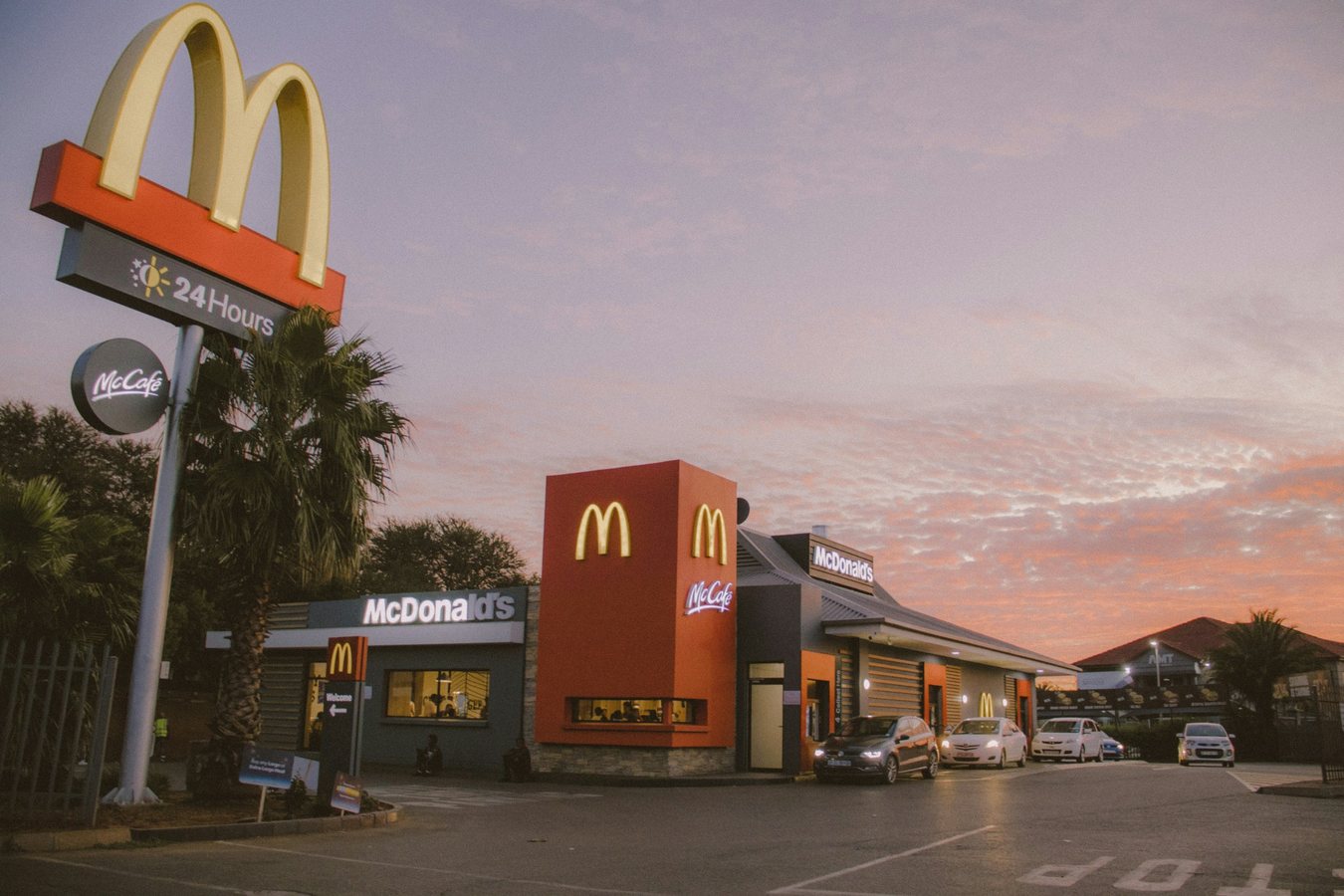
For a restaurant franchisee, security is becoming less like an emergency expense and more like a recurring operating function. MAIR’s Italian publication Ascensio examined the issue in “Guardie e mendicanti nei McDonald’s italiani.” It found customer reports of guards, receipt checks and controlled restrooms in Milan, a documented violent incident from 2017 and a formal security protocol launched in Frosinone in 2026. The evidence does not support the viral claim that McDonald’s deliberately hires African guards to control African visitors.
The economics begin with location. A restaurant near a station or major tourist area benefits from heavy footfall, but that same footfall brings people who are not necessarily customers. Seating, toilets, shelter and long opening hours make fast-food restaurants attractive as informal public spaces.
Customer reviews reveal the two-sided nature of the risk. In Milan, some reviewers complain about aggressive security and requirements to show a receipt before using the bathroom. A 2025 reviewer described a man perceived as African who enforced a purchase-before-restroom rule. That account cannot establish the worker’s role or nationality, but it shows the reputational cost of enforcement when customers experience it as hostility.
Naples demonstrates the cost of under-enforcement. A reviewer at the Piazza Garibaldi McDonald’s said two security workers were present yet diners were still repeatedly approached for money. From an operator’s perspective, that means paying for security does not automatically deliver the outcome customers expect.
The downside risk can be far greater than a negative review. In Milan in 2017, ANSA reported, citing police, that a manager asked a security guard to remove a group described as North African after customers were disturbed. A customer who verbally supported the guard was stabbed. An incident of that kind carries potential costs across insurance, legal exposure, staff retention, customer confidence and brand reputation.
Frosinone’s 2026 protocol illustrates a more mature risk-management model. The agreement with the prefecture includes enhanced surveillance, permanent exterior lighting, employee training and rapid communication with law enforcement. Those measures spread security spending across technology, infrastructure and people.
McDonald’s Italian franchise structure makes this particularly relevant. The company says more than 90 percent of restaurants in the country are franchise-operated. In January 2026 it cited more than 800 restaurants, around 38,000 employees and more than 165 local franchise entrepreneurs.
The viral ethnic claim is therefore a distraction from the management problem. Even if a particular guard is African, appearance does not prove the hiring criterion. Ascensio found no public evidence that ethnic background is used as a deliberate matching tool. For business analysis, the relevant question is whether the security arrangement is effective, lawful and consistent with brand standards.
For franchisees, the strategic lesson is straightforward. Security in difficult urban locations must be treated like food safety or cash handling: a defined process with training, investment, metrics and external partners. The Italian experience suggests that the real competitive advantage is not toughness. It is the ability to make a busy restaurant feel predictable and safe without making it feel closed.
49